
Chief legal and compliance officer | Angelini Pharma

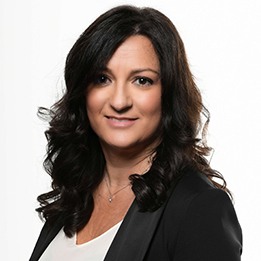
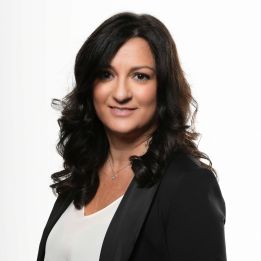
Enrica Dogali
Chief legal and compliance officer | Angelini Pharma
Team size: 20
What are the most significant cases, projects, or transactions that you and your legal team have recently been involved in?
On 25 July 2026, Angelini Pharma completed the acquisition of Catalyst Pharmaceuticals, a Nasdaq-listed company.
The transaction, valued at USD 4.1 billion, strengthened Angelini Pharma’s presence in the United States, where the company already operates a manufacturing facility in Georgia. The pharmaceutical division is the driving force behind Angelini Industries, a holding company with EUR 1.7 billion in revenues and 5,800 employees. Even as the US becomes the prevailing market in terms of volumes and market share, the Group’s identity and its national legal entity will remain unchanged. The Group remains focused on high therapeutic-impact markets, such as the central nervous system and orphan diseases, while streamlining its portfolio by divesting less synergistic segments such as beauty. Choosing this field also means taking on the responsibility of addressing an area — that of rare diseases — where unmet medical need still stands at 90% today, tackling scientific and industrial challenges with the appropriate financial strength.
How do you approach managing legal aspects during periods of instability or crisis to ensure the organisation’s resilience?
The daily challenge for the legal department lies in the ability to protect the company without stifling its commercial momentum. The EU confronts us with unprecedented regulatory frameworks (from the impact of the AI Act to the NIS2 Directive, through to Italy’s stringent export-control measures) that risk undermining competitiveness vis-à-vis the United States or China. Our task is to ensure that the legal function does not become a source of rigidity: we tailor governance models through a granular analysis of industrial processes, embedding controls directly into the workflow and avoiding upstream barriers or belated downstream reviews that would force the company to modify or delay its activities, with a negative impact on the business.
Furthermore, in order to address the challenge posed by an increasingly complex and fragmented regulatory landscape (Legislative Decree 231/2001, GDPR, AI Act, NIS2, EMA, FDA), an integrated compliance model has been adopted, structured around a global centre of excellence and a distributed local network, with the aim of harmonising obligations within a single framework and bringing all such requirements together in a coherent vision. The primary objective is to create a shared point of reference for all corporate functions: a system that connects risks arising from different regulations, generates centralised reporting and enables informed and timely decisions, starting from the processes themselves, through a tailor-made solution built with care and attention, so as to turn compliance from a bureaucratic constraint into a strategic lever that enables responsible innovation and strengthens the confidence of investors and partners.
What do you think is the greatest innovation you have enacted in the past year?
The Pharma legal team comprises twenty professionals, organised across two main operational areas: the first supports commercial and industrial activities, while the second oversees medical affairs, corporate matters, finance, and research and development. In addition to the aforementioned integrated compliance department, there is the Intellectual Property protection and enhancement department: three resources led by a professional with a background in physics and qualifications at both Italian and European level, including European Patent Attorney and UPC Representative for the newly established Unified Patent Court. “In pharma, the IP component is the most critical asset: we acquire licences and products both at early research stages and during full commercialisation. Having embedded specific technical expertise directly within the legal function gives us extraordinary independence: we can manage all M&A activities on the Italian market in-house, without necessarily having to resort to external advisers — with the exception of tax matters — thereby ensuring the company full peace of mind.”
General counsel often speak of the need to be strategic to reach the pinnacle of the profession. What does being strategic mean to you?
The in-house lawyer sits at the decision-making table and shapes strategic direction. The real value lies in the ability to listen to and manage the needs of the internal client. The General Counsel sits alongside the CEO and supports decisions with a perspective that is simultaneously business- and risk-oriented. Pure technical expertise — abstract knowledge of the law — can be purchased on the market. What cannot be sourced externally is the ability to embed that expertise within the company’s mechanisms and industrial objectives.
Group chief legal and compliance officer | Angelini Holding
Group chief legal and compliance officer | Angelini Holding
Group chief legal and compliance officer | Angelini Holding