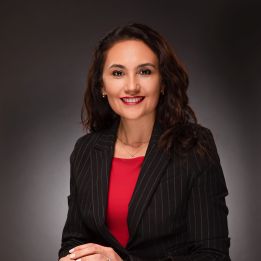

Regional counsel Latin America | Albemarle Corporation



Carla Araya
Regional counsel Latin America | Albemarle Corporation
What are the most significant cases, projects and/or transactions that you and/or your legal team have recently been involved in?
The past twelve months have been focused on supporting Albemarle’s long-term growth strategy while reinforcing our commitment to sustainability and stakeholder engagement.
One of our most significant priorities has been advancing the New Technologies Project in the Salar de Atacama, including its successful submission into Chile’s environmental assessment process. This has required close collaboration across technical, environmental, community relations, and business teams to navigate a complex regulatory framework while supporting our sustainability objectives.
At the same time, our legal team has played a key role in preparing for several strategically important collective bargaining processes, developing risk mitigation strategies, supporting business continuity, and helping balance operational competitiveness with constructive labor relations.
We have also continued strengthening relationships with local communities and other stakeholders through initiatives that promote transparency, dialogue, and shared value creation. Together, these efforts reflect the evolving role of the legal function, enabling responsible growth while navigating increasingly complex regulatory, social, and operational challenges.
How do you approach managing legal aspects during periods of instability or crisis to ensure the organisation’s resilience?
I believe resilience starts long before a crisis occurs. A key responsibility of in-house counsel is to identify risks early, understand their potential business impact, and help develop practical strategies that enable informed decision-making.
Our approach is based on proactive risk management, cross-functional collaboration, and scenario planning. Whether the challenge involves regulatory changes, labor relations, operational disruptions, environmental issues, or stakeholder concerns, the legal team works closely with business leaders to assess risks, define mitigation measures, and prepare contingency plans.
During periods of uncertainty, legal, operational, reputational, and community-related considerations must be evaluated together rather than in isolation. This is particularly important in mining, where business continuity depends on maintaining strong relationships with employees, communities, regulators, and other stakeholders.
Ultimately, legal teams must do more than manage risk. They must help the business navigate complexity with confidence, sound judgment, and a solutions-oriented mindset.
Have you had any experiences during your career as a lawyer that stand out as particularly unique or interesting?
One of the most rewarding aspects of my career has been contributing to projects at the intersection of innovation, sustainability, regulation, and social impact.
Working in the mining industry has allowed me to support initiatives ranging from new lithium extraction technologies and environmental permitting processes to stakeholder and community engagement efforts. These experiences have shown me how legal advice can play a critical role in the successful execution of projects that are essential to the global energy transition.
What makes this work particularly interesting is that success rarely depends on legal analysis alone. It requires understanding technical, environmental, operational, and social perspectives and helping multidisciplinary teams find practical solutions to complex challenges.
These experiences have strengthened my ability to adapt to rapidly changing environments, build consensus among diverse stakeholders, and support responsible growth while managing risk. They have also reinforced my belief that the most effective lawyers are those who become trusted business partners and contribute to achieving strategic objectives.
Head of Legal | Albemarle Corporation
Regional counsel, Latin America | Albemarle Corporation

Executive vice president, general counsel and corporate secretary
Albemarle Corporation
View Powerlist
Executive vice president, general counsel and corporate secretary
Albemarle Corporation
View Powerlist

Executive vice president, general counsel and corporate secretary
Albemarle Corporation
View Powerlist
Executive vice president, general counsel and corporate secretary
Albemarle Corporation
View Powerlist