
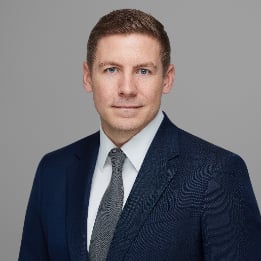
Deputy General Counsel (EMEA & APAC) | Ankura Consulting Group

Christian Fahey
Deputy General Counsel (EMEA & APAC) | Ankura Consulting Group
Team size: 16
What are the key projects you have been involved in over the past twelve months?
Ankura Consulting Group is a global consulting firm with over 2000 professionals across more than 35 locations and projects in over 115 countries specialising in various services, including strategic finance, global strategic advisory, cybersecurity and data privacy, digital forensics, risk and change management and dispute resolution.
Key projects include leading the legal aspects of concurrent multi-jurisdictional expansion projects.
Aerobility is a UK charity that changes lives by providing the disabled community access to the magic and wonder of flight using a fleet of specially modified aircraft while also providing education and advocacy on behalf of the disabled community.
Key projects include introducing a new strategic plan for the charity based around three pillars of flying, education and advocacy with each pillar supported by specific and measurable KPIs. I also led a project resulting in the charity being awarded the King’s Award for Voluntary Service (KAVS), which is equivalent to an MBE and the highest award given to voluntary groups in the UK.
The British Standards Institution (BSI) is the UK’s national standards body which develops and publishes technical standards across a wide range of products and services. While legislation and standards serve different purposes and have distinct characteristics, they both play important roles in regulating behaviour, ensuring safety, and promoting excellence.
Having assumed the role of Chair of a Technical Committee on service standards in 2025 for CEN (the European Committee for Standardization), over the last twelve months I have been involved in a number of projects resulting in securing approval from National Members for: the initiation of a new work item for a standard on Electronic contracts – Guidelines on accessibility, presentation and execution; the publication of a new standard on Concepts and guidance on servitisation and advanced services; and the publication of a new standard on Provision of services – Guidance for organisations that provide lists of prequalified, qualified or shortlisted service providers.
I am also involved in a new project setting up a working group to establish a new international standard on mediation.
Please provide a brief description of any internal transformation/development projects within your legal team over the last twelve months.
There have been three new hires to the legal team over the last twelve months.
What key trends should in-house counsel be monitoring over the coming months?
A key trend that every in-house counsel should be monitoring is the rapid convergence of artificial intelligence, data governance and regulatory oversight. As organisations embed AI into core business processes, legal teams are being asked to move beyond traditional compliance and become architects of governance frameworks that address transparency, accountability, intellectual property, cybersecurity and privacy risks. The legal function increasingly sits at the centre of enterprise AI strategy, helping businesses harness innovation while ensuring that appropriate controls, verification processes and risk management structures are in place.
At the same time, the role of the general counsel continues to evolve from legal adviser to strategic business partner. In-house teams are under pressure to support growth, manage increasingly complex global regulatory environments and deliver more with constrained resources. This places greater emphasis on legal operations, technology-enabled workflows, data-driven decision-making and enterprise risk management. Successful legal leaders will be those who can combine commercial awareness with legal judgment, using technology to improve efficiency while providing forward-looking advice that enables organisations to navigate uncertainty and seize strategic opportunities.
What are the most important attributes of the modern GC and what advice would you give to those aspiring to be an in-house lawyer?
The modern general counsel must combine legal excellence with commercial leadership. Today’s GC is expected not only to manage legal risk, but also to enable growth, influence strategy and help navigate an increasingly complex environment shaped by technological change, evolving regulation and heightened stakeholder expectations. The most effective GCs are commercially minded, pragmatic and trusted advisers who can distil complex legal issues into clear business decisions. They are equally comfortable discussing governance, culture, technology and risk as they are analysing legal questions, and they recognise that their role is to help the organisation achieve its objectives safely and responsibly rather than simply identify obstacles.
For those aspiring to an in-house career, my advice is to focus on developing commercial awareness and relationship-building skills alongside legal expertise. The best in-house lawyers invest time in understanding the business, its strategy, its clients and the challenges faced by colleagues across different functions. Curiosity, adaptability and a willingness to embrace new technologies are increasingly important, particularly as AI and digital tools reshape the delivery of legal services. Technical competence remains essential, but long-term success comes from earning trust, exercising sound judgment and becoming a problem solver who can provide practical, solutions-oriented advice that helps the business move forward with confidence.
Beyond your legal role, is there a cause or initiative you are especially passionate about?
Outside my professional responsibilities, I am particularly passionate about social inclusion and creating opportunities for people to achieve things they may once have thought impossible. This commitment is reflected in my role as Deputy Chair of the Board of Trustees at Aerobility, a charity dedicated to making aviation accessible to people with disabilities. What resonates with me most is the charity’s belief that disability should never limit aspiration. Every day, Aerobility helps people build confidence, develop new skills and challenge perceptions, both their own and those of society.
Serving on the Board has been one of the most rewarding experiences of my career. It provides an opportunity to apply my legal and governance expertise to a cause that delivers tangible, life-changing impact. Aerobility was awarded the King’s Award for Voluntary Service (KAVS) this year, which is equivalent to an MBE and the highest award given to voluntary groups in the UK, and was a fitting recognition of the extraordinary work carried out by its volunteers, staff and supporters. The award highlights not only the quality and scale of Aerobility’s contribution, but also the profound difference it makes to the lives of the people it serves.
I am particularly proud to support an organisation that combines practical accessibility with genuine empowerment, opening doors to experiences that would otherwise be out of reach and helping to break down barriers across society. The recognition provided by the King’s Award is a testament to the dedication of everyone involved and the lasting impact Aerobility continues to have on individuals, families and communities across the UK.
Deputy general counsel (EMEA & APAC) | Ankura Consulting Group
| Inmarsat
Team size: 14 Major legal advisers: Bird & Bird, Clifford Chance, Fieldfisher, Jones Day, Steptoe & Johnson The services sector makes up more than 70% of the EU’s gross domestic...