
General counsel, head of legal | KPMG Luxembourg


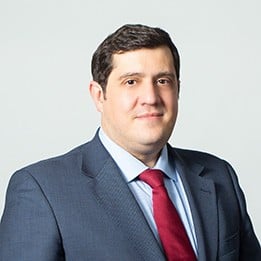
Sylvain Lesaffre
General counsel, head of legal | KPMG Luxembourg
Team size: 6
How do you manage situations where legal advice and commercial objectives conflict?
This is a recurring situation in a competitive environment where we must balance risk management with the need to secure services to clients.
My approach is to engage early with the business teams to understand the commercial context, while clearly setting out the legal constraints and associated risks. The objective is not to block transactions, but to identify pragmatic and proportionate solutions that are legally sound and commercially workable.
This often involves refining contractual positions or prioritising key risk areas rather than adopting a purely defensive approach. In negotiations, I place strong emphasis on clear reasoning and on bringing discussions back to fundamental legal principles, particularly within the framework of Luxembourg civil law, while seeking to avoid overly Anglo-Saxon provisions that can sometimes unnecessarily complicate agreements and detract from those core principles.
Where needed, I also support the teams in explaining and justifying our positions to clients, in order to reach balanced outcomes. Overall, the focus is on maintaining legal integrity while enabling the business to operate effectively in a competitive market.
What major challenges or risks should in-house legal teams be preparing for over the next twelve months?
We are facing increasing pressure to manage budgets while dealing with a growing volume of contracts and legal matters. This requires a constant focus on prioritisation and efficiency.
One of the key challenges lies in the rapidly increasing complexity of the regulatory landscape, particularly at the European level, with frameworks such as DORA and NIS2. Keeping pace with evolving requirements has become increasingly demanding.
Artificial intelligence (AI) is another major focus area. While it offers clear opportunities, its deployment raises significant legal risks, notably in relation to professional secrecy and data protection, as well as growing client expectations and constraints, which may ultimately slow down its adoption.
At the same time, legal departments are expected to do more with limited resources. This drives the need to streamline processes and make greater use of legal tech tools, particularly contract management.
Attracting and retaining talent also remains a key challenge, particularly when it comes to profiles that not only demonstrate strong legal expertise but also, increasingly, a sound understanding of new technologies, including AI, in order to adapt to evolving ways of working.
Have you had any particularly unique or defining experiences during your legal career?
Prior to becoming the general counsel of KPMG, I previously worked in several law firms in both Paris and Luxembourg, including independent firms and firms that are part of international networks. This provided me with a broad range of experience across different legal environments and ways of working. These experiences helped me develop strong technical skills, analytical thinking and a practical approach to legal issues. They continue to shape the way I address matters today, particularly in balancing legal rigour with business expectations.
General counsel, head of legal | KPMG Luxembourg