

Legal head, EU funds group | Franklin Templeton International Services S.à r.l.


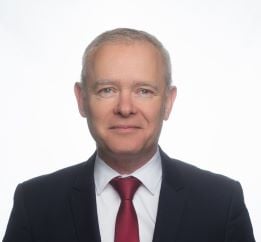
Grégory Surply
Legal head, EU funds group | Franklin Templeton International Services S.à r.l.
Team size: 23 people
Career Biography
Grégory Surply brings over twenty-five years of experience to his role as associate general counsel, where he heads the European Legal Funds Group at Franklin Templeton.
As a member of the Executive Committee of Franklin Templeton, Mr. Surply leads the strategic legal operations and regulatory agenda for the Luxembourg-based Management Company, overseeing over 230 Luxembourg and Irish-based regulated and unregulated investment funds (UCITS and AIFs) and their cross-border distribution in 52 countries. His remit also includes managing ten EU branches under a Super ManCo structure with a MiFID top-up license.
Mr. Surply spearheaded the launch of Europe’s first fully native tokenised UCITS Money Market Fund, setting a new industry benchmark and marking a transformative milestone in the digitalisation of asset management.
Since 2007, Mr. Surply has been an engaged member of the Luxembourg Fund Association, now serving on the ALFI Regulation Advisory Board, and active member of the European Fund and Asset Management Association (EFAMA).
Before joining Franklin Templeton, he was part of the M&A division at Linklaters Luxembourg. Mr. Surply began his career in 1999 in Shanghai, where he advised on tax and corporate matters, facilitating direct foreign investments in China.
What are the key projects you have been involved in over the past twelve months?
Over the past year, I have played a leading legal and regulatory role in the development and international expansion of Franklin Templeton’s blockchain-enabled fund platform, following the launch of one of the first European funds natively issued on blockchain technology. My responsibilities covered all Luxembourg legal, contractual and regulatory aspects of the project, as well as the coordination of cross-border registrations in jurisdictions such as Hong Kong and Singapore. The project required balancing innovation with regulatory compliance and has helped establish a scalable framework for future tokenisation initiatives while reinforcing Franklin Templeton’s position as a pioneer in digital asset innovation.
Can you describe an instance where your legal advice directly influenced business strategy or commercial objectives?
A good example is the establishment of regulated entities in Luxembourg. Given the importance of substance, governance and regulatory expectations, legal considerations are often fundamental to the business model itself. By advising on the appropriate operating model, governance structure, staffing and delegation framework, I helped shape strategic decisions at an early stage and ensure that commercial objectives could be achieved within a robust and sustainable regulatory framework.
How has the role of general counsel evolved, and what are the most important attributes for the modern in-house lawyer?
The general counsel has evolved from a legal specialist into a strategic adviser to the business. Beyond technical legal expertise, the modern in-house lawyer must combine commercial judgment, adaptability and strong communication skills. The rise of AI is also transforming the profession, making technological literacy and the ability to use AI responsibly increasingly important attributes for successful legal teams.
How do you navigate situations where legal advice and commercial objectives conflict?
With integrity and pragmatism. Our role is to identify the most appropriate and compliant path forward while taking the time to understand the underlying business objectives. Often, through dialogue and careful analysis, there are alternative approaches or nuances that allow commercial objectives to be achieved within an acceptable legal and regulatory framework.
Business risk is inherent in any commercial activity. Where a tension remains, our role is to clearly assess, articulate and escalate the legal and regulatory risks associated with the proposed course of action, so that business leaders can make informed decisions with full transparency as to the risks involved. Ultimately, Legal should be a partner to the business — not a roadblock — while maintaining its independence and commitment to integrity and compliance.
How have you implemented AI within your legal team to improve efficiency while maintaining quality and governance – and keeping the human element?
Yes – the human element is imperative and essential, cannot be skipped.
Organisations are facing increasing regulation across jurisdictions. How do you embed compliance across the business?
This is fundamentally the ‘raison d’être’ of our function. We are active at the various stages of the regulatory journey from advocacy to strategic internal analysis and implementation. We embed compliance through a strong culture of accountability, clear governance, and close collaboration between Compliance, Legal, Risk and business teams. Regulatory requirements are integrated into product development, operational processes and decision-making, supported by ongoing training, monitoring and regular review to ensure consistent implementation across jurisdictions.
How do you promote ethical decision-making beyond formal compliance requirements?
We seek to foster a culture where employees are encouraged to exercise sound judgment, speak up when concerns arise, and consider what is right, not simply what is permitted.
Beyond your legal role, is there a cause or initiative you are especially passionate about?
Yes, Chinese medicine.
Associate general counsel | Franklin Templeton International Services
Head of legal funds group - executive committee
Franklin Templeton International Services
View Powerlist
Head of legal funds group - executive committee
Franklin Templeton International Services
View Powerlist