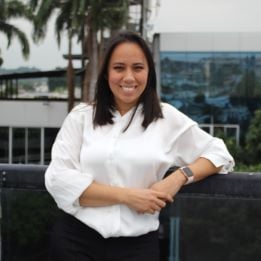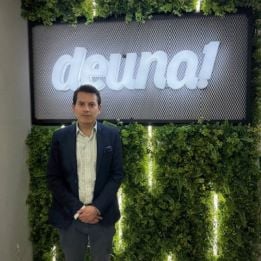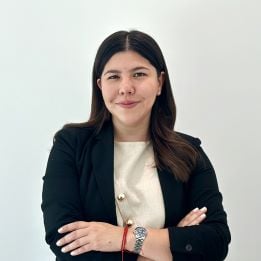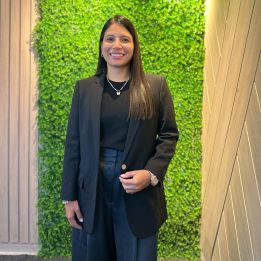
Legal manager Colombia and Ecuador | Patterson-UTI InternationalÂ
Compliance and data protection officer | Telefónica Ecuador

Chief legal officer | QSI Ecuador
General counsel Ecuador | Huawei Technologies Ecuador

Legal manager - Ecuador | SBA Communications Corporation Ecuador

Senior counsel | Phoenix Tower International Ecuador (PTIE)

Vice president of legal and corporate affairs | Reybanpac

Legal counsel and regulatory affairs  | Corporación El Rosado

Legal and compliance and corporate affairs director | Holcim

General counsel and president of the compliance unit | Grupo Santillana
Vice-president of legal, corporate affairs and sustainability | Nestlé Ecuador

Submanager of compliance, AML/AFC and data protection | Generali Ecuador CompañÃa de Seguros
Chief legal and corporate relations officer | Quala
Chief legal officer | Trust Fiduciaria Administradora de Fondos y Fideicomisos
Director | Cámara de Industrias de Guayaquil

General counsel, Venezuela and Ecuador | Unilever Andina Ecuador

Legal and compliance manager | Duragas Abastible
Executive director | Fundación de Apoyo al Desarrollo Sustentable del Ecuador (FADSE)

Senior legal manager and compliance officer | Corporación Quiport

Legal, corporate affairs and compliance manager | UNACEM Ecuador
Legal, compliance and public relations manager | UNACEM Ecuador
Legal and compliance manager, Ecuador, Puerto Rico, Dominican Republic, Aruba and Curazon | Linde
Legal and compliance director | Empresa Pública Metropolitana de Seguridad y LogÃstica
Congratulations to everyone featured in our first standalone GC Powerlist Ecuador since 2023 – a return that is long overdue. Alongside Dentons Paz Horowitz, we are excited to once again shine a spotlight on the exceptional in-house legal talent in Ecuador, one of the most dynamic markets in the whole of Latin America, through this dedicated publication.
A sincere thank you to everyone who took the time to speak with us for this project. These conversations are what bring the Powerlist to life, allowing us to share insights from leading general counsel with a global audience and contribute to the broader development of the in-house legal community.
Through the GC Powerlist initiative, we aim to foster connections between general counsel, enabling them to exchange knowledge, learn from one another, and support each other’s professional growth – something we know is vital in today’s evolving legal landscape.

The recent news that elite US firm Sullivan & Cromwell had apologised to a judge over AI hallucinations in a court filing prompted a collective wince from the legal profession.
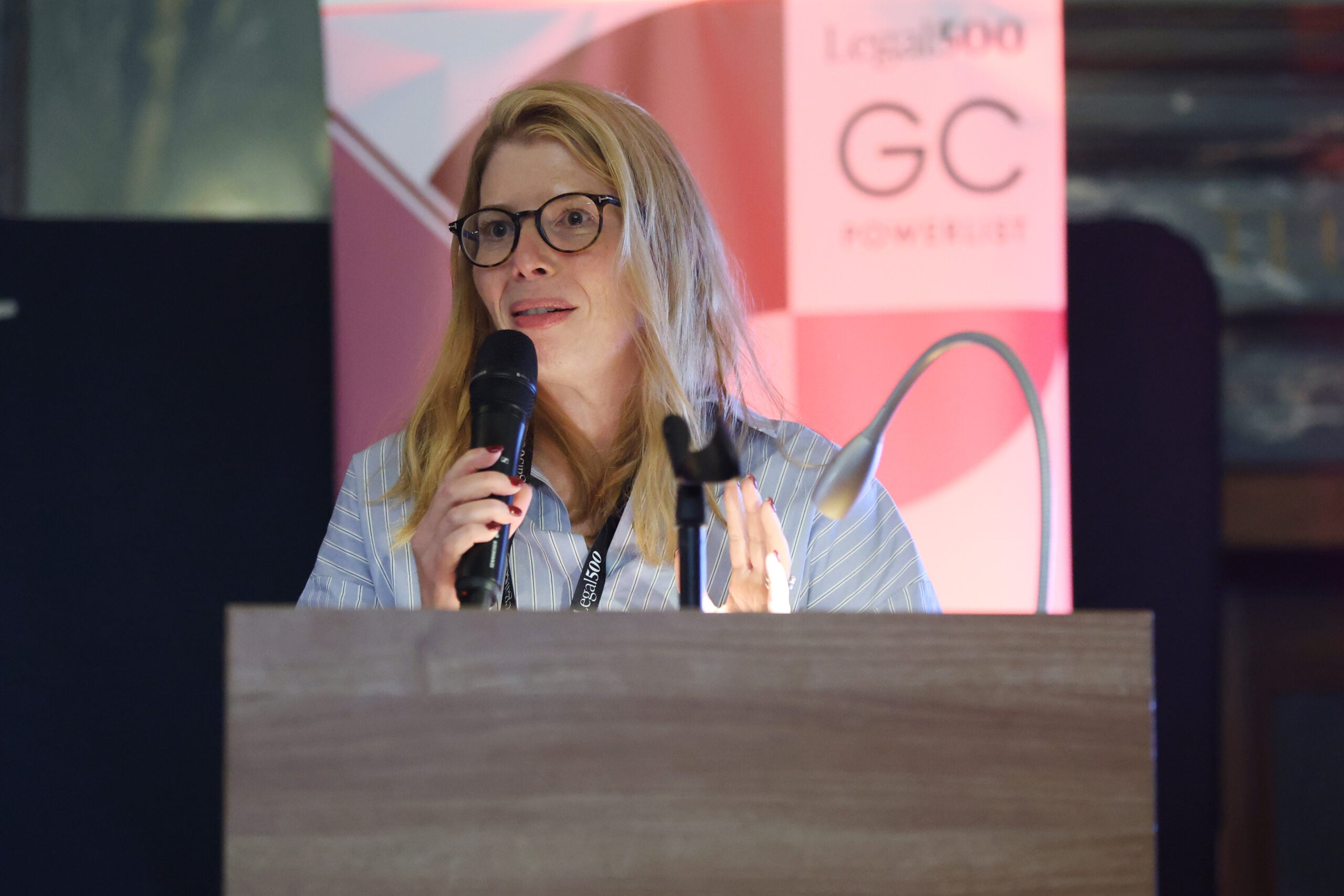
But while some lawyers remain wary of AI, others are striking a more open-minded note, and at the LexisNexis AI Forum hosted this Wednesday (20 May) by Legal 500 and Legal Business, panelists argued that the risks are far outweighed by the opportunities.
Barbara Zapisetskaya, principal technology counsel at the European Bank for Reconstruction and Development, made the case that hallucinations and other potential pitfalls can be overcome with a shift in mindset.
‘What makes a difference,’ she said, ‘is empowering your lawyers to take responsibility for AI output – helping them become active AI operators, not just passive AI users. You have agency to decide whether you agree with the output or not.’
Zapisetskaya was among a line-up of leading in-house figures speaking on two panels, which covered everything from practical steps for AI implementation to the key decisions GCs need to be making in the coming months.
Financial Times general counsel Dan Guilford began by stressing the importance of building the right culture for AI adoption. In addition to proactively upskilling himself, Guilford talked about how he had implemented a voluntary weekly ‘show and tell’ meeting for team members to share successful use cases – or an exercise that became a gratifying measure of progress.
Other panelists discussed how increased in-house productivity is altering the dynamic with their external counsel.
While some see the use of AI by law firms as a precursor for reduced fees, Russell Davies, head of global operations for legal and compliance at Dentsu, said that faster results – however they are delivered – are something to be valued.
GSK assistant general counsel Anthony Kenny agreed, saying that while there was an expectation that external counsel would be utilising AI, the focus should be on the value of the output, rather than an overemphasis on identifying AI use as a justification to reduce fees.
Speaking on the second panel, MUFG EMEA general counsel James Morgan stressed the critical importance of education, noting that educating the C-suite on the advantages and risks of AI is just as important as enabling large in-house teams to use these tools.
Shanthini Satyendra, vice-chair of the AI Committee, Society for Computers & Law, CEO and founder of Manisain, offered a reminder of the importance of making the connection between tasks and the purpose behind them, extolling the virtues of identifying use cases for AI that can solve a meaningful problem.
Zapisetskaya concurred, adding that one of the most important tasks for GCs across the next six to twelve months is to create AI playbooks and templates, noting that ‘it is easy for lawyers to see problems – much harder for lawyers to see opportunities.’
There was also broad agreement among panellists that GCs should focus on upskilling their junior lawyers on AI, rather than – as some may expect – cutting back their workforce. As Satyendra summarised: ‘Some people are replacing human capital with AI without thinking about what’s required to make AI work. Retain your people and train them up.’
The panels were moderated by Emma Millington, head of the UK Lexis+ Finance Group, and LexisNexis director of segment management Stuart Greenhill.