General counsel, Africa | Unilever

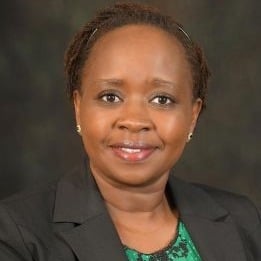
Alison Kariuki-Mbuthia
General counsel, Africa | Unilever
Team size: Twelve
Jurisdictions your role covers: East & West Africa (9 countries)
Career Biography
Alison is a Kenyan-qualified lawyer admitted to the Kenyan Bar and serves as General Counsel for Unilever East & West Africa. She provides strategic legal leadership across a diverse regional portfolio spanning Nigeria, Ghana, Côte d’Ivoire, Kenya, Uganda, Tanzania, Djibouti, Ethiopia, and Rwanda.
She brings broad leadership and professional experience gained across private practice and senior legal roles in the FMCG sector, including at Diageo Kenya and British American Tobacco. Her expertise spans strategic business management, regulatory affairs, advocacy and legislative drafting, commercial law, corporate governance, company secretarial practice, data protection, commercial litigation, pension schemes, business integrity, and compliance.
Alison holds a Master’s degree in International Relations from Staffordshire University, UK, and a Bachelor of Laws degree (LL.B.) from the University of Nairobi. She also completed the Women Leaders Programme at INSEAD, is a Certified Governance Auditor, and is a Certified Public Secretary through the Institute of Certified Secretaries of Kenya.
She is committed to advancing the legal profession and developing future-ready legal talent, with a focus on empowering others to unlock their potential and deliver impact beyond perceived limitations. Outside work, she enjoys spending time with her family, volunteering, travelling, motorsports, and cooking.
Q&A
What are the most significant cases or transactions that your legal team has recently been involved in?
The team has supported a range of significant regional matters, including divestitures, new market set-ups, business redesign projects, and day-to-day legal advisory work. We take a proactive approach to helping the business understand operational risks, providing targeted training and practical guidance where needed. This helps minimise litigation and related costs, while freeing up the team to provide more strategic support for business growth.
The organisation also creates opportunities for lawyers to participate in diverse business workstreams, enabling them to build broader commercial skills and become well-rounded legal advisers.
What strategies has your legal team adopted to mitigate legal and regulatory risks in a rapidly evolving business and political environment?
We ensure that we are in business teams and understand the organisational requirements; create a risk matrix and build a compliance tracker tailored to the business scope. This supports focused discussions with relevant business teams on key risk areas and appropriate mitigation measures. We also work closely with external counsels, who provide value-added regulatory landscape insights.
In addition, the legal team participates in industry forums across our markets, giving us opportunities to contribute to legislative discussions and, where possible, help shape balanced regulation. There is collaboration with other lawyers in the markets to understand the evolving business environment and anticipate any headwinds or indeed develop compliance ahead of the legislations such as in the implementation of compliance on Data Protection & Privacy laws ahead of the legislation in East Africa markets.
How is the role of the General Counsel evolving in East Africa as organisations place greater emphasis on governance, transparency and ESG considerations?
The role of the General Counsel varies depending on the industry, the size of the organisation and the regulatory environment in which it operates. Increasingly, the GC must move beyond the perception of being involved only when issues arise, or only in relation to litigation and contracts. To be effective, the GC must be fully embedded in the business, with a strong understanding of operations and strategy, to provide practical legal advice as well as broader commercial guidance.
Embracing technology especially in contracts as well as developing templates and upskilling IT skills has helped ease workloads and provide time for more strategic engagement with the business.
Governance, transparency, and ESG considerations are now central to ethical business for organisations. The GC plays a key role in designing a fit-for-purpose compliance programme, ensuring the organisation understands its obligations, relevant requirements, and escalation channels. Because the role is delivered through stakeholders, building and maintaining strong working relationships is essential; the GC cannot operate from a distance or engage only when there is a crisis.
This requires the GC to map the organisation’s licensing obligations, identify key risks, stay informed of legal and regulatory developments across all operating markets, and ensure effective monitoring of the compliance framework. As regulation increases, the GC must also develop advocacy and corporate management skills in addition to traditional legal expertise. The role is therefore multifaceted and sits at the heart of the business, supporting decision-making from the outset while managing significant organisational risks. Evolving legislation and compliance requirements also create an opportunity for the GC to become a more rounded corporate adviser who adds value while helping maintain the organisation’s ethical standards.

General counsel, beauty and wellbeing LATAM, head of legal and data privacy leader, LATAM
Unilever
View Powerlist


General counsel, beauty and wellbeing LATAM, head of legal and data privacy leader, LATAM
Unilever
View Powerlist