
Legal manager, CCA and legal lead for Latin America distribution business unit | Cummins Inc.

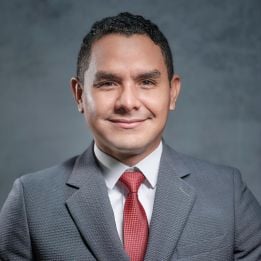
Raúl Quejada Bello
Legal manager, CCA and legal lead for Latin America distribution business unit | Cummins Inc.
What are the key projects you have been involved in over the past twelve months?
Multinational organisations build local functions as operations mature. Our direct presence across Colombia, Central America and the Caribbean is not decades old. For years, the legal function was managed remotely from more established markets; a reasonable decision when the priority was operational sustainability before adding fixed costs. By the time a dedicated local role was justified, what we found was an accumulation of long-standing gaps invisible to remote predecessors: no contract lifecycle management, no outside counsel program, no litigation tracker, no spend dashboards. It had to be built while running.
Over the past twelve months, that build matured into an operating system. Convergence, our outside counsel program, entered its third cycle: nine jurisdictions, engagement letters renegotiated for 2026–2028, fee structures built on metrics that determine when a retainer beats hourly billing, firm selection beyond cost (operational integration and values alignment). In parallel, I led a four-phase overhaul of sales commission structures across four countries, coordinating HR, business, and legal on no-detriment clauses, transition periods, and documentation standards.
The operational work ran alongside high-stakes matters. I coordinated defense of a dual-proceeding dispute with a former distributor, approximately $24m in combined exposure across international arbitration and local litigation. We obtained a nullity ruling that opened a statute of limitations defense and resolved an internal deadlock over cost allocation across three business units. Simultaneously, I designed the architecture to harmonise local distribution agreements across multiple countries with a global master services agreement for a strategic partner, protecting approximately $10m in annual revenue. When a sister business unit needed our channel to sell components in the region for the first time, I built the intercompany template for three countries.
None of these ran sequentially. They all ran at once.
Can you describe an instance where your legal advice directly influenced business strategy or commercial objectives?
One of the most consequential strategic decisions in the region this year started with a legal study. Our operations in one Central American country ran from a facility that had been in use for years. Health and safety had assessed the site and could have approved continuity. Legal could not.
A regulatory review I conducted against local fire safety and occupational standards revealed structural gaps that no operational adjustment could cure within the existing footprint. The conclusion was binary: bring the facility into compliance or cease operations. Neither option was commercially attractive.
Legal determined the finding. The business found the solution. The commercial team, evaluating alternatives, identified a modern industrial park that offered improved infrastructure, operational efficiencies and a financial profile that outperformed the cost of retrofitting the old site over a reasonable horizon. The move also yielded annual fiscal savings through a lower municipal tax rate in the new jurisdiction.
The legal function did not choose where to relocate. But without the legal assessment, the business would have continued operating in a facility that exposed the company to regulatory action and liability.
How has the role of general counsel evolved, and what are the most important attributes for the modern in-house lawyer?
The environment around the role has changed more than the role was initially designed to handle. Technology regulation, environmental agendas, anti-money laundering: risk surfaces keep expanding. No team covers all of it. Something will get through. The discipline is making sure it is not catastrophic.
That pressure forced the role to evolve, from answering legal questions to designing infrastructure that absorbs complexity before it reaches your desk and managing the resources to sustain it. It means choosing what not to do and holding that line when internal clients push their priorities over what keeps the organisation safe. You will frustrate people. That is a management problem, not a legal one.
Beyond your legal role, is there a cause or initiative you are especially passionate about?
Our company supports over 150 employee resource groups worldwide. The Multicultural ERG in my region had been dormant since its previous leader left. I took it as Leader on and narrowed the focus: racial equity, not generic cultural programming. Actionable, measurable and verifiable.
We chose San Basilio de Palenque, a community in northern Colombia founded by formerly enslaved Africans and recognised by UNESCO as Intangible Cultural Heritage. The goal: helping young graduates access public higher education through regular admissions and seats reserved for Afro-Colombian communities. We partnered with the Universidad de Cartagena, delivered books and supplies, and brought in the university’s Director of Admissions. The work continues.