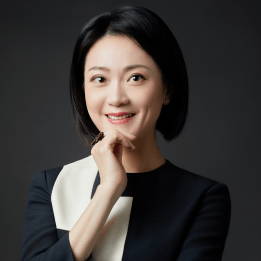
Head of legal and compliance, Greater China and Korea | Cordis

Judy Qiuting Cao
Head of legal and compliance, Greater China and Korea | Cordis
Team size: Four
What are the most significant cases, projects and/or transactions that you and/or your legal team have recently been involved in?
My team has been providing support to accelerate the market access of several innovative products in jurisdictions such as Japan, Korea, and Taiwan. This includes evaluating the legal risks associated with the contemplated new launches and taking the necessary actions to mitigate those risks. One of these innovative products is SELUTION SLR™ DEB, an in-house product of Cordis. According to available data, it has demonstrated consistent evidence of effectiveness, from pre-clinical studies showing sustained sirolimus levels in tissue over 90 days, to proof-of-concept clinical evaluations demonstrating favourable late lumen loss measurements. Recently, we obtained product approval from the local medical authority in Japan.
How do you approach managing legal aspects during periods of instability or crisis to ensure the organisation’s resilience?
An effective approach rests on three key pillars. First, adhering to the facts, which are non-negotiable and form the essential groundwork on which everything else depends. Second, actively pursuing and constantly seeking new and improved solutions. Finally, achieving this requires proactively engaging in close cross-functional collaboration, leveraging diverse perspectives and expertise from across the organisation to drive results. At times, discussions spark reflection and prompt self-adjustment, equipping each department to tackle future or potential challenges.
What factors influence your team’s decision to use external legal services versus handling matters in-house, and what criteria are used to evaluate their performance?
Normally, when selecting external legal counsel, our evaluation extends beyond basic legal competency. We prioritise partners who can deliver strategic value and act as a true extension of our in-house team. Our key selection criteria include the provision of value-added services, specialised expertise and niche knowledge, the experience and tenure of the partner, a relevant project portfolio with demonstrated success, and the acuity to anticipate and respond to external environmental shifts.
Looking forward, what trends do you foresee in the legal landscape over the next 5–10 years that companies should prepare for?
The medical devices sector will remain a highly regulated industry, and the setting up of mature internal compliance has been and will continue to be required on a compulsory basis. Hence, companies shall stay adapted to the external environment and shape the regulatory environment in a timely manner.
In addition, AI has been used and incorporated in many business operation processes. On one hand, it does release human resources under certain circumstances, and on the other hand, it needs improvement to ensure accuracy, completeness, and compliance. Companies may need to establish and/or improve their internal mechanisms to regularly evaluate the functions and gaps of AI tools, and stay aware of regulatory changes.
Head of legal and compliance, Greater China and Korea | Cordis