
General counsel and corporate secretary | Versamet Royalties

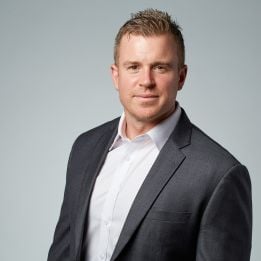
Craig Rollins
General counsel and corporate secretary | Versamet Royalties
What are the most significant matters, transactions, or legal initiatives you and your team have been involved in over the past 12–18 months?
The past 12–18 months have been transformational for Versamet Royalties Corporation. During that period, Versamet completed its direct listing on the TSX Venture Exchange, graduated to the Toronto Stock Exchange, listed on Nasdaq, completed significant equity and debt financings, expanded its institutional shareholder base and welcomed Tether Investments and the Lundin family as cornerstone shareholders. In a relatively short period, the company has grown to an approximately US$1 bn. market capitalization.
The transaction activity has been particularly significant. Ahead of our public listing, Versamet completed the US$35 million acquisition of the Kolpa copper stream. In September 2025, we completed the US$125 m. acquisition of a 90% silver stream on the Rosh Pinah Zinc mine in Namibia and a 2.75% NSR royalty on the Santa Rita nickel mine in Brazil. In April 2026, Versamet completed its largest transaction to date: the US$360 m. acquisition of a 3.52% life-of-mine gold stream on the Eskay Creek project in British Columbia.
What I am most proud of is the platform on which this has been accomplished. Versamet has only eight employees in total and a two-person legal team. The legal function is therefore deeply integrated into virtually every major transaction, financing, securities law, governance, disclosure and capital-markets workstream. At the same time, we have had to build and continuously enhance the governance, disclosure and compliance infrastructure expected of a company listed on both the TSX and Nasdaq.
I have been involved with Versamet since its inception in 2022, so I have had the opportunity to help build the legal, governance and public-company framework alongside the business itself as it has evolved from a newly formed private company into a TSX- and Nasdaq-listed issuer. For me, the defining feature of the period has been helping a very lean organisation execute complex, cross-border transactions and capital-markets initiatives at a pace normally associated with much larger companies, while maintaining the legal and governance discipline required of a rapidly scaling public company.
How do you determine the balance between internal legal capability and external counsel support, and what do you value most in external legal advisors in the Canadian market?
With only two people in the legal function, the objective is not to replicate a large internal legal department. It is to keep strategic judgment, commercial understanding and institutional knowledge in-house, while using external counsel selectively where their expertise or execution capacity adds real value.
I try to remain closely involved in the legal and commercial architecture of every significant matter. That includes transaction structuring, negotiating key risk allocations, securities and stock exchange matters, financing strategy, governance and disclosure. External advisers are then used for specialist expertise, jurisdiction-specific advice and execution support where appropriate.
The external counsel I value most is technically excellent but also practical, responsive, and commercially minded. In a fast-moving public company environment – particularly across mining, capital markets and cross-border transactions – the best advisers understand the broader commercial objective and can distinguish between issues that are genuinely important and those that are not. Accurate legal advice is essential, but the most valuable advice is also clear, proportionate, and capable of being used in real time by management and the board.
How does your legal team contribute to broader business strategy within your organisation, and can you share an example where legal input materially influenced a key decision or outcome?
Versamet’s legal function is not a back-end support function; it is part of the core business team. As general counsel and corporate secretary, I work closely with the CEO, CFO, corporate development and technical teams, the board and our external advisers on transaction structuring, securities law, stock exchange matters, governance, disclosure, financing strategy and risk allocation.
That integration is particularly important in the royalty and streaming sector because legal structuring can directly affect the economics and long-term value of an investment. A stream or royalty may remain in place for decades, so matters such as security, transferability, enforcement rights, reporting obligations, change-of-control provisions and the precise definition of the underlying economic interest can have consequences far beyond the closing of a transaction.
Accordingly, legal input often shapes not simply whether Versamet can complete a transaction, but how the investment should be structured to protect downside, preserve flexibility and capture future upside. The same applies at the corporate level: as Versamet has progressed from a private company to the TSXV, TSX and Nasdaq while executing increasingly significant transactions, the legal function has been closely involved in determining how the company structures and sequences transactions, financings, disclosure and governance as part of the broader growth strategy.
General Counsel and Corporate Secretary | Versamet Royalties