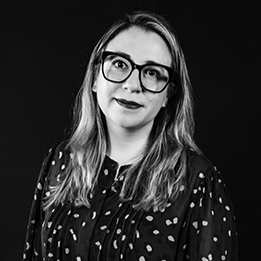

Global Intellectual Property Counsel | América Móvil


Fernanda Díaz Aquino
Global Intellectual Property Counsel | América Móvil
What piece of work or project over the past year are you most proud of, and why was it particularly significant for the business?
One of the things I am most proud of over the past year has been strengthening the way intellectual property is understood and managed within the business. Rather than treating IP as something that only becomes relevant when a trademark needs to be registered or a legal issue arises, I have worked to position it as a strategic business asset that should be considered from the earliest stages of a project.
This has involved working closely with different business areas on matters ranging from trademarks, copyright and content to advertising, technology and emerging issues around artificial intelligence. What makes this particularly meaningful to me is seeing the legal function move from being consulted at the end of a process to becoming a trusted partner in developing ideas from the beginning.
For a company operating at the scale and pace of América Móvil, that shift is particularly significant: good IP management is not simply about protecting rights; it is about enabling the business to innovate, communicate and grow with greater certainty.
What skills or experiences have been most important in your development as an in-house lawyer so far?
Learning to understand the business has probably been the most important part of my development as an in-house lawyer. Technical legal knowledge is essential, but being in-house teaches you very quickly that knowing the law is only the starting point. You need to understand why the business wants to do something, what it is trying to achieve, how quickly it needs to move and which risks actually matter.
Over time, I have learned to translate complex intellectual property issues into practical recommendations and, whenever possible, solutions. I believe a good in-house lawyer should not simply explain why something cannot be done; our role is to help determine how it can be done responsibly.
Working in intellectual property has made this especially interesting because I constantly interact with creative, commercial and technology teams. It requires curiosity, flexibility and the ability to speak several “languages” beyond the strictly legal one.
Have you been involved in any initiatives to improve legal processes, introduce new ways of working or make the legal function more efficient?
Yes. One area I have been particularly interested in is how technology, including artificial intelligence, can make legal work more efficient without compromising legal judgement.
I have worked on developing clearer internal guidelines, playbooks and more standardised approaches to recurring IP matters so that legal analysis can be more consistent and efficient. I am also very interested in identifying where AI can support legal teams — for example, in initial contract review, research, issue spotting and knowledge management — while maintaining appropriate safeguards around confidentiality, intellectual property and human oversight.
For me, innovation in a legal department is not about using technology for the sake of using technology. It is about removing repetitive work where possible so lawyers can dedicate more time to the matters where our judgement, experience and understanding of the business genuinely add value.
Who or what has most influenced your professional development, and how do you continue to build your skills and knowledge?
My professional development has been influenced by a combination of mentors, colleagues and, perhaps most importantly, curiosity. Intellectual property is an area that never really allows you to stop learning. Technology changes, business models evolve, new forms of content appear and the legal questions change with them. Artificial intelligence is probably the clearest current example of this.
I try to remain actively involved in the IP community, both in Mexico and internationally, and I value enormously the opportunity to exchange experiences with other in-house professionals. My involvement with AMPPI has been particularly important in this respect. Being part of conversations with lawyers who face similar challenges in very different industries constantly gives me new perspectives on my own work.
I also make a conscious effort to keep learning outside traditional legal sources. Understanding technology, media, entertainment and business trends is increasingly important for an IP lawyer because many of tomorrow’s legal questions are already being created in those spaces today.
What excites you most about the future of the in-house legal profession, and where do you hope to continue developing your career?
What excites me most is that the role of the in-house lawyer is becoming increasingly strategic. Technology and artificial intelligence will undoubtedly transform some of the work lawyers traditionally perform, but I believe they will also make the skills that cannot easily be automated even more valuable: judgement, creativity, communication, understanding the business and the ability to navigate uncertainty.
For intellectual property lawyers, I think the coming years will be particularly fascinating. AI, digital content, new technologies and increasingly global business models are challenging concepts that we have worked with for decades and forcing us to reconsider how rights are created, protected, licensed and commercialised.
I would like to continue developing my career at the intersection of intellectual property, technology and business, with an increasingly global perspective. Ultimately, my goal is to continue evolving from being a specialist who protects intellectual property into a strategic counsel who helps the business understand how IP can create value. That is, to me, one of the most exciting opportunities for the next generation of in-house lawyers.
Global IP counsel | América Móvil