

Vice president of legal and governmental affairs | AES Dominicana, ADRE, ITABO

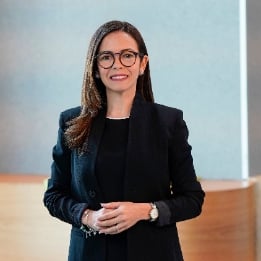
Giselle Marie Leger Lora
Vice president of legal and governmental affairs | AES Dominicana, ADRE, ITABO
What are the most significant cases, projects or transactions that you and your legal team have recently been involved in?
Over the past year, the legal team has advised on a range of significant, high-impact matters across multiple areas of the business, including M&A transactions, new energy projects, regulatory matters and strategic corporate initiatives. While certain matters remain confidential due to ongoing proceedings or non-disclosure obligations, they demonstrate the breadth and complexity of the legal function’s work and its role in supporting the company’s strategic objectives.
How do you approach managing legal matters during periods of instability or crisis to ensure the organisation’s resilience?
During periods of instability or crisis, the legal team takes a proactive and disciplined approach that is closely aligned with the business. We focus on mitigating legal and regulatory risks while supporting operational continuity and sound decision-making.
The legal function contributes to organisational resilience by advising on crisis preparedness, governance structures, escalation protocols, stakeholder engagement and communications with regulators and other key counterparts.
Particular areas of focus include regulatory enforcement, where the evolving landscape requires robust compliance frameworks, early risk identification and coordinated internal controls; cybersecurity, which has become a central legal and business priority, particularly in relation to incident response, contractual allocation of risk and regulatory reporting obligations; and contractual agility, ensuring that our contractual frameworks are capable of responding to market volatility, supply chain disruption and evolving regulatory requirements.
We are currently living through a period of geopolitical change, and the world order that we have taken for granted for many years is being rewritten. Does this affect your company’s risk profile and, if so, what are you doing to mitigate this?
Yes. Geopolitical change has materially affected the risk profile of companies operating in strategic sectors such as energy. The current environment has increased exposure to regulatory uncertainty, supply chain disruption, sanctions and trade restrictions, foreign investment scrutiny, currency and commodity volatility, and heightened expectations around energy security and sustainability.
For AES Dominicana, these risks are particularly relevant given the critical nature of the energy sector and the importance of ensuring a reliable, resilient and sustainable power supply. Our approach therefore focuses on anticipating risk rather than reacting to it. We work closely with the business to monitor geopolitical and regulatory developments, assess their potential impact on operations and projects, and ensure that contractual, compliance and governance frameworks remain robust and adaptable.
From a legal perspective, mitigation involves strengthening due diligence processes, reviewing contractual protections, enhancing compliance controls, supporting scenario planning and maintaining constructive engagement with regulators and key stakeholders. We also place significant emphasis on resilience, ensuring that legal advice contributes to operational continuity, responsible investment decisions and the company’s broader energy transition strategy.
Ultimately, geopolitical uncertainty reinforces the importance of the in-house legal function as a strategic partner to the business. Our role is not only to manage legal exposure, but also to help the company make informed, disciplined and sustainable decisions in an increasingly complex global environment.
Based on your experiences over the past year, are there any trends in the legal or business world that you are keeping an eye on that you think other in-house lawyers should be mindful of?
Based on my experience over the past year, several trends stand out as particularly important for in-house lawyers to monitor closely. First, regulatory complexity continues to increase, particularly in sectors such as energy, infrastructure and sustainability. Legal teams must remain alert to changes in enforcement priorities, permitting requirements, market regulation and broader public policy developments that may affect business operations and investment decisions.
Second, ESG regulation and sustainability-related scrutiny are becoming increasingly demanding. Companies are expected not only to make responsible commitments, but also to demonstrate that those commitments are supported by credible governance, accurate disclosures and measurable action. This creates an important role for in-house counsel in helping the business manage greenwashing risk, align sustainability strategy with legal obligations and embed ESG considerations into decision-making.
Third, technology, AI and data governance are transforming the way organisations operate. In-house lawyers should be mindful of the opportunities these tools create, as well as the risks relating to privacy, cybersecurity, accountability, intellectual property and ethical use. Legal teams will increasingly be expected to guide responsible adoption while helping the business innovate with appropriate safeguards.
Finally, geopolitical uncertainty, supply chain disruption and market volatility are reinforcing the need for contractual resilience and agile risk management. In-house counsel should ensure that contracts, compliance frameworks and governance processes are sufficiently robust to respond to changing conditions. Overall, the modern in-house lawyer must be both a legal adviser and a strategic business partner, capable of helping the organisation navigate uncertainty while supporting sustainable growth.
Vice president of legal and governmental affairs | AES Dominicana
Vice president, legal and governmental affairs | AES Dominicana
General counsel | AES Dominicana





Vice president, legal and governmental affairs
AES Dominicana
View Powerlist

Vice president of legal and governmental affairs
AES Dominicana
View Powerlist