General counsel | iGravity

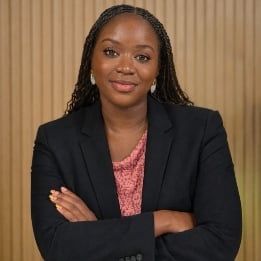
Priscilla Busulwa
General counsel | iGravity
Team size: Three
Jurisdictions covered: Uganda, Kenya, Tanzania
Q&A
What are the most significant cases or transactions that your legal team has recently been involved in?
It is difficult to single out one transaction because the significance of our work is often measured not only by deal size, but also by the impact created. Two recent transactions stand out. The first is the structuring and execution of iGravity’s first investment under its management of the SECO Start-up Fund: a US$300,000 loan to SmartSolar, a Vietnamese rooftop solar provider. Working with external counsel in Singapore and Vietnam, we developed a cross-border structure that supported the company’s growth while establishing a track record that can help unlock larger pools of institutional and development-finance capital. The second is the Refugee Investment Facility’s first investment in Kenya, backing LIFTA Kenya Limited, a business providing affordable bottled water and plastic recycling services in Kakuma. The transaction combined commercial viability with refugee inclusion, circular-economy solutions and job creation in one of East Africa’s largest refugee-hosting areas.
How do you navigate the legal complexities of cross-border transactions within the East African Community (EAC) and beyond?
One of the biggest lessons I have learned is that cross-border transactions require both technical expertise and humility. Similar commercial objectives can give rise to very different regulatory requirements, security structures, foreign-exchange considerations and enforcement realities. The SmartSolar transaction illustrated this clearly – structuring a loan across Singapore and Vietnam with a Swiss lender meant navigating distinct legal systems simultaneously while keeping the commercial outcome firmly in view. My approach is to establish a clear transaction framework, identify the issues requiring local advice early, and work closely with trusted counsel who understand both the law and the practical realities of execution. We document lessons from each transaction and incorporate them into our precedents and internal guidance, which has enabled us to build a strong adviser network and execute increasingly complex transactions across East Africa and other emerging markets.
What trends are you seeing in foreign investment into the region, and how does your role support or facilitate these opportunities?
One significant trend is the growing role of private capital and blended finance in addressing development challenges that were traditionally funded primarily through aid. As public and development-finance resources face increasing pressure, there is a greater need to mobilise private investors alongside philanthropic and public capital. This is creating opportunities across renewable energy, financial inclusion, agriculture and SME finance. My role sits at the intersection of capital providers and local markets: I help structure investments that are legally robust, commercially viable and capable of operating across multiple regulatory environments. Often, the challenge is not a lack of capital or opportunity, but creating structures that allow capital to flow efficiently between the two. Helping to build that bridge is one of the most rewarding aspects of my work.
How is the role of the General Counsel evolving in East Africa as organisations place greater emphasis on governance, transparency and ESG considerations?
The General Counsel role has evolved significantly. Organisations increasingly expect legal leaders to do more than provide technical advice: we must anticipate risk, support strategic decision-making, and help businesses navigate rapidly changing regulatory and geopolitical environments. At iGravity, this has meant building a legal function that operates across multiple jurisdictions and asset classes while remaining lean – three lawyers supporting a team of thirty. That requires being deeply embedded in the business rather than sitting at arm’s length from it. In East Africa particularly, as organisations attract international capital and face growing expectations around transparency and ESG, the most effective General Counsel combine sound legal judgement with commercial awareness, adaptability and foresight. This also requires legal teams that remain curious and responsive, because governance expectations and regulatory priorities continue to evolve.