
Secretary‑general and vice-secretary to the board | Banco Sabadell


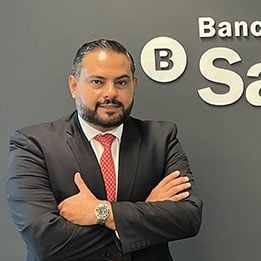
Gonzalo Barettino Coloma
Secretary‑general and vice-secretary to the board | Banco Sabadell
How do you approach managing legal aspects during periods of instability or crisis to ensure the organisation’s resilience?
Legal considerations are particularly important during periods of crisis or instability, when large organisations face the need to undertake extraordinary or urgent analysis and to take decisions that would ordinarily fall outside the normal course of business. For this reason, the legal department must include specialists in core areas, but also individuals whose experience demonstrates sufficient depth, broad based knowledge, and skills drawn from other disciplines, so that the team as a whole can respond to these specific challenges with agility, flexibility and, at the same time, rigour.
To achieve this, legal leadership must be mindful of maintaining a range of profiles within the team, including, where appropriate, individuals from other areas, while also encouraging training in different subject matters. At the same time, it is important to remain open minded and to foster an environment in which internal debate and creativity in developing solutions are actively encouraged.
What strategies do you employ to ensure the successful digital transformation of a legal department while maintaining compliance with your country’s data protection laws?
The starting point should be to treat the corporate data protection framework, including policies, procedures and controls, as a clearly defined environment. On that basis, data protection is not a constraint, but an enabler for digital transformation to take place in a sustainable way.
It should also be borne in mind that, in our particular case, the digital transformation of the legal department is already a reality that we have experienced successfully for several years. What lies ahead, however, is a period in which the possibilities expand significantly.
Given Spain’s integration within the EU and its exposure to Latin America and North Africa, have recent geopolitical tensions and trade shifts changed your company’s risk profile over the past year?
Geopolitical tensions in recent years have created a more unstable and fragmented environment and, in that sense, a less predictable one. In these circumstances, our institution in particular, and the banking sector more broadly, have strengthened the monitoring of country risk, the management of international exposures, and, consequently, regulatory anticipation.
Risk has not necessarily increased across all markets, but it has become more complex and dynamic.
From your perspective, what legal or business trends over the past 12 months have had the most tangible impact on your role? Are there specific regulatory developments, at Spanish or EU level, that you believe other in-house teams should be paying closer attention to?
Geopolitical developments, together with the renewed focus on refining legislation within the European framework, have led to legislative changes at international, European and local levels. These developments have been significant, as they require legal departments to remain closely up to date.
The emphasis should be on seeking stability and ensuring that the application of regulation does not become a barrier to business development, but rather acts as an enabling factor, while avoiding the introduction of unnecessary complexity.
How can a general counsel in Spain effectively embed a culture of compliance and ESG accountability across all levels of the organisation, especially in large or multi-jurisdictional groups?
The focus at this point is fundamental. A GC can foster a strong compliance and ESG culture provided this is achieved by aligning the regulatory framework with the business strategy, which is self evident. In a multinational group, this also involves defining common standards while retaining the ability to adapt locally. Ultimately, it is a cultural question, ensuring that this compliance and ESG approach becomes a natural way of operating the business.
The management of legal and reputational risk is a core function of the legal department. It is addressed in a preventive and cross functional manner, integrated into the bank’s decision making processes, with a perspective aligned with the regulatory framework and risk appetite.
The legal function not only identifies and mitigates risks, but also helps to anticipate them and manage them in a way that is consistent with strategy, protecting the bank’s reputation and long term sustainability.
What factors influence your team’s decision to use external legal services versus handling matters in-house, and what criteria are used to evaluate their performance?
The legal department acts as the principal point of contact and coordinator for external counsel. It defines the scope of the required advice, supervises the quality of the service, and ensures alignment with the bank’s strategy and risk profile. In this way, external engagement is kept efficient and controlled.
External firms provide specialist expertise and additional capacity, but always under the direction of the internal legal function, which retains the overall and strategic view of the business.
How does your team contribute to the overall business strategy of the company? Can you share an example of a recent legal-led initiative that had a significant impact?
The legal team supports and underpins the business strategy, providing confidence in decision making at all levels and, in particular, in the governance of the institution. In recent years, there has been a transformation in the holding of general shareholders’ meetings, with the introduction of a hybrid model. A new organisation of business facing legal services has also been implemented, bringing lawyers closer to internal clients by area of expertise. Finally, there has been a continued focus on adopting leading practices across the sector.

Director ejecutivo de asesoría jurídica y gobierno corporativo
Banco Sabadell
View Powerlist

Director ejecutivo de asesoría jurídica y gobierno corporativo
Banco Sabadell
View Powerlist