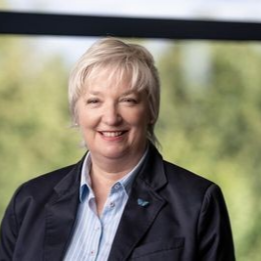
General Counsel | Everllence PrimeServ

Louise Durose
General Counsel | Everllence PrimeServ
<strong>What are the most significant cases and/or transactions that your legal team has recently been involved in? </strong>
My team has been involved in the recovery of over $1m from a ship owner by means of arresting the ship in a South African port; the mediation and settlement of a $15m+ dispute with Bahamas Power & Light Company; and a successful challenge to tender terms for US Navy.
<strong>What do you see as an opportunity or risk over the next six months? </strong>
The company is for sale, and we are currently filling a data room and answering due diligence questions. A new owner has an opportunity to view our business differently and change operating procedures, but the uncertainty is a risk, keeping everyone focused on business as well as the sale process is key.
<strong>What are some of the main trends impacting your industry sector specifically? </strong>
AI development and expansion means many national grids cannot supply data centres with the amount of electricity needed. Tech companies are therefore increasingly building their own electric power sources, using gas or dual fuel engines, and wanting long-term operating and maintenance contracts. This is good business for Everllence but, at the same time, giving contractual obligations for long term contracts can be challenging at a time of great geopolitical change. The worldwide supply of competent engineers is short and changing attitudes to immigration, and fewer open borders around the world, pose a risk to getting qualified staff in the places needed.
Shipping goods around the world is facing more risk due to war, unstable regimes, and piracy than in the past thirty years.
US tariffs and reaction to them causes disruption in both raw materials and finished goods markets, making long-term supply contracts riskier.
Sanctions regimes cause a loss of markets and a risk of violation. We operate in more than 80 countries selling spare parts and services for a large range of industrial equipment. In this context, business is increasingly complicated legally.
<strong>General counsel often speak of the need to be strategic to reach the pinnacle of the profession. What does being strategic mean to you? </strong>
I moved in-house in 1992 and, since that time, have found being within a business very interesting and rewarding. Understanding the commercial performance of a business and how to improve it is essential. As a lawyer, this is where you can add value to the growth and direction of the business and to me it has been the best part of my work. Becoming a key contributor in the setting of corporate strategy is about taking responsibility for business decisions whilst using your analytical skills and knowledge of the legal landscape to inform your contribution to the senior management team. Being strategic is about having skin in the game of the business, being in the team that sets the direction for the organisation and constantly reviewing that direction. It can mean reducing some areas of the business to build other areas; it can mean starting new business from scratch; and always, as a lawyer, giving wise counsel on how to achieve the objective. Sometimes lawyers can build a reputation for advising on why something is not to be done. Whilst there may be many legal reasons why not to do something, I have always worked from the premise of how we can do something whilst remaining lawful and with as low a risk as possible. There is almost always risk involved in a strategy, so, in my opinion, it is my role to point out what the risk is, with a recommendation for how to mitigate, overcome or simply take the risk with full knowledge of the consequences.
<strong> Have you had any experiences during your career as a lawyer that stand out as particularly unique or interesting? </strong>
Working internationally has been a real privilege and enormously fulfilling.
Being part of the negotiating team for the sale of a fleet of training aircraft and ancillary equipment to the Royal Australian Air Force was a huge learning experience. We were challenged daily by the customer to change our usual way of doing business, and we concluded an innovative contract as well as spending nine weeks in Canberra.
Negotiating contracts with the Islamic Republic of Iran Railway in Istanbul was a unique experience. Cultural differences can be the biggest challenge to clear communications and alignment of objectives and when you finally get to distinguish what someone’s real concern is and work at addressing that, then you are doing a great job.
One of the first pieces of work I did as a newly qualified solicitor was drafting a partnership agreement for the office cleaners, a couple of women who had set up their business whizzing around on the tube themselves and gradually employing people to do the same. At the point they thought they should formalise their business they were turning over £2m in 1989. It was a lesson in business growth and very satisfying helping them along the way.