Senior legal counsel, legal vice-presidency | Consorcio Energético Punta Cana-Macao (CEPM) - InterEnergy Group

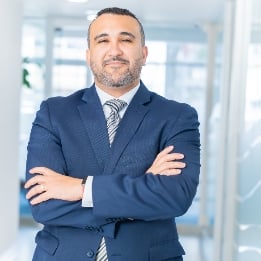
César A. Jacobo Mercedes
Senior legal counsel, legal vice-presidency | Consorcio Energético Punta Cana-Macao (CEPM) - InterEnergy Group
Career biography
César A. Jacobo Mercedes is Senior Legal Counsel within the Legal Vice-Presidency of Consorcio Energético Punta Cana-Macao (CEPM), part of InterEnergy Group, where he advises on energy, corporate, regulatory and administrative law matters. A business law specialist with postgraduate studies in Civil Procedure at Pontificia Universidad Católica Madre y Maestra, he has experience in corporate taxation, labour, administrative and corporate law, as well as in the application of Law 189-11 on the development of the mortgage market and trusts.
Earlier in his career, he served at the Attorney General’s Office of the Dominican Republic (PGR), where he was responsible for following up on international anti-corruption conventions and represented the Dominican State before international bodies. He later served as a Legal Officer at the Superior Administrative Court of the Dominican Republic, gaining experience in administrative law and disputes involving public authorities and government agencies. In private practice, he advised clients across the energy, gas, water, environmental, foreign investment, M&A, tourism and telecommunications sectors.
At CEPM, his work includes complex corporate transactions, group reorganisations, entity structuring, M&A and corporate governance across InterEnergy companies, as well as regulatory matters throughout the development and operation of energy projects. His experience also covers environmental permitting, concessions and other regulatory approvals required for the development and continued operation of the group’s assets.
What are the most significant cases, projects or transactions that you and your legal team have recently been involved in?
Over the past few years, our legal team has played an important role in supporting CEPM’s energy-transition agenda within its isolated grid in the eastern Dominican Republic. We have worked on the legal and regulatory structuring, permitting and grid-interconnection strategy before the Superintendence of Electricity (SIE) and the National Energy Commission (CNE) for CEPM’s utility-scale solar parks, including FV3 and FV5, and their battery energy storage systems. These projects form part of the group’s CEPM Zero programme and its objective of achieving carbon neutrality within its concession area by the end of the decade.
For Grupo Eólico Dominicano (GEDOM), we handled legal matters relating to the expansion of the Matafongo wind farm in Sabana Buey, including the addition of three Siemens SG 5.0-145 turbines, increasing installed capacity from approximately 34 MW to 50 MW.
Alongside these projects, we have handled complex corporate matters, including group reorganisations and entity restructurings across InterEnergy companies. In the capital markets, we also worked on CEPM’s corporate bond programme (SIVEM-182), for up to US$100 million. My role covered corporate approvals, the prospectus and its supplement, placement notices and material-event filings before the relevant regulators.
How do you approach managing legal aspects during periods of instability or crisis to ensure the organisation’s resilience?
During periods of instability or crisis, I see the legal function as both a stabilising force and a strategic partner to the business. My approach starts with identifying and prioritising the legal and regulatory risks that could have the greatest impact on the organisation’s operations, reputation and strategic objectives.
From there, I focus on scenario planning, clear escalation mechanisms and close coordination with senior management and the relevant business teams. In a crisis, legal advice must be practical and decision-oriented: management needs to understand not only the legal risk, but also the available options, their consequences and the measures that can be implemented to mitigate exposure.
General Counsel often speak of the need to be strategic. What does being strategic mean to you?
To me, being strategic means understanding the business beyond its immediate legal needs. It requires knowing where the organisation wants to go, how it creates value, the environment in which it operates, and the legal and regulatory factors that could either facilitate or affect its objectives.
Ultimately, I see strategic in-house counsel as combining legal judgement with business understanding and foresight, enabling Legal to participate in decisions from the outset rather than simply responding to issues once they arise.
We are living through a time of geopolitical change. Does this affect your company’s risk profile and, if so, what are you doing to mitigate this?
Geopolitical change has undoubtedly become an important factor in the risk profile of companies, even when their operations are primarily domestic. In the energy and infrastructure sectors, international developments can have indirect but significant effects through supply chains, the availability and cost of equipment, financing conditions, international contractors and changes in the regulatory and commercial environment.
From a legal perspective, our approach is focused on anticipating how these external developments may translate into concrete risks for the business. This includes monitoring relevant regulatory and market developments, identifying potential exposure in key contracts and transactions, and ensuring appropriate contractual, regulatory and operational safeguards are in place so that the business can adapt quickly while maintaining continuity and protecting its strategic objectives.
What do you think is the greatest innovation you have enacted in the past year?
One of the most meaningful innovations I have contributed to over the past year has been strengthening a more proactive and integrated approach to corporate and regulatory legal management. Rather than addressing matters only when a formal requirement, transaction or issue arises, I have focused on bringing Legal into the process at an earlier stage, identifying regulatory requirements and potential risks from the outset and coordinating more closely with business and technical teams.
For me, innovation within a legal function does not necessarily mean introducing new technology. It can also mean improving how legal information is organised, how risks are anticipated and communicated, and how Legal works with the business.