General counsel and Proxy | Symfonia


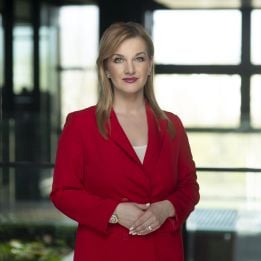
Wioletta Kałoska
General counsel and Proxy | Symfonia
Team size: 6
What are the key projects that you have been involved in over the past twelve months?
Over the past twelve months, my work has focused primarily on supporting Symfonia’s growth strategy across CEE through complex M&A activity, group restructuring and strategic transformation projects.
I led the legal aspects of three completed acquisitions: the acquisition of NextUp, strengthening Symfonia’s position in the Romanian SME software market, the acquisition of inEWI, expanding the group’s offering in the HR and workforce management solutions space, and the acquisition of Develogic and eXant Software Polska in Poland, expanding the group’s presence in the construction industry. My role covered the full transaction lifecycle, including structuring, due diligence, transaction documentation, negotiations and post-closing integration. I also oversaw the restructuring of the group through the merger of subsidiaries, streamlining the corporate structure and supporting operational efficiency.
In parallel, I am currently working on two further acquisitions within the CEE region, including one in Romania and one in a new jurisdiction for the Symfonia Group, supporting the business in entering a brand-new market.
Alongside transactional work, I have been leading a transformation of all customer-facing documentation and product terms, redesigning them in line with Legal Design principles to improve clarity, accessibility and user experience.
In addition, we are implementing a comprehensive Privacy by Design approach across the entire R&D departments, refining how data is embedded into product development processes and strengthening our approach to data governance and compliance.
Finally, I initiated and am currently building the legal front-desk function in Romania, establishing local legal support and processes to accompany the group’s continued expansion in that market.
What do you think are the most important attributes for a modern in-house counsel to possess?
In my view, the role of a modern in-house counsel is evolving well beyond that of a traditional legal advisor, particularly in the era of AI and rapid technological change.
Today, an in-house lawyer increasingly acts as a project manager and a driver of change within the organisation. Someone who helps translate legal, technological and regulatory developments into practical solutions, supported by modern tools and accumulated experience. This requires strong project management skills, the ability to connect multiple dots across the organisation and to understand how different initiatives, risks and decisions interact with one another.
Curiosity remains essential, especially curiosity about the business itself. I firmly believe that the role of in-house counsel is to make life easier for the business, not to slow it down. This mindset has guided me since the moment I transitioned from private practice to an in-house role, and it continues to shape how I approach my work. It is also the same approach I have consistently mentored and instilled in my legal team from the very beginning – encouraging them to understand the business context, look for solutions and approach their work with ownership rather than formality.
At the same time, we have long moved away from a model in which lawyers build walls through complex language and rigid formalism. Modern in-house counsel should simplify, not complicate, using clear, accessible language and well-designed, user-friendly documentation to reduce misunderstandings, prevent disputes and support better decision-making.
A modern in-house lawyer is no longer merely a guardian of internal and external regulations, but a trusted partner who stands shoulder to shoulder with the business, helping it grow responsibly while remaining mindful of an evolving legal landscape.
AI is increasingly being integrated into legal teams to maximise efficiency. How can in-house counsel ensure the successful incorporation of these tools without compromising the human element?
AI has the potential to significantly enhance the efficiency of in-house legal teams, but its successful integration depends on a clear understanding that it is a support tool, not a replacement for legal judgment.
In my view, AI delivers the greatest value when applied to repetitive, time-consuming and data-intensive tasks, such as document review, contract analysis or information retrieval. This allows lawyers to redirect their time towards higher-value work that requires experience, context, judgment, and close cooperation with the business.
Strong governance is equally critical. Clear internal rules defining acceptable use, data boundaries, and mandatory human review are essential to protect confidentiality, ensure compliance and maintain trust. Ultimate responsibility must always remain with the legal team, with AI outputs treated as input rather than final advice.
Preserving the human element also requires a cultural approach. Upskilling legal teams, prompting a pragmatic and curious mindset, and positioning AI as a collaborative tool helps avoid resistance and fear. The true value of in-house counsel lies in strategic thinking, empathy and an understanding of business realities—qualities that technology cannot replicate.
When implemented thoughtfully and responsibly, AI strengthens the legal function by enhancing efficiency while keeping human expertise firmly at its core.
What is a cause, business or otherwise, that you are passionate about?
A cause that is particularly close to my heart is supporting women who need encouragement and additional momentum to build their professional confidence and move forward in their careers.
I actively lead and co-create the Symfonia Foundation, which focuses on empowering women operating in the worlds of IT and finance — industries that remain heavily male-dominated, particularly at senior and decision-making levels. I strongly believe that talent and ambition are evenly distributed, but opportunities, confidence and visibility too often are not. For that reason, I see it as a responsibility to actively “put wind in women’s sails” and help them believe in their potential, especially at moments when they may hesitate to take the next step.
Through the Foundation, we run mentoring programmes, workshops and practical initiatives supporting women at different stages of their careers, including those returning to the labour market after longer breaks. I am also personally involved in mentoring, which gives me a great deal of joy and personal satisfaction, particularly when I see confidence grow and real professional progress follow.
At the same time, I am very conscious that building diversity is not about excluding anyone. On the contrary, I strongly value the role of male allies and believe that real change happens when organisations consciously encourage diversity and inclusion across the board. My goal is not to compete with men, but to ensure that more women feel encouraged to step forward, apply, speak up and take leadership roles.
This work gives me a deep sense of purpose and balance. Supporting women’s growth is not only a social initiative for me—it is an integral part of how I understand leadership and long-term, sustainable business success.