
Chief legal officer | Höegh Autoliners ASA

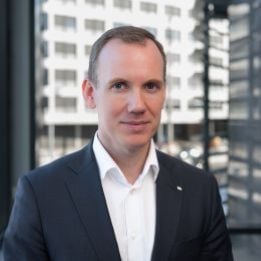
Sigve Reme Sand
Chief legal officer | Höegh Autoliners ASA
What are the key projects that you have been involved in over the past twelve months?
Over the past year, my focus has primarily been on supporting Höegh Autoliners through a period of heightened geopolitical, regulatory and commercial complexity, while continuing to strengthen the legal function as a strategic partner to our organisation.
Key projects have included advising on financings, deliveries of our new trailblazing Aurora class vessels and major customer contracts. In parallel, the legal team has been closely involved in managing geopolitical risk, trade‑related issues and sanctions compliance, particularly in light of the situation in the Middle East and its impact on global shipping routes, safety and security considerations and contractual performance. This has required close coordination across the organisation to ensure legally sound and commercially pragmatic decision‑making in a fast‑moving environment.
Finally, a significant part of my role has been dedicated to ensuring that legal considerations are embedded early in strategic and operational discussions rather than addressed reactively.
As the world continues to face geopolitical, technological and economic uncertainty, how do you manage legal risk while still prioritising commercial objectives?
For me, effective legal risk management starts with proximity to the business. Legal advice is most useful when it is timely, relevant and based on a clear understanding of the company’s commercial objectives and risk appetite.
In an environment marked by geopolitical uncertainty and regulatory change, the legal function must focus on identifying material trends and risks early, and presenting decision-makers with clear options, including the legal, commercial and reputational implications of each. The goal is rarely to eliminate risk entirely, but rather to enable informed choices that align with the company’s strategy and values.
This requires close collaboration across functions and jurisdictions, a strong internal compliance culture and the ability to distinguish between theoretical and real‑world risk. I place particular emphasis on clarity, proportionality and consistency in legal advice, especially when the business is operating under time pressure.
As the in-house role continues to evolve from legal advisor to business partner, what strategies have you found most effective for stakeholder management and aligning legal advice with business strategy?
The shift from pure legal advisor to trusted business partner depends largely on credibility and relationships. That credibility is built over time by demonstrating sound judgement, commercial awareness and an understanding of the organisation’s strategic priorities.
In practice, this means being present in key forums, engaging early in decision-making processes, and tailoring legal input to the audience. I often emphasise that the legal function shares the same objectives as the rest of the organisation: enabling the business to operate effectively, pursue opportunities and deliver on its strategy in a sustainable and responsible manner. Legal advice that is technically correct but disconnected from operational or commercial reality adds limited value. On the other hand, advice that acknowledges commercial constraints while clearly articulating legal boundaries tends to be well received.
I also believe consistency is crucial. Stakeholders need to trust that legal advice is predictable, principled and aligned with the company’s long‑term interests, even when individual situations are complex or sensitive.
What key trends – and challenges – should in-house lawyers be monitoring over the next year?
In-house lawyers will need to navigate an environment characterised by continued geopolitical volatility, accelerating regulatory change and increasing expectations on the legal function to deliver strategic value with constrained resources.
Geopolitical risk and sanctions compliance will remain a central challenge for globally operating businesses, requiring legal teams to stay closely aligned with commercial and operational decision-making while responding quickly to shifting regulatory landscapes. The pace and complexity of regulatory developments will also place pressure on in‑house teams to interpret and implement new requirements in a practical and proportionate manner.
At the same time, boards and management teams increasingly expect legal departments to contribute beyond risk mitigation, including supporting long‑term strategy. This elevates the importance of sound judgement, prioritisation and clear communication, particularly where legal issues intersect with public scrutiny and stakeholder expectations.
Finally, the continued adoption of legal technology and AI presents both opportunity and risk. While these tools can enhance efficiency, in-house lawyers will need to ensure appropriate governance, data integrity and accountability, and be clear about where human judgement remains indispensable. Balancing speed, quality and oversight will be a defining challenge for the modern in‑house role.
Chief legal officer | Höegh Autoliners