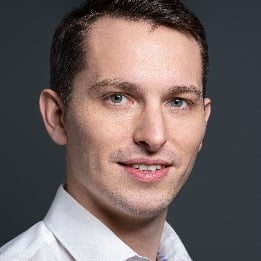
General counsel and corporate secretary | Argos Fund


Olivier De la Guéronnière
General counsel and corporate secretary | Argos Fund
What are the key projects you have been involved in over the past twelve months?
Over the past year, I have worked on the launch and successive closings of our latest mid-market fund, its first investment, several sensitive internal matters and the continued development of our group platform.
I was closely involved in the fund and co-investment structures, negotiations with institutional investors and the work needed to make the platform ready to invest. I then worked with the deal teams on the completed acquisition of STAR7 in Italy. My role covered structure, regulatory and cross-border issues, governance, funding mechanics, adviser coordination and execution. On another investment, I challenged an unnecessarily complex arrangement and helped replace it with a simpler solution that worked for the relevant parties and the deal timetable.
My remit is wider than deals. I handle all carry matters across the firm, supervise our trade mark portfolio, help run the Luxembourg office and support management on sensitive employment matters, disputes and potential adviser conflicts. The common point is to bring the firm’s commercial angle into legal and regulatory matters, make sure our principles and values are reflected throughout the process and ensure that decisions are implemented consistently with our wider objectives and long-term direction.
This requires top-down direction and bottom-up contact with the work itself. I need to understand the firm’s priorities, but also stay close to deal teams, investor relations and operational teams. That is how I spot new issues early, follow market practice and identify where a process works on paper but not in practice.
Can you describe an instance where your legal advice directly influenced business strategy or commercial objectives?
On a recent strategic transaction, I helped choose the structure. Several routes were legally possible. The real question was which one made sense for investors and for the firm.
I worked with the deal team and advisers to compare a combined structure with separate alternatives. We looked at investor choice, economics, governance, alignment, execution risk and potential cross-liabilities. I challenged a technically workable option because it created too much complexity and blurred the economics between different asset pools.
That changed the term-sheet discussions, the sequence of the process and the way the commercial team approached investors and existing stakeholders. My role was to help select the best route, not simply confirm that a route was legally available.
How have you implemented AI to improve efficiency while maintaining quality, governance and integrity within legal teams?
I do not believe in starting with a heavy platform that changes every working process and takes months to learn. I prefer small tools that solve a clear problem and produce quick wins.
The starting point is data management: what information we have, who owns it and whether it is reliable. We then add tools where they are useful. Current use cases include reviewing and comparing documents, tracking mandate and agreement renewals, monitoring filing deadlines, generating standard documents and keeping track of our positions across investment strategies and LP negotiations.
The balance matters. The tools should enable teams to handle straightforward tasks directly without blurring legal accountability or decision-making. AI can help me act as a control tower and improve consistency. Judgement and responsibility remain with the relevant people.
How do you manage situations where legal advice and commercial objectives conflict?
I first check whether there is a real conflict. Often the objective is right, but the proposed route is not.
The key is always to bring a solution. I explain the practical downside, its likelihood and the alternatives, and I try to identify a route that preserves the commercial objective while addressing the material risks. In some cases, the teams ask me to take the final decision even where the issue is commercial or operational rather than legal. Some risks can be negotiated, priced or consciously accepted; others cannot.
Beyond your legal role, is there a cause or initiative you are especially passionate about?
I invest personally in early-stage companies and hold a small number of board positions. I enjoy helping sustainable ideas become viable businesses, particularly where they create jobs and address medical or environmental problems.
It also keeps me close to founders, company-building and the realities of the venture market.