Head of Legal Department | XPeng AeroHT

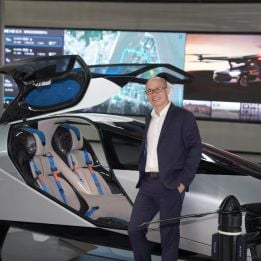
Stuart Lin
Head of Legal Department | XPeng AeroHT
Team size: Ten
Career Biography
My career is a testament to the power of integrating deep legal expertise with strategic business leadership, consistently positioned at the forefront of technological innovation. With over two decades of multifaceted experience, I have cultivated a unique profile that blends legal acumen, operational management, and a passion for guiding transformative technologies from concept to reality.
My foundational expertise is built upon a robust legal and financial qualifications. I am dually qualified to practice law in both Mainland China and the State of California, USA, providing me with a critical cross-border perspective. This is complemented by credentials as an Intermediate Accountant(中级会计师), a Guangdong Provincial Foreign-Related Legal Talent, and a Guangzhou Intellectual Property Expert. This diverse skill set has equipped me to navigate the complex legal, regulatory, and financial landscapes that define global high-tech industries.
My journey in the tech sector reached a significant milestone in 2018 when I joined XPeng Motors as its Head of Legal. During this formative period, I was instrumental in building and scaling the legal function to support the company’s rapid growth in the intelligent electric vehicle space. My work involved tackling the novel legal challenges surrounding autonomous driving, data security, and intellectual property, laying the groundwork for the company’s technological ambitions.
In 2021, I embraced a broader, more integrated role by joining Aridge (formerly known as XPeng AeroHT), the company pioneering the future of mobility with flying cars. As a Partner, General Manager of Comprehensive Operations, and General Counsel, my responsibilities expanded beyond the legal domain into full-scale operational management. This unique triple-hatted role allows me to synthesise legal strategy, business operations, and technological development into a cohesive vision. I am directly involved in steering the company’s strategic direction, managing day-to-day operations, and ensuring that our groundbreaking projects in flying cars—a quintessential example of “New Quality Productive Forces”—are built on a solid foundation of compliance, risk management, and strategic IP protection.
My commitment to professional and public service extends beyond corporate walls. Serving as a member of the Tianhe District Standing Committee of the People’s Congress in the Supervision and Judicial Affairs Committee allows me to contribute to the legislative and oversight processes that shape the business environment. This role, combined with my expert positions in government talent pools, keeps me at the nexus of policy and practice, enabling me to advocate for sensible regulations that foster innovation.
In summary, my career is defined by a continuous pursuit of challenges at the intersection of law, business, and technology. From establishing the legal backbone for smart EV at XPeng Motors to now leading operations and strategy for the revolutionary flying car projects at Aridge (XPeng AeroHT), I have dedicated myself to enabling the birth and growth of next-generation strategic industries that will define our future.
What are the most significant cases, projects and/or transactions that you and/or your legal team have recently been involved in?
Low-attitude Economic is soaring in China, and it’s an exciting big pool for a legal professional to grow and play. During the past 4 years, my legal team has been, closely with our engineers, developing the world’s first modular flying car — Land Aircraft Carrier (The “LAC”). The LAC maybe the most innovative transportation product in recent years, combined an eVTOL with a smart EV, featuring with the modern aviation and smart EV technologies. The 2-passenger eVTOL could be put into the car for daily storage and transportation. When you drive the car, carrying the eVTOL, into a suitable place with airspace to fly, e.g. a flying camp, you may release the eVTOL from the car, by the one-touch automatic separation & reconnection mechanism, and enjoy the freedom to fly. Simply put, we have been creating the world’s first manned aircraft that could be put into a car.
My team has been supporting and facilitating the whole process of the LAC, from R&D to mass-production to preparation of sales &service. Since the LAC is the first type, there is no previous successful experience to be followed and we have to be the pioneer and explorer of both technology and laws/regulations. Most significantly, our company is trying to introduce the cost & efficiency methodology of the smart EV car industry into the aviation industry, resulting in various cross-industry innovations, cooperations and transactions have to be dealt with in legal terms, which actually also lack of previous successful experience to be followed. Therefore, my team has to concurrently “use” and “create” rules and regulations. As a matter of fact, we have been participating in a number of low- attitude-economic-related laws/regulations consultation and formulation, both at national and local level.
As of Sep. 2025, XPENG AeroHT has filed more than 1000 Chinese and international patents, among which over 70% are invention patents, primarily focused on the core fields of flying car power systems, safety systems, avionics systems, autonomous driving, flight control and overall flying car structures. Notably, the exterior design patent of the X2 received the Silver Award for Exterior Design at the 14th China Patent Awards, and the patent for the “High-Safety and High-Reliability Flight Control Navigation System for Flying Cars” won the Gold Award at the 2024 Guangdong-Hongkong-Macau Greater Bay Area High-Value Patent Cultivation and Layout Competition, representing a significant milestone in our patent portfolio.
How do you approach managing legal aspects during periods of instability or crisis to ensure the organisation’s resilience?
Our guiding principle is to move from advisor to a partner, to do a bit more to contribute to the company’s resilience.
Before crisis, the legal department actively participate in the company’s crisis management, including being a member of the quality and safety committee, supply chain safety committee; provide and enhance various legal and risk management procedures; cooperate with HR and Internal Control departments to develop crisis detection management and discipline rules; proactively keep in touch with key regulators, including but not limited to national and local branches of NDRC, MIIT, SAMR, to ensure the entry and compliance of products and operations, facilite the company to subscribe proper insurance, esp. The insurance for brand new activities and products.
In crisis, actively assist the top management or risk management team in handling the crisis, report to or liase with relevant regulators, and seek support and advice from regulators, handling relevant legal procedures, communication, negotiation, documentation and lesson.
After crisis, we review and recovery and redemption.
Have you had any experiences during your career as a lawyer that stand out as particularly unique or interesting?
Between early 2018 to the end of 2021, when I was acting as the GC of XPENG Motors, the smart EV and autonomous driving are the hottest topics in both financial and legal worlds. In recent years, the low-attitude economy is booming. So, basically, I have been in the cutting-edge industries practicing law for over 7 years. I have kept curious and interested in new technologies, contributed my best efforts to the development of the new technologies and industries.
Based on your experiences in the past year, are there any trends in the legal or business world that you are keeping an eye on that you think other in-house lawyers should be mindful of?
Technology may change many things, including transaction models and even rules and regulations. As in-house lawyers, we may have deeper understanding or master more knowledge or information of the industries that we are working in, compared with external lawyers, regulators, or other rule makers. We may influence law practice, from this or another point, in our specific industries, and we must pay attention to this. The existing legal system may not always be adequate to solve all problems caused by the rapidly growing technology and, therefore, intentionally or unintentionally, we may be involved in creation of new rules or regulations. Then, your baseline or ethical standards would be important to your future career, and even to the whole industry.