Head of legal | CCEE

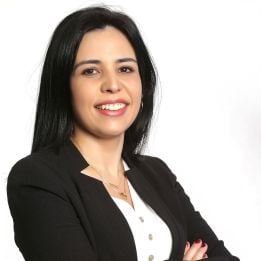
Maria Madalena G. Porangaba
Head of legal | CCEE
What are the most significant cases or transactions that your legal team has recently been involved in?
In recent years, CCEE’s legal team has focused its work on structural issues essential to the stability of the Brazilian electricity market, with significant financial impact and an emphasis on preserving the sector’s systemic logic.
In strategic litigation, key areas of work have included matters related to hydrological risk (MRE), default, price formation (PLD), constrained-off, and the integrity of the short-term market (MCP) rules. These fronts involved reversing sensitive injunctions, protecting against regulatory distortions, and acting in significant judicial restructuring proceedings. As a result, the legal team’s work contributed to risk mitigation and estimated financial protection of between BRL 935 million and BRL 1.2 billion in 2025.
In the advisory and regulatory sphere, the team played a central role in advancing structural initiatives, such as the development of prudential monitoring, the structuring of the sanctions process, and active participation in public consultations, provisional measures, and normative resolutions. The team was also significantly involved in innovation projects, including initiatives related to data and hydrogen certification, reinforcing CCEE’s institutional position in emerging agendas.
This set of initiatives was conducted through direct and ongoing institutional engagement with ANEEL, the MME, and the AGU, particularly on sensitive matters concerning market balance, the development of regulatory solutions, and legal-institutional alignment.
Additionally, the review of internal workflows, process automation, and strengthened governance contributed to operational efficiency gains estimated at between BRL 650,000 and BRL 850,000 per year, while also reducing risks and increasing predictability.
What new pressures are you facing from the business as expectations for legal to act as a strategic partner continue to grow?
The main pressure lies in the need for the legal function to act in an increasingly integrated and proactive manner in relation to business decisions. In a highly regulated and technically complex sector, the legal team is expected not only to validate decisions, but also to contribute actively to shaping them, with the ability to translate regulatory risks into viable solutions.
This shift requires a constant balance between agility and legal certainty, particularly when decisions have a systemic impact on the market. There is also growing demand for a data-driven, predictable, and standardised approach, which has led to investments in automation, knowledge management, and the review of internal processes.
What strategies has your legal team adopted to manage disputes and mitigate risks in Brazil’s dynamic business environment?
The strategy adopted combines structured litigation, regulatory prevention, and the strengthening of institutional governance. In litigation, the approach is guided by the systemic logic of the electricity sector, avoiding solutions that could create imbalances in the short-term market (MCP). This includes coordinated action to reverse injunctions with the potential to cause distortions, as well as protecting the integrity of market rules.
On the preventive side, the legal team is involved from the outset in the design of new rules, projects, and mechanisms, with particular emphasis on the development of the sanctions framework and prudential monitoring, aligned with a responsive regulation logic.
Direct and ongoing engagement with ANEEL, the MME, and the AGU is also a central element of this strategy, making it possible to align interpretations, anticipate risks, and contribute to greater regulatory predictability.
In addition, this work contributed to further risk mitigation estimated at between BRL 50 million and BRL 100 million across advisory and regulatory matters.