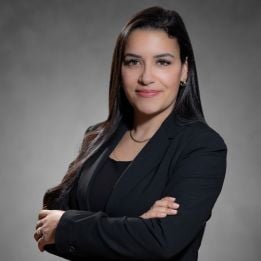

Legal director, Colombia; Global director of corporate and finance | Rappi


Carlos Eduardo Fernández Olaya
Legal director, Colombia; Global director of corporate and finance | Rappi
What are the key projects you have been involved in over the past twelve months?
The standout was closing a $100m financing. The legal contribution there was not drafting — it was orchestration. A deal of that size only closes well when every stakeholder moves in the same direction at the same time and getting them there is as much a coordination problem as a legal one. My job was to keep the business, the investors and our advisors aligned so we could close on the best available terms rather than simply the terms that were on the table first.
Beyond that single transaction, much of my year has been spent advising on strategic partnerships, settlements and joint ventures with key partners across the region — work that sits at the intersection of corporate, finance and commercial law, and where the legal task is usually to find a structure that protects Rappi without slowing the business down.
On the contentious side, I led and supported the team through several investigations and the defence of administrative sanction proceedings before Colombian authorities, including a favourable first-instance decision in the administrative jurisdiction on a fine imposed by the Superintendence of Industry and Commerce. These matters are rarely glamorous, but they are where a company’s regulatory standing is actually protected, and I treat them with the same seniority as any headline transaction.
Can you describe an instance where your legal advice directly influenced business strategy?
The clearest example was advising several internal stakeholders, together with a major strategic partner, on how a new commercial partnership would sit alongside Rappi’s existing financing arrangements. The difficulty was not any single document; it was the interaction between them. A new strategic relationship can quietly cut across commitments already in place, and the business needed to understand those consequences before committing, not after. My advice shaped how the partnership was structured and sequenced so that it fit within the existing arrangements rather than creating friction with them. That was a case where the legal read directly informed a commercial decision the business could not have taken safely on its own.
How can in-house counsel use AI to improve efficiency while maintaining quality, governance and integrity?
At an AI-first company like Rappi, knowing how the tools work is step zero, not the destination. Plenty of lawyers stop there and mistake familiarity with the technology for capability. The real skill sits earlier: understanding the problem well enough to see which parts of a workflow can sensibly be supported or run by AI, and which genuinely require legal judgement. We are putting this into practice, developing tools to automate work across several areas — corporate, NDAs, terms and conditions and document review. Once you understand the problem, the division of labour becomes obvious, and so does governance, because you are no longer applying AI indiscriminately but only where it adds value and where the judgement that must stay human is protected. Governance, in my experience, is a by-product of that discipline rather than a set of restrictions bolted on afterwards.
How do you manage situations where legal advice and commercial objectives conflict ?
By being a legal business partner in the real sense — part of the business, not sitting beside it. That means being in the meetings, embedded in the teams and understanding their concerns before I am asked for a view. When conflict does arise, my instinct is to offer alternatives that meet what the business actually needs without giving up legal rigour. In practice, most apparent conflicts are a symptom of the lawyer having arrived too late. Presence prevents far more conflict than argument ever resolves.
Beyond your legal role, is there a cause you are especially passionate about?
The effect the platform has on Colombia’s grassroots economy. I find real meaning in the small, family-run businesses that reach customers they could never have reached alone, and in listening to the couriers who use the platform to earn an income they would not otherwise have. It is easy, in a corporate legal role, to lose sight of who is on the other end of the work. That connection to the base of the economy is the part of the job I care most about beyond the law itself.
Legal director Colombia and Costa Rica | Rappi