General counsel | Banco Santander

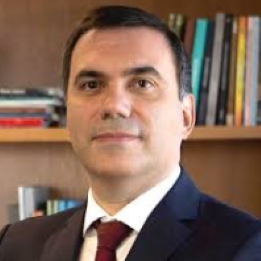
Bruno Santos de Jesus
General counsel | Banco Santander
Team size: Approx. 40
Career Biography
Bruno Miguel dos Santos de Jesus is Company Secretary and General Counsel of Santander Portugal, roles he has held since March 2022. In this capacity, he oversees several key areas of the Bank, including the Legal Department, coordinates the legal teams supporting the Bank’s business and corporate functions, and supervises all litigation involving the Bank.
Bruno has been part of the Santander Group since 2016. Between 2016 and 2022, he worked in Santander Portugal’s Legal Department and was appointed Head of Legal in 2018.
Before joining Santander, Bruno worked from 2008 to 2015 at Grupo Banif, a Portuguese financial group, where he held the positions of General Counsel and Company Secretary for Banif Bank, Banco Banif Mais and other financial companies in Portugal and abroad. He led the legal function, supervised the legal teams supporting the Bank and its affiliated companies, and advised the Board of Directors on legal and corporate governance matters.
From 2014 to 2016, Bruno was also a member of the Audit Board of Companhia de Seguros Açoreana, a Portuguese insurance company. Earlier in his career, he practised law for ten years as a partner at Portuguese law firms, focusing mainly on banking and litigation. Bruno holds a law degree from the University of Coimbra and is admitted to the Portuguese Bar Association.
In what ways does your legal function contribute to international business strategy, transformation or growth, beyond traditional compliance or risk mitigation?
Legal and regulatory questions are part of the way the business is designed, particularly in areas such as digitalisation, outsourcing, data, product governance and customer protection.
Our commercial activity is in Portugal, and that is an important starting point. We are not managing different markets from Lisbon. Our role is to help the Portuguese bank implement its strategy within a large international group, making sure that Group priorities are properly adapted to Portuguese law, local supervisory expectations and the reality of our market.
I think legal advice is useful when it helps people make clearer decisions. What is strictly required by law? What is a regulatory expectation? What is a reputational issue? What is, in the end, a matter for management to decide? These distinctions are sometimes more valuable than a long legal analysis.
For me, the legal function contributes to growth by making projects better structured from the beginning. Not by being conservative, but by helping the bank move forward in a way that can be implemented, explained and defended if necessary.
How do you structure relationships with internal stakeholders and external counsel across different jurisdictions to ensure effective collaboration and decision-making?
I am quite pragmatic about collaboration. More meetings, longer email chains and more people copied do not necessarily improve the quality of a decision. In complex matters, the first task is usually to clarify the basics: what needs to be decided, who owns the decision, whose input is really needed, and what remains open.
Most of my day-to-day relationships are naturally in Portugal: with business areas, management, control functions and governance bodies. I try to build those relationships before there is an urgent issue. If legal only appears at the moment of escalation, it is easily seen as a final control point. That is not, in my view, the most effective model.
Legal should be close enough to understand the commercial and operational context, but independent enough to challenge assumptions when needed. That balance is important.
The international dimension comes from being part of the Santander Group and from matters where Group standards, European regulation or advice from other jurisdictions are relevant. With external counsel, I value technical quality, but I value judgement even more. I do not usually need advice that merely restates the law. I need to understand how the issue is likely to work in practice, where the execution risks are, and what a regulator, court or counterparty may focus on.
Good legal coordination should make the organisation more confident in deciding, not more hesitant.
How do you see the role of Portugal-based corporate counsel with international mandates evolving over the next few years?
I think the role will become more relevant, although not necessarily because Portugal-based counsel will manage legal work across many countries. In my case, the bank’s commercial activity is in Portugal. The international aspect comes from being part of a major financial group and from working in a sector where many important legal and regulatory developments are European or global in nature.
That creates a demanding role. A Portugal-based counsel must understand Portuguese law, regulators, governance practice, clients and the way decisions are actually implemented locally. But local knowledge, on its own, is no longer enough. It needs to be connected with European regulation, global tendencies, Group policies, technology, operational resilience, data, artificial intelligence, sustainability and changing supervisory expectations.
The strongest contribution of corporate counsel will be the ability to connect these different levels without losing practicality. A Group initiative may make sense in principle, but it still needs to work in Portugal. Someone has to identify what can be replicated, what must be adapted and where friction may arise.
Technology will change legal work, but I do not think it will replace judgement, independence or institutional memory. For Portugal-based counsel, the opportunity is to be more than local validators of international projects. We should help shape how those projects are implemented locally, with rigour, pragmatism and responsibility.
General counsel | Banco Santander