
Head of Legal | Sacyr Concesiones Paraguay

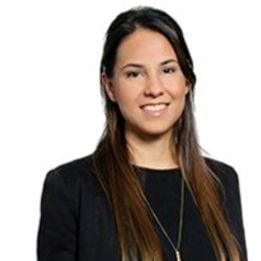
Sofía Margarita Suárez
Head of Legal | Sacyr Concesiones Paraguay
In an increasingly complex global environment, how are you helping your organisation navigate risk while still supporting growth?
In the current global environment, it is of the utmost importance to anticipate potential risks and assess the necessary contingencies to mitigate their effects. This is particularly relevant when dealing with transactions linked to international financial markets, which are inherently volatile and unpredictable. Any significant event may directly impact costs, thereby affecting the economic balance of contractual arrangements.
How has the role of General Counsel evolved in recent years, and where do you see GCs creating the most value today?
Nowadays, the role of General Counsel is not merely to react to legal issues, but to anticipate and prevent them. General Counsel must provide comprehensive legal advice whilst actively participating in the Board’s decision-making process, ensuring that legal and business risks are properly assessed and managed.
What has been your most significant challenge as General Counsel in recent years, and what did you learn from it?
My most significant challenge as General Counsel has come from the fact that my work requires extensive knowledge from different areas that are not necessarily of a legal nature. The role requires a thorough understanding of the business as a whole, enabling me to provide effective legal advice to different areas, each of them with their own objectives and viewpoint. Each perspective has its advantages and challenges, but it is fundamental to make decisions that will advocate for the project’s best interests, regardless of the particular position that is being represented.
What regulatory or risk trends are having the greatest impact on your role at present?
In the infrastructure sector, particularly in light of the current international landscape, one of the main challenges is ensuring that long-term contracts remain adaptable to changing market conditions. This requires the incorporation of flexible contractual conditions, especially open clauses that allow for adjustments without the need to renegotiate between the parties. For this reason, contractual clauses that establish price adjustment mechanisms, deadline conditions and early termination are key to ensuring the parties are sufficiently flexible for the contract to remain properly executable in times of increasingly unpredictable global markets.
Gerente de Legales | Sacyr Concesiones Paraguay