Vice president & Associate general counsel, global M&A, Americas | Diageo

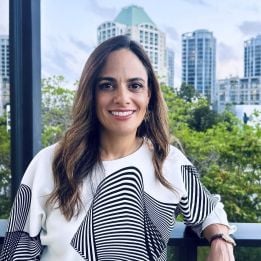
Zamira Zapata
Vice president & Associate general counsel, global M&A, Americas | Diageo
What are the most significant cases, projects and/or transactions that you and/or your legal team have recently been involved in?
During 2025 we announced a new joint venture with Main Street Advisors to partner on the iconic Cîroc and Lobos 1707 brands. It’s been a privilege to play a leading role in bringing this transaction to life.
Delighted to have led the Ritual Zero Proof acquisition to bring it to our portfolio.
Based on your experiences in the past year, are there any trends in the legal or business world that you are keeping an eye on that you think other in-house lawyers should be mindful of?
To begin with, regulation is increasingly shaping strategy, not just risk. Legal teams are being pulled upstream earlier than ever. Regulatory insight is no longer just about ‘can we do this?’ but ‘how do we do this competitively and responsibly?’
Fast-moving areas like AI, digital marketing, privacy, ESG, and emerging product categories are forcing legal to act as strategic advisors, not just gatekeepers. In-house lawyers who understand the business model and consumer impact are becoming indispensable.
Also, there is a growing blurry line between legal, reputational, and commercial risk. In this sense, decisions are increasingly evaluated not only on legal permissibility but on reputational, stakeholder, and investor perception. Boards and executives are asking: ‘Is this legally allowed?’ and ‘Is this aligned with our values and long-term brand?’ Social media, activist pressure, and instant global visibility amplify the consequences of missteps.
Thirdly, we are operating in regulatory ambiguity. Businesses are moving faster than legislatures and regulators. Many growth opportunities sit in spaces where the law is incomplete, fragmented, or evolving.
The expectation is no longer perfect certainty, but well-reasoned, documented judgment calls. This elevates the importance of risk frameworks, decision matrices, and clear escalation paths.
Also, legal is performing as a growth enabler between M&A and partnerships. In M&A and strategic deals, legal is increasingly central to value creation, not just diligence and closing.
Regulatory foresight, integration planning, and post-close governance are where deals succeed or fail. The best legal teams are thinking several steps ahead: ‘What could break this in 12–24 months?’
Furthermore, expectations on in-house lawyers as leaders are rising. There’s a noticeable shift toward viewing senior in-house lawyers as enterprise leaders, not just technical experts. This includes people leadership, cross-functional influence, and the ability to communicate clearly with boards and executives. Emotional intelligence and judgment under pressure are as valued as legal expertise.
Finally, even global companies are facing hyper-local enforcement and cultural expectations, especially in regulated industries. Consistency of values with flexibility of execution is a real challenge. Legal teams must navigate differing legal standards while maintaining a coherent global risk posture.
Looking forward, what trends do you foresee in the legal landscape over the next 5–10 years that companies should prepare for?
Firstly, legal will be embedded in business architecture. Legal will move from a “function” to an embedded capability across product design, data strategy, marketing, and supply chains. Secondly, regulation will become more fragmented, and more political I think we will see a greater divergence across jurisdictions on AI, data, consumer protection, sustainability, health, and emerging products, alongside an increased use of regulation as a policy and political tool, not just consumer protection.
We will also witness a rise of ‘judgment-based lawyering’ and how reputational and legal risk will fully converge. The separation between ‘legal’, ‘PR’ and ‘ESG’ risk will disappear.
Finally, AI will transform legal work, but not legal accountability.
Now, companies should upskill legal teams in business, technology, and leadership, build flexible risk frameworks rather than rigid rules, invest in early regulatory intelligence and elevate legal voices in strategic decision-making.
Vice president and general counsel Central America and Caribbean, FTZ-Border and Zacapa | Diageo
Zamira Zapata Valdés joined the world’s leading premium drinks company, Diageo, in November 2011 as legal counsel and through her ambitious nature and willingness to self-improve was promoted to vice...

Counsel, Latin America and the Caribbean, IP and innovation
Diageo
View Powerlist


Regional director of legal, brand protection, privacy and corporate security
Diageo
View Powerlist
Counsel, Latin America and the Caribbean, IP and innovation
Diageo
View Powerlist
Regional director of legal, brand protection, privacy and corporate security
Diageo
View Powerlist