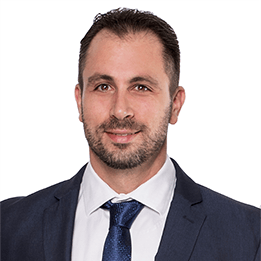
Head legal and ethics | Discovery Health Medical Scheme


Howard Snoyman
Head legal and ethics | Discovery Health Medical Scheme
What are the most significant cases, projects and/or transactions that you and/or your legal team have recently been involved in?
The development of health policy through academic and other interventions that would, if implemented, reduce the cost of private medical scheme membership in South Africa, thereby making such private medical scheme membership (and the private healthcare that it pays for) more accessible to the masses, and enabling members to afford to remain on appropriate plan types and retain their membership for longer durations, ideally indefinitely. In a country where access to adequate quality healthcare is unattainable for the majority of citizens, legislative change that could enable greater access (without reducing quality of care, overburdening the healthcare system or increasing taxation beyond what society can afford) has to be prioritised.
How do you approach managing legal aspects during periods of instability or crisis to ensure the organisation’s resilience?
The GC has to be more than simply an in-house attorney. Their role is to be strategic, understand the eccentricities of the business, the nature of the risks and opportunities that it faces, as well as its capacity constraints. Many crises create inherent opportunities, and my perspective is to (first) mitigate legal, regulatory, operational, PR and other risk, whilst being alive to often unique opportunities, in order that the business can emerge from the crises in a better position than that which it entered with. Whilst crises are not sought out, a crises should never be wasted in terms of the learnings and opportunities that can arise from it.
Based on your experiences in the past year, are there any trends in the legal or business world that you are keeping an eye on that you think other in-house lawyers should be mindful of?
Two trends that I have seen emerge, and that I address directly, are:
Service providers seeking to impose arbitrary limitations on their prospective contractual and / or delictual liability, with such limitations often having no relation to the nature and scale of possible damages that could actually be suffered. Realistic possible damages could easily be many multiples of the arbitrary limitations that service providers seek to cap prospective liability at. If left unchecked, a GC / CEO may have to explain to stakeholders how lax contract vetting led to a haemorrhaging of funds that cannot be recovered. Such limitations on prospective liability have to be negotiated, an service providers need to carry adequate insurance. If one / both of these aren’t possible, then one should ideally be finding alternate service providers.
and
The need to cater contractually for how one’s service providers utilize AI in the core provision of services. Whilst AI use has become ubiquitous, and it would be naïve (and quite likely short-sighted) to attempt to restrict all AI use by service providers, one should still have sight of how it used to perform key functions. To the extent that that raises any risks, those risks should be dealt with directly. To blindly assume that all AI use by service providers will simply result in improved efficiency and / or decreased cost, without any concomitant increase in risk, is reckless. This recklessness would be even more stark when one is unsure of the governance protocols of the service providers in terms of how they design / procure the AI-software, the extent to which it complies with legislation (e.g. data protection / privacy laws) and the extent of human oversight that they retain over the AI-generated output.
What is a cause, business or otherwise, that you are passionate about? Why is this?
Incentivising and facilitating employees to become healthier. This is both for the inherent good for the employees’ own benefit (longevity, greater quality of life, lower healthcare expenses etc), but also in the best interests of the business in the form of greater productivity, and lower risk of morbidity and mortality of key (particularly senior) individuals. It is often those senior individuals who play disproportionately significant roles in the business’s success, but due to the demands of their jobs, the natural aging process and the systemic impact of stress, these same senior individuals are often at greatest risk of lifestyle related diseases such as heart attacks, strokes and Type II diabetes, which frequently lead to premature and unnecessarily impending mortality (causing key-man risk for the business). A culture that genuinely fosters employee wellness is invaluable.
How does your team contribute to the overall business strategy of the company? Can you share an example of a recent legal-led initiative that had a significant impact?
I initiated a procurement governance strategy that ensures that all key service providers are vetted prior to the execution of a contract, and then at two-yearly intervals thereafter. This vetting incorporates tax clearance, criminal checks, related party screening and PR / reputational screening to name but a few, in order to provide reasonable assurance that the entities that we contract with are not likely to bring our business into disrepute, merely by being associated therewith. Of course, past conduct is no guarantee of future conduct, but simply by checking, one can assess the desirability of contracting with given entities based on presently known / accessible information. Should a service provider fail / refuse to undergo the procurement governance screening, then a contract will not be entered into.
Head legal and ethics | Discovery Health Medical Scheme
Head legal and ethics | Discovery Health Medical Scheme