
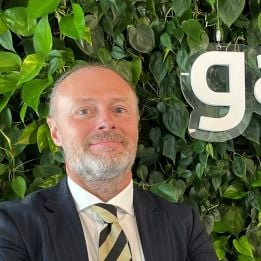
Group general counsel | Galp

Pedro Krusse Neves
Group general counsel | Galp
Team size: 41
Jurisdictions your role covers: Portugal, Spain, Brazil, S. Tomé, Namibia, Angola, Mozambique, Eswatini and Cape Verde
How do you manage and coordinate legal responsibilities across multiple jurisdictions from a Portugal‑based role, and what are the main challenges this presents in practice?
We have established a single, global legal department, which is responsible for advising transactions and regulatory matters and for managing litigation. The department currently has 41 members in three locations, Lisbon, Madrid and Rio de Janeiro. The department is centrally managed through business-oriented, multi-jurisdictional teams that ensure full alignment with corporate and business strategy. Apart from the business it specialises in, each team is responsible for advising the remaining teams on certain legal specialised subjects, acting therefore as matrix organisation. The department has the resources to handle most sector-related matters internally, and has access to a wide range of external providers to advise non-core, local issues.
Coordinating legal responsibilities across multiple jurisdictions is especially challenging in our cross‑border, business-oriented model. The central legal function must translate diverse regulatory requirements into guidance that fits the commercial priorities of globally distributed teams who may not be aware of local legal constraints. This creates pressure to manage regulatory divergence, complex permitting regimes, and differing administrative cultures while maintaining consistent risk standards and harmonised policies across all business units. At the same time, legal must ensure strong oversight of external counsel, maintain continuous regulatory monitoring, and align stakeholders across languages, time zones, and cultural expectations, all without the natural clarity that a jurisdiction‑based structure would provide.
What advantages or constraints does operating from Portugal create when advising on regional or global matters, particularly when working with international leadership teams or boards?
Operating from a centralised legal function offers strong advantages for advising on regional and global matters. It enables unified strategic alignment with corporate objectives, ensures consistent risk standards, and allows leadership teams and boards to receive coherent, business‑focused guidance rather than fragmented jurisdiction‑specific views. The matrix structure—where each business‑oriented, multi‑jurisdictional team also owns a specialised legal subject, promotes deep expertise, efficient knowledge sharing, and rapid internal mobilisation for complex transactions, regulatory issues, or litigation. With most sector‑related matters handled internally and a broad network of external providers for non‑core local issues, the department can allocate resources flexibly, maintain high quality, and speak with a single, authoritative voice across the organisation.
At the same time, centralisation introduces meaningful constraints. Distance from local regulatory nuance requires strong oversight of external counsel and continuous monitoring to avoid blind spots in fast‑moving or highly technical jurisdictions. Because teams are cross‑border and organised by business rather than geography, legal must translate diverse regulatory regimes into commercially relevant guidance for colleagues who may not fully appreciate local constraints, increasing the risk of misalignment. Coordinating across time zones, languages, and administrative cultures adds operational friction, while the matrix model can create bottlenecks if subject‑matter experts become overloaded or if ownership of cross‑border issues is unclear. These factors make governance, communication discipline, and regulatory intelligence essential to maintaining harmonised global standards without losing sensitivity to local legal realities.
Is there a recent regulatory or legislative change in Portugal or at EU level that has had a broader impact across your international remit? How has your legal team responded?
Portugal is implementing major reforms aligned with the EU’s decarbonisation agenda, particularly through updates to its renewable energy framework and the regulation of renewable and low‑carbon gases. The overhaul of the renewables regime—driven in part by the EU’s RED III Directive—streamlined permitting, expanded hybridisation and storage options, strengthened the PPA and bilateral contracting environment, and modernised rules for energy communities and electro‑intensive consumers. In parallel, Portugal’s reform of the gas system introduced a clearer framework for hydrogen and renewable gases, defined responsibilities for network planning and regulation, and shifted licensing and regulatory interactions to a fully digital platform. At EU level, RED III and related energy‑transition legislation have raised renewable targets, accelerated permitting obligations and pushed Member States toward more harmonised regulatory structures.
Together, these changes have implications that extend beyond Portugal’s borders. They influence cross‑border investment decisions, permitting strategies, PPA structuring, hydrogen project development and the alignment of compliance frameworks across multiple jurisdictions. For legal teams with international mandates, they require updated contracting models, closer regulatory monitoring, and a more integrated approach to advising on project development and market entry across the EU and other regions influenced by EU energy policy.
In what ways does your legal function contribute to international business strategy, transformation or growth, beyond traditional compliance or risk mitigation?
In a centralised, business‑oriented global legal department, I am able to contribute to international strategy and growth by acting as a strategic architect rather than just a risk gatekeeper. With a unified view across Lisbon, Madrid and Rio de Janeiro, I can anticipate regulatory trends, shape market‑entry decisions, influence investment priorities and ensure that the company’s operating model is scalable across jurisdictions. I am also able to embed legal thinking into commercial decision‑making so the business can move faster and with greater confidence.
At the same time, I am able to enable growth by structuring complex cross‑border transactions, designing negotiation strategies aligned with global priorities, and ensuring that the company’s contractual and regulatory posture supports long‑term value creation. By developing globally minded legal talent, fostering collaboration across regions, and maintaining a coherent legal narrative for leadership and boards, I am able to strengthen strategic clarity and investor confidence. I can therefore become a catalyst for international expansion, operational transformation and sustained competitive advantage.
How do you structure relationships with internal stakeholders and external counsel across different jurisdictions to ensure effective collaboration and decision‑making?
As General Counsel, I structure relationships with internal stakeholders and external counsel by creating clear interfaces, predictable routines and strong ownership, so collaboration works smoothly across jurisdictions.
With internal stakeholders, I have assigned clear legal points of contact for each business area, supported by subject‑matter experts behind the scenes. I also regularly engage to help position legal as a proactive partner rather than a reactive reviewer. In addition, we define playbooks, templates and short jurisdictional guides set expectations and make decision‑making faster, while a culture of early legal involvement ensures issues are addressed before they become obstacles. This combination builds trust, reduces friction and aligns legal advice with commercial priorities across all regions.
For external counsel, a curated panel of trusted firms has been selected by jurisdiction and specialty and creates consistency and quality. Clear scopes of work, defined escalation paths and a single internal relationship owner for each firm ensure that advice is actionable, aligned with your business‑oriented model and cost‑effective. External counsel are integrated into your global structure, tailoring their advice to your matrix organisation and highlighting cross‑border implications rather than offering isolated local opinions. Together, these practices create a coordinated ecosystem where internal teams and external advisors work in sync, enabling faster decisions and stronger global alignment.
How do you see the role of Portugal‑based corporate counsel with international mandates evolving over the next few years?
Over the next few years, the role will increasingly become a strategic enabler of international growth, with deeper involvement in market‑entry decisions, cross‑border investment strategy, and the design of scalable governance models that support expansion into different jurisdictions across the globe. Counsel will be expected to anticipate regulatory trends – particularly in energy, ESG, digitalisation and infrastructure – and translate them into strategic options for leadership, positioning legal as a source of competitive intelligence rather than a back‑end reviewer.