
General counsel and corporate governance | SONAE

Célia Sá Miranda
General counsel and corporate governance | SONAE
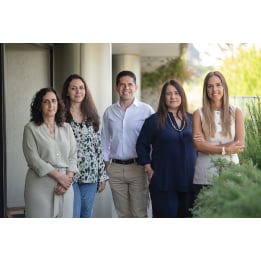
Team size: Six
What are the most significant cases or transactions that your legal team has recently been involved in? (Please mark anything confidential clearly, and feel free to speak in general terms if you wish, we’re just trying to describe the sort of work your team has been engaged with over the past year)
Over the past year, our legal team has been closely involved in a number of strategically significant matters across multiple jurisdictions, supporting both the transformation and growth agenda of the businesses we advise.
A key area of focus has been supporting complex corporate reorganisations and cross-border restructuring projects within international group structures. These initiatives required the coordination of legal, governance, tax and regulatory considerations across different jurisdictions, ensuring alignment with business objectives while maintaining robust risk management frameworks.
We have also advised on a range of M&A transactions, including acquisitions, divestments and post-transaction integration projects, supporting the full transaction lifecycle from structuring and due diligence through negotiation, completion and implementation. Several of these transactions involved cross-border elements and required close collaboration with international advisers and management teams.
From a governance perspective, we have continued to play a central role in advising boards and senior management on corporate governance, directors’ duties, decision-making processes and regulatory compliance.
Our team has also been involved in a number of significant commercial negotiations and long-term strategic partnerships, helping the business navigate complex contractual arrangements, allocate risk appropriately and prevent potential disputes. This included matters relating to warranty and indemnity insurance claims and other post-transaction issues.
In parallel, we have continued to strengthen compliance, ethics and integrity frameworks across the organisation, supporting initiatives related to corporate governance, anti-corruption, whistleblowing, sanctions compliance and broader legal risk management.
Finally, a particularly exciting area of work has been the transformation of the legal function itself. We have been actively exploring the use of generative AI and legal technology solutions to enhance efficiency, knowledge management and decision-making processes. Our objective is not only to improve legal service delivery but also to position the legal team as an enabler of innovation and business transformation across the organisation.
Taken together, these matters reflect the increasingly strategic and multidisciplinary role of in-house legal teams, combining legal expertise, commercial judgement, governance oversight and technological innovation to support sustainable business growth.
How has the role of the legal function evolved within your organisation over recent years, and where do you see it adding the most strategic value today?
The role of the legal function has evolved significantly from a traditional advisory role to becoming an integral strategic partner to the business. Today, legal teams are expected not only to identify and manage risk, but also to help enable growth, transformation and innovation.
At Sonae, the legal team is involved at an earlier stage of decision-making processes, supporting business leaders on strategic transactions, governance matters, investment decisions, international expansion projects and organisational transformation initiatives – we bring a combination of risk awareness, commercial judgement and stakeholder management, which I believe is the greatest strategic value of the legal function.
In addition, legal functions are uniquely positioned to foster trust, ethics and responsible business practices, which have become essential drivers of corporate success.
In what ways has technology or process innovation changed how your legal team operates?
Technology is changing not only how legal work is performed but also how legal teams create value. We have been exploring the use of generative AI and other digital tools to improve efficiency, knowledge management and decision-making, allowing lawyers to focus more on strategic and business-critical matters.
At the same time, process optimisation and greater collaboration with business teams have helped us become more agile and responsive. Innovation is no longer just about adopting new tools; it is about rethinking how legal services are delivered and how legal teams can better support organisational objectives.
What do you value most in external advisers working alongside your team: sector knowledge, responsiveness, innovation, or something else?
Above all, I value advisers who combine strong technical expertise with commercial judgement. The best external counsel understand the business context, provide pragmatic solutions and help facilitate decision-making rather than simply identifying risks.
Responsiveness is essential, particularly in complex transactions and fast-moving situations, but what truly differentiates advisers is their ability to act as trusted partners. I value people who bring fresh perspectives, understand our strategic objectives and work collaboratively with the in-house team to achieve the best outcomes for the business.