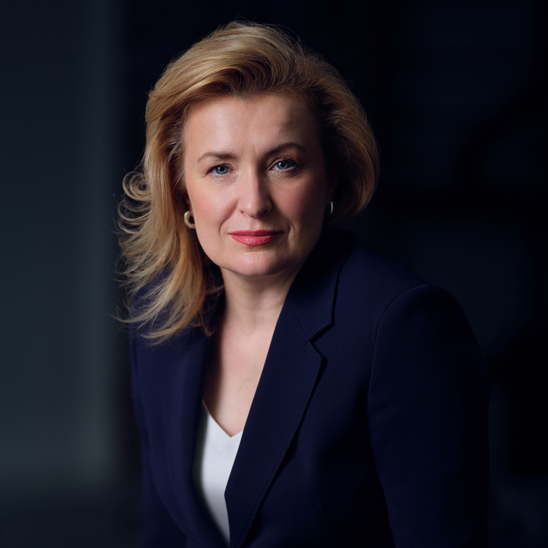

Manager of the legal department, Poland, the Baltics & Ukraine | IBM


Adam Zakrzewski
Manager of the legal department, Poland, the Baltics & Ukraine | IBM
What are the key projects you have worked on in the past twelve months?
Over the past year, I have worked on a wide range of projects involving both external clients and internal stakeholders. These included several acquisitions and integrations of products and services purchased in earlier years, as well as helping to win or resolve disputes across the region — most recently in Norway.
Equally interesting were internal projects focused on the development and large‑scale adoption of AI tools at IBM (watsonx challenge), including within the Legal and Regulatory Affairs function (“LRA”). IBM’s Chief Legal Officer committed all lawyers to the responsible use of AI, while at the same time encouraging experimentation with a broad set of tools.
A key milestone was LRA’s Elevate Week in October, centered on the theme “One Team, Future Ready.” The week focused on technology adoption and upskilling as part of LRA’s broader transformation journey. Through a mix of practical sessions and hands‑on learning, I gained valuable insights into how legal and regulatory teams around the world are using technology in their day‑to‑day work.
Today, my team uses AI tools regularly, in close collaboration with the business, with a strong focus on responsibility and risk awareness. For example, I work closely with IBM’s Software and Research & Development Center in Kraków — the first and largest IBM innovation hub in Central and Eastern Europe — to support awareness of AI ethics among software developers. In 2025, we also began using AI‑based tools such as Onit and Persuit to support external counsel management.
What key trends should in‑house counsel monitor in 2026?
Trends shorter than several years are in most cases not worth monitoring unless a lawyer works e.g. for a financial institution active on speculative markets. Most lawyers should focus on mid- and long-term trends. I would point to two long‑term trends that extend beyond 2026.
Cyber-risks and information manipulation. There are two important factors that may drive this trend: (i) commercialisation of AI- assisted cyberattacks and disinformation, (ii) insider risks related to agentic AI behaving in unintended ways. Further advancement of AI and automation will continue to fuel attackers’ potential, which has so far been limited by human hacker resources. Malicious actors will scale up their capabilities. Cyberattacks, information manipulation and inference will take place on a large scale and will continue to be driven by organised criminal groups, as well as certain foreign states. Agentic AI are designed to be helpful but operate without understanding consequences or even context. They are meant to be highly efficient. When integrated into enterprise’s workflows without strong controls, agents may take actions that create real risks for companies.
Diversification of technology suppliers. We are seeing critical functions shift from the public sector to a small group of global technology companies that control infrastructure, data and capital. These players increasingly act as de facto regulators, shaping markets and behavior. As an IBMer, I strongly believe in hybrid models — such as hybrid infrastructure (cloud & on-premise), hybrid AI — that combine solutions from multiple providers with in‑house capabilities for critical workloads. When advising decision‑makers or negotiating with major technology providers, lawyers should actively guard against over‑reliance on any single supplier by promoting diversification, alternative pathways and clear exit strategies. Risk optimisation shall become equally important as cost optimisation. This trend has been already supported by regulations such as DORA in the financial sector and will further spread across industries fueled by discussions about data sovereignty.
What professional experience has been particularly unique or interesting?
Between 2016 and 2024, I served as IBM Business Partner Ecosystem Counsel for Europe. The Ecosystem manages IBM’s indirect sales through thousands of third‑party partners. During my term, the Ecosystem underwent significant transformation, and its share in the European revenue grew strong double digit to almost 50%.
What made this role particularly fascinating was that it resembled programming more than traditional counseling. With thousands of partners and a need for consistent treatment, individual contract negotiations were totally impractical. Contract management has become automated to a large extent. The work instead focused on designing incentive models, promotions, and award frameworks that supported growth for both IBM and its partners, while remaining compliant with competition law.
This role offered a unique opportunity to test nuances of distribution models against increasingly complex European competition rules, arbitrate competing partner interests, and address vulnerabilities of the system – and sometimes breaches of partners’ obligations. Also, the unification of practices across the regions was important. I had the opportunity to closely cooperate with country lawyers in Europe and my peers in MEA, APAC, Americas. My experience in this role built deep antitrust expertise and positioned me well for my current secondary role as a subject matter expert supporting the global IBM Ecosystem legal team.
What cause are you most passionate about?
Simplification and enablement. My guiding question is: “If this was easy, what would it look like?” Legal work is inherently complex, and that complexity increases every year — especially in an organisation like IBM, with its scale, long history and the breadth of problems it tackles.
I am passionate about initiatives that help IBMers navigate legal risk quickly and confidently so they can grow the business with speed and scale. This often takes the form of sharing best practices across teams, which today can be amplified through AI tools. When I spot recurring issues for clients or business partners, I aim to proactively identify them, design solutions, and drive change.
A good example is the introduction of pre‑approved non‑standard contract clauses to address common negotiation roadblocks. By clearly defining risks and mitigations upfront, educating sellers on when and how to use these clauses, and empowering them to do so independently, we significantly shortened deal cycles. This increased deal velocity and meaningfully offloaded my team — freeing us to focus on higher‑value work.