Legal and permitting manager | PetroTal Perú

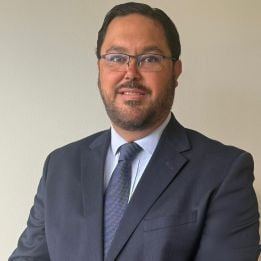
David Sáenz Delgado
Legal and permitting manager | PetroTal Perú
What are the key projects that you have been involved in over the past twelve months?
Over the past twelve months, I have been involved in several strategic initiatives that support the company’s operational continuity, growth, and regulatory compliance. Due to confidentiality constraints, many of these projects cannot be described in detail.
One publicly known project was my participation in the negotiation of a USD 75 million syndicated loan aimed at financing erosion control works at the company’s Block 95 operating site. This project was critical to safeguarding infrastructure, ensuring operational stability, and reinforcing the company’s long-term sustainability strategy.
In parallel, I have worked closely with senior management on the legal structuring of the company’s current drilling campaign, designed to support production growth and enhance asset performance. This involved comprehensive contractual, regulatory, and risk assessments to ensure that operational objectives were achieved within a sound legal framework.
Another major area of focus has been the management of regulatory permits and environmental authorizations, particularly the environmental management instruments required to sustain production across our active assets. This work has been essential to maintaining compliance, securing operational continuity, and mitigating regulatory risks in a highly regulated industry.
Collectively, these projects reflect a strong alignment between legal strategy, operational priorities, and long-term business objectives.
Are there any particular challenges for which in-house counsel should be preparing in 2026?
In highly cyclical industries such as hydrocarbons, in-house counsel must be prepared for potential downturns in commodity prices. Lower prices often translate into tighter budgets and increased pressure on legal spending, requiring more rigorous prioritization and resource allocation.
This environment demands a strong ability to distinguish between matters that genuinely require external expertise and those that can be handled efficiently in-house. Developing robust internal capabilities therefore becomes a strategic necessity.
In the Peruvian context, political uncertainty also represents a major challenge. Frequent changes in government leadership, shifting regulatory priorities, and electoral cycles create a complex and evolving operating environment. These dynamics can directly affect permitting processes, regulatory enforcement, and investment decisions.
In-house counsel must be prepared to anticipate regulatory changes, assess political risk, and support management in navigating uncertainty. This requires continuous monitoring, strong institutional relationships, and the ability to adapt legal strategies to rapidly changing conditions.
How do you manage legal aspects during periods of instability or crisis, ensuring that your legal strategy aligns with the broader business?
During periods of instability or crisis, our legal function operates as an integrated and transversal partner to the business. We work very closely with all key departments to identify where the main operational challenges and legal risks are concentrated.
Our first priority is to map critical risks and immediate, medium-term, and long-term legal support needs. Based on this assessment, we coordinate with internal stakeholders to define priorities and align legal actions with business objectives. We firmly believe that the legal department is not an end in itself, but a strategic support function that exists to enable the organisation to operate effectively.
In this context, we approach our role as a backup and support service. We focus on accompanying the business, understanding operational realities, and providing timely and practical solutions. Cost optimisation also becomes particularly relevant during periods of uncertainty. As a result, we rely primarily on in-house capabilities, complemented by a carefully selected minimum level of external support when strictly necessary.
This approach allows us to maintain continuity, protect the company’s interests, and support internal clients without compromising efficiency or responsiveness.
Have you had any experiences during your career as a lawyer that stand out as particularly unique or interesting?
Throughout my career, I have had the opportunity to work mainly in productive and growth-oriented businesses. However, one particularly significant experience was participating in the closure of a business unit as a result of a corporate decision and specific market conditions.
This process was especially challenging from a human and organizational perspective. Managing workforce-related matters, optimising remaining resources, transferring assets, and handling regulatory and corporate obligations required close coordination across multiple functions. As a legal counsel and legal representative, I was deeply involved in every stage of this process.
It was a demanding experience, but it strengthened my resilience, adaptability, and ability to operate under high-pressure conditions. It also required me to address complex issues beyond my usual areas of expertise, significantly broadening my professional skill set.
In addition, working in multicultural environments has been highly enriching. In previous roles, I operated within international structures, including Korean subsidiaries and multinational consortia, where communication often took place in a non-native language. Collaborating with professionals from diverse cultural and business backgrounds enhanced my perspective and reinforced the importance of cultural sensitivity in legal practice.