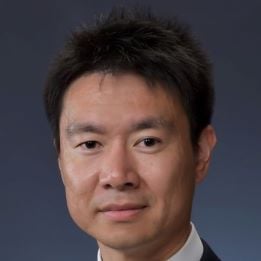
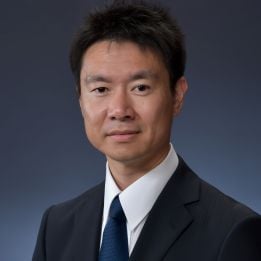
General counsel, Asia Pacific | Lenovo Group




Yosuke Yashio
General counsel, Asia Pacific | Lenovo Group
What are the key projects that you have been involved in over the past twelve months?
Regulatory readiness and crisis response continue to be very important. I have previously described how we rely on established “dawn raid” protocols to manage sudden regulator activity, aiming to protect our entities, directors and employees. Over the past year, we continued to operationalise this across AP: coordinating reminders and trainings and ensuring leadership teams know what to do in the first hour of an unannounced visit. This type of preparation is less visible than supporting a single big transaction, but it clearly improves organisational resilience by reducing confusion and delay at the critical moment. In the past twelve months, we actually needed to handle several regulatory movements on an urgent basis only within AP alone. In all instances, our initial responses were made in an efficient and quality manner.
Though we have been implementing periodic training globally with much more frequency than five years ago, regulatory visits are occasionally unavoidable. We periodically make conversations with senior management about heated areas of regulatory trends, and it is important that Legal department has such cycle of conversation to alert, get resources (or occasionally needs to do more without additional resources), deploy resources and prepare, monitor regulatory actions in the industries (and handle the ones toward us) and provide feedback to senior management. Legal department’s role is not just to reduce risks but to make business leaders management aware to make conscious decisions how to cope with the regulatory environment in which our businesses operate.
AI remains at the forefront of conversations about the future. How can in-house counsel ensure the successful integration of legal tech, while maintaining the human element?
Generative AI has been evolving as we speak. It is said that inferencing functions of generative AI will be heavily invested and grown for another several years until 2030. Capturing and providing accurate and comprehensive information in AI’s responses to our inquiries with contexts will be dramatically improved. Given AI at this moment is good enough to help our day-to-day responsibility, room for AI to help more in current human tasks in coming years should be enormous. Law is a rule that is generally publicly available through legislation, court cases, governments’ guidelines and recommendations. As long as information is available to AI, which could then understand relevant rules and facts in a given context with strong logical thinking, there might be only very limited areas AI could not play a part.
I believe, whatever complex legislations governments publish, the governments around the globe will soon expect that AI could translate them into simpler forms so that legal professions and even laypersons could understand in a short amount of time. Thus, governments might not hesitate to create even more complex regulations to target specific areas of business activities, with higher expectation of adherence to the regulations in a shorter allowance period going forward, and legal professions would need to keep it up. Higher expectations could also come from the senior management that we are working for. They know (or will soon know) that, as soon as a business team designs a new type of business or service in writing, we could just put the written document into AI to ask relevant laws and best practices. AI could immediately generate relevant rules and gaps with very good accuracy, for a rough estimation, so that the legal department’s response time is expected to be much less.
The successful integration of legal tech, particularly AI, should be that each in-house member should use AI on a day-to-day basis as an extremely knowledgeable advisor. Whenever possible, we should consult with AI for our informed decisions and our own learning (e.g., legal research, designing best practices), and seek efficiency regarding intelligent tasks where possible (e.g., initial contract review). As AI tools themselves will continue to grow and evolve, unless we would continue to choose the bast-in-class AI tool and to explore its best usage, our performance could easily become outdated.
In-house counsel increasingly play the role of ‘translator’. How do you communicate complex legal advice to the board, key stakeholders and internally?
My communication to internal stakeholders tends to be practical and structured, particularly when dealing with complex, multidisciplinary matters.
When advising business leaders, focus of my communications tend to be on what the decision enables, what risks it creates and how those risks can be managed, rather than legal theories or statutory details. I tend to present a small number of viable options, clearly explaining the trade‑offs and indicating where Legal is comfortable versus where judgment is required from the business. This allows leadership to make informed decisions without feeling constrained by technical legal language.
Many complex issues are resolved not in meetings, but through well‑structured written communication. I therefore place particular emphasis on precise, plain‑English emails that confirm understanding, record agreed assumptions and keep stakeholders aligned. This reduces re‑work, avoids misunderstandings and builds trust as a partner to the business. When a meeting is needed, I try to narrow down the scope of the meeting as much as possible prior to the meeting in order to effectively make decisions and/or alignment on targeted points at the meeting.
Overall, I believe effective legal translation is about helping the business act with confidence, not about showcasing legal complexity. My objective is always to ensure that stakeholders understand why an issue matters, what choices they have and how Legal will support execution once a direction is chosen.
General counsel for Asia Pacific | Lenovo Group
Vice president and deputy general counsel, Lenovo Group; general counsel, Lenovo China
Lenovo Group
View Powerlist

Vice president and deputy general counsel, Lenovo Group; general counsel, Lenovo China
Lenovo Group
View Powerlist