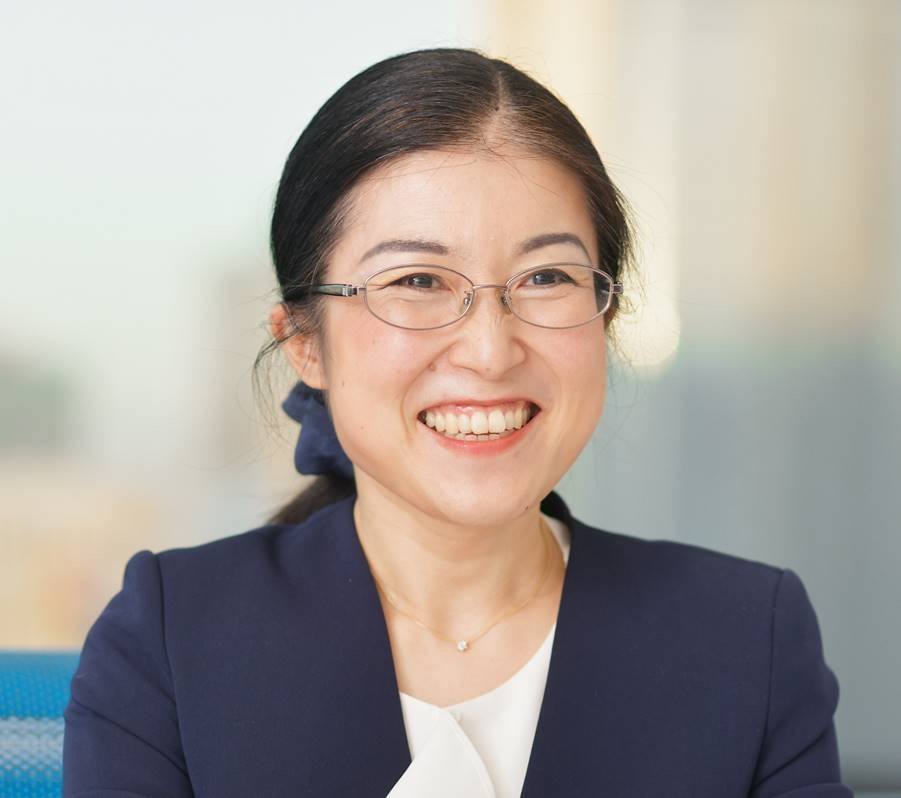
General manager of general risk management department | Sojitz Corporation



Toshimi Itakura
General manager of general risk management department | Sojitz Corporation
Team size: seven sections and one unit with approx. 70 members
What are the key projects that you have been involved in over the past twelve months?
Since we are the legal team of a general trading house with seven sections, we handle all important matters related to the business conducted globally by seven business divisions. We receive legal consultation at all phases of a project from the preliminary phase of an acquisition to the post PMI phase of the acquisition. Therefore, our legal staff handle cases not only at the time of project structuring, but also on an ongoing basis. We have dealt with numerous matters within the past year, including a range of M&A, tender deals and dispute resolution in various industries and regions. In addition, three sections of our department deal with general compliance matters and import and export compliance matters. Therefore, we also cover all company-wide compliance matters other than regular business transactions.
What are the most important attributes for a modern in-house counsel to possess?
As AI becomes increasingly embedded in the workplace, the competency profile of in‑house lawyers has evolved in a somewhat different direction from five years ago. I consider the following three competencies to be critical for in‑house counsel.
First, traditional legal knowledge. This remains essential to identify and manage AI hallucination risk. Ultimately, humans are accountable for decisions and, for in‑house counsel, sound legal judgement and subject‑matter expertise underpin that accountability.
Second, workflow design. This is the ability to decompose work processes into discrete components, determine which steps are amenable to AI‑enabled automation and which require human judgement, and orchestrate the overall workflow accordingly. While not traditionally expected of lawyers, this capability has become critical as AI becomes integral to our operations.
Third, human‑centred skills. The ability to ‘sense’ has grown in importance as AI assumes many routine tasks previously performed by humans. Communication, empathy, situational judgement and the capacity to read the context in which our business operates all fall within this category and, in my view, will not be readily replaced by AI tools. Humans excel at these capabilities, and AI cannot yet ‘read the room’. In this regard, I established a dedicated management training programme within the Legal Department three years ago to develop these skills; the programme remains ongoing.
What are the key trends that in-house counsel should be monitoring over the coming months?
Over the past year, we have navigated significant uncertainty associated with the US presidential election and its implications for the Russia–Ukraine relationship, which in turn increased the unpredictability of sanctions regimes. In parallel, the risk profile for sanctions and export controls has continued to intensify across key jurisdictions (the UK, the EU, the US and relevant local regimes), heightening legal, operational and reputational exposure for multinational groups. Accordingly, we continue to conduct thorough risk assessments to identify vulnerabilities during periods of instability and to sustain organisational resilience.
In addition to the measures already in place — namely the implementation of robust compliance programmes, regular employee training and the revision and updating of our model contracts — we have established a new framework for group‑wide sanctions and export controls risk mapping. We have developed a uniform, data‑driven map of sanctions and export controls risks across all group companies, classified entities into High/Medium/Low tiers, and linked each tier to monitoring cadence, control expectations and escalation pathways. We have successfully completed the classification of all group companies into High‑, Medium‑ and Low‑tier entities, and we will commence enhanced internal reviews of High‑tier entities this year. We will operate this monitoring and improvement mechanism on a periodic basis — either semi‑annually or, where appropriate, on a triennial cycle.
Have you had any experiences during your career as a lawyer that stand out as particularly unique or interesting?
We established a legal department in Vietnam in April 2024. This marked the first instance in our company of an administrative department establishing an organisation to consistently oversee all project group companies within Vietnam. Project companies in our group are independently supervised by their respective business divisions, and, with the increasing number of investments taking place in Vietnam, it has become quite challenging to ensure collaboration among these companies on legal and other administrative matters.
For similar reasons, building on the Vietnamese initiative, we established a legal department in Australia in January 2026.
Sojitz Corporation is focusing on business in Vietnam, where we have more than 20 active companies. Vietnam is one of the most active regions for our group, and this momentum will continue under our Mid-Term Plan 2026. Through our active investments, we have identified many challenges in Vietnam (such as anti-bribery and corruption risks and complex governmental procedures) and recognised the need for proper, consistent support across the region from a legal and compliance perspective.
By contrast, in Australia we anticipate undertaking larger-scale projects with significant capital commitments. This is another important aspect of our Mid-Term Plan 2026. Accordingly, a legal governance framework different from that in Vietnam will be required, and we intend to explore and define the appropriate model throughout 2026.
In this context, being physically close to each project company is very important to truly understand their business teams, the legal teams who support them, and their needs within the organisation. This is the main reason we decided to establish legal departments locally — both in Vietnam and in Australia — instead of providing remote support from the Tokyo head office.
General manager, legal department | Sojitz
General manager, legal department | Sojitz Corporation
General manager of the legal department | Sojitz Corporation