
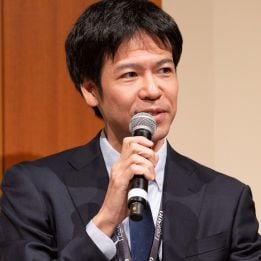
General counsel, Japan | The Hongkong and Shanghai Banking Corporation Limited




Naoki Hamada
General counsel, Japan | The Hongkong and Shanghai Banking Corporation Limited
Team size: 8
What are the key projects that you have been involved in over the past twelve months?
In 2025, I was seconded to the regional legal team, overseeing global markets legal matters across multiple APAC jurisdictions. A key project I led was supporting affiliated entities in selected APAC markets with applications for international dealer exemptions. The primary challenge was enabling these entities to continue trading with counterparties without business disruption or regulatory/licensing risk. We successfully obtained the relevant exemptions while maintaining business continuity during the preparation period by operating within a reverse-solicitation framework.
Another notable matter was the negotiation and execution of a bespoke tri-party collateral settlement arrangement with a major central counterparty (CCP). We engaged in detailed bilateral negotiations to agree an operationally workable settlement model outside the CCP’s standard collateral processes. Legal led the discussions end-to-end, including the legal structuring and the operational/technical set-up, resulting in a significantly more efficient process and a material reduction in manual operational workload.
Please describe a situation where your advice had a significant impact on business outcomes or objectives.
I advised the equities business that certain listed products, which were historically settled on a gross basis, could be moved to net settlement provided that the appropriate contractual documentation was put in place and supported by an external legal opinion. This approach is expected to deliver a significant reduction in risk-weighted assets (RWA), while maintaining a robust legal and control framework.
What are the most important attributes for a modern in-house counsel to possess?
In my view, the most important attributes for a modern in-house counsel are: adaptability — the willingness to learn quickly and adjust to new products, regulations and ways of working; strong stakeholder management — building trusted relationships and influencing outcomes across functions; and business acumen and commercial judgement — deep understanding and sense of ownership of the company’s business, spotting issues early, prioritising what matters and proposing practical solutions.
Many lawyers who excel as external counsel or individual contributors can find the transition to in-house leadership role challenging. As seniority increases, success depends less on individual technical output and more on enabling team performance — setting direction, coaching and creating an environment where the team can deliver consistently at pace.
AI remains at the forefront of conversations about the future. How can in-house counsel ensure the successful integration of legal tech, while maintaining the human element?
AI can be a powerful assistant for in-house legal teams, but it does not replace a lawyer’s responsibility. Any AI-generated output should be reviewed for accuracy, completeness and appropriateness, and it should not be relied upon as the sole basis for decision-making.
In practice, the level of review should be calibrated to the task and the risk profile. For some activities (e.g., summarisation, first-draft generation, translation, etc.), AI can materially improve speed and consistency when used with clear instructions and guardrails. For higher-risk work (such as legal conclusions, regulatory interpretations, bespoke structuring), AI should remain a support tool, with human judgement and accountability firmly retained. The differentiator for modern in-house counsel will be finding safe, efficient and creative ways to deploy AI while strengthening controls and maintaining trust with stakeholders.
In-house counsel increasingly play the role of ‘translator’. How do you communicate complex legal advice to the board, key stakeholders and internally?
There is a well-known quote: “If you can’t explain something simply, you don’t understand it well enough.” I try to keep that in mind whenever I advise stakeholders. The starting point is a deep understanding of the goals and the issues, followed by distilling it into the few points that truly drive the decision.
From there, I tailor the message to the audience in a concrete actionable form. Techniques such as BLUF (bottom line up front) are particularly effective, especially when stakeholders are familiar with the format. Ultimately, the goal is to translate issues and risks into clear options — what we can do, what we cannot do, and what we can do with conditions — so that decision-makers can move forward with confidence.
General counsel Japan | HSBC
General counsel Japan | HSBC
General counsel Japan | HSBC
As general counsel for Japan at HSBC, Naoki Hamada takes on a wide variety of roles for the global banking giant, having ultimate responsibility for legal matters in Japan. In...



Deputy general counsel, head of wholesale legal and markets legal for Mexico and Latam
HSBC
View Powerlist