Corporate officer, senior general manager of legal and compliance division | Park 24 Co., Ltd.




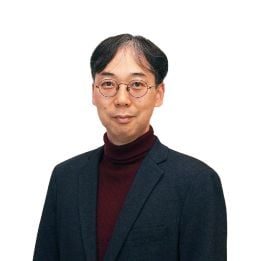
Masaki Sato
Corporate officer, senior general manager of legal and compliance division | Park 24 Co., Ltd.
Team size: approx. 50
What are the key projects that you have been involved in over the past twelve months?
A restructuring project in the UK was a key focus. The most famous carparking company in the country, National Car Parks (NPC), went into the insolvency procedure, with some part continuing its business. The NCP’s debt amount was more than £300m, more than $400m. It was a really unfortunate and painful process for us, but this was an absolutely necessary step to change our business model in the UK and restore our business there. The process is still ongoing but filing the administration, the most critical step, has been successfully completed. My role in the project was leading our legal team in Tokyo and London, closely working with external lawyers in both cities. As a part of the senior management team, I also led the discussion and made business decisions on matters related to the project.
Please describe a situation where your advice had a significant impact on business outcomes or objectives.
Our company, Park24 Group, is proud to be a business pioneer. In fact, Park24 created the world’s first unmanned, time-based car parking business and commercially successful car-sharing business. This meant that there was no business model we could rely on, and no rules we could simply follow. Thus, we have ‘discovered’ or ‘developed’ the rules and procedures by which our business abides. In other words, we co-created new businesses with other businesspeople. For example, when we started the new type of car-sharing business, as there were no clear regulations, we examined related rules and regulations and provided the interpretation that enabled us to start the business as we planned.
Have you been in a situation where expectations between Japanese and global stakeholders differed? How did you resolve it?
This has not been my actual experience, but I believe that this issue will arise soon. Nowadays, ransomware is prolific all over the world, and it is not unlikely that our company will become a victim of that. In that case, the hard question to handle will be whether we pay the criminal organisation to let them release the locked data or not. From a purely economical viewpoint, paying is one of the reasonable options to take, but from an ethical or legal viewpoint, paying money is somewhat problematic: the payment is supporting the crime. Outside of Japan, as far as I know, the former position can be accepted relatively easily. In Japan, there is not commonly accepted view on the question, or rather I think most Japanese stakeholders are less open to accept the former position.
As the GC of the Japan-based company, we have to think much of the Japanese stakeholders perception. However, considering our business nature and that our service is a part of mobility infrastructure – parking and car-sharing – quick resumption of the business is required by society. I do not have a clear answer yet, but we are having intensive internal discussions.
In-house counsel increasingly play the role of ‘translator’. How do you communicate complex legal advice to the board, key stakeholders and internally?
I believe that one of the key elements when communicating with board members or other key personnels is to know them: what is the area they are concerned about or are interested in, what is their role in the organisation (decision makers, external directors), what is their background and what level of knowledge do they have in relation to the topic – and select the best suitable way to them. When it comes to timing, a premature but early explanation may be suitable. When it comes to the way to communicate, emailing or texting may be better than having a call. When it comes to content, detailed and historical background information may be required sometime. Even if the information to be conveyed to them is complex, as long as the means of communication, timing and content are well prepared, the information can be smoothly and correctly delivered to them.
What counts in this context is to know them. Thus, I always proactively try to know the internal stakeholders through casual chatting or formal discussion at official meetings. I believe this is the area where in-house counsel have an advantage over external lawyers. We have regular contacts with those “clients” and a huge context information in relation to the company’s business.
Corporate officer; senior general manager of legal and compliance division | PARK24 CO.,LTD.
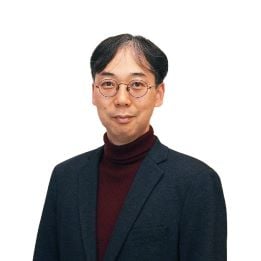
Corporate officer; senior general manager of legal and compliance division
PARK24 CO.,LTD.
View Powerlist