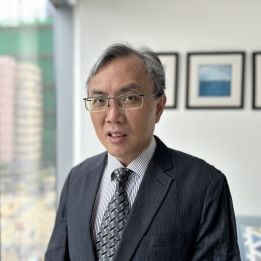

Global Director - Legal | SML Group


Teruce Yuen
Global Director - Legal | SML Group
When SML Group became the second largest global brand identification solution supplier group 19 years ago, I joined it as project manager bringing in a decade of solid in-house legal, compliance and insurance experience from market leaders in different industries. I have taken part in various M&A deals and lived through its expansion with a surging RFID business and the most turbulent years as its General Counsel since 2008, and actively participated in and accomplished its recent milestone change of control. Being a registered officer of some of its subsidiaries and without incurring a disproportionate level of legal fees, I was instrumental in ensuring it stayed sound and safe through all potential, threatened and actual intellectual property infringement disputes, contractual disputes with major suppliers, and maintaining a low to zero number of litigation cases against delinquent customer accounts throughout.
In an increasingly complex global environment, how are you helping your organisation navigate risk while still supporting growth?
In an increasingly complex global environment, I am helping my organisation navigate risk while still supporting growth by proactively collaborating with a global team of internal stakeholders and external business partners. Organisations can hardly grow healthily through legally initiating all claims relying on all valid causes of action and defending all claims relying on all valid defences without weighing on balance the associated costs and the underlying benefits. Always playing a strict legal role without stepping into their shoes will no longer be a panacea nowadays. My making of practical suggestions, not in a purely legalistic way and with alternative options in the right circumstances, will often be appreciated by my internal stakeholders. I am not supposed to be always drawing a clear yes-or-no or similar conclusion one way or the other in all situations as doing so without commercial input or recommendation will simply leave the material underlying issue not fully addressed and to the financial detriment of their organisation. As general counsel, I always strive to facilitate my organisation’s addressing of legal, commercial and operational issues in the same case in a wholistic manner, thereby avoiding perpetuity or escalation of any underlying problem.
How has the role of General Counsel evolved in recent years, and where do you see GCs creating the most value today?
The role of General Counsel has evolved in recent years from a principal in-house legal officer wearing a legal hat with certain legal management responsibilities to a more multi-role officer of his organisation. Not strictly legal roles are more commonly assumed by them nowadays. GCs have undergone evolution from their typical role as such from the last century to a more dynamic role as a master of more than one trade within their own organisation. They are taking on a more influential role in their own organisation as to how decisions are made, risks managed, progress made and desired results realised. GCs creating the most value today tend to be those who are either generalist in-house lawyers or specialist in-house lawyers in certain spheres of law, and who are sufficiently conversant with their own organisation’s overall day-to-day operations or certain critical aspects of their own organisation’s overall day-to-day operations. Whilst the GC wearing a legal hat does have certain legal management responsibilities within his own organisation, legal sense alone not coupled with any commercial and operational acumen will cripple his effective functioning within his organisation. Even though in-house lawyers are typically brought up with the ability to clearly segregate between legal and commercial considerations from day one of their employment, analysing legal or business situations by considering other internal and external stakeholders’ commercial and operational concerns will be the key to creating extra value to their own organisation today. Making zero non-legal suggestion and making legal comment with zero or inadequate commercial and operational sense will not serve to enhance the GC’s value to his organisation. Besides, whilst sometimes wearing more than one hat than just a legal hat may involve conflicts between the GC’s legal considerations and non-legal considerations, as well as his legal role and some other concurrent or ad hoc roles (e.g. AML officer, committee member, company director, company secretary and authorised contract signatory) that he may be required to play, being able to do that by managing such conflicts intelligently and properly is an effective way to achieve synergy within their own organisation, thereby creating the most value as GC today.
What has been your most significant challenge as General Counsel in recent years, and what did you learn from it?
The most significant challenge for me as General Counsel in recent years has been the growing significance of unconventional or atypical legal risks to be addressed by my organisation. Such risks range from geopolitical risks, sanctioning law risks, global pandemic risks, risks of unexpected claims from non-practising patent/trademark asserting entities, cyber security risks and artificial intelligence (AI) risks. The key lesson I learned from my experience in addressing such risks for my organisation consecutively and sometimes concurrently over the past decade is that a GC should have an open mind for embracing an open-ended list of significant challenges in the ever-changing global business environment. An open mind is indispensable and has enabled me to steer through such challenges and risks in recent years, and will continue to enable me to cope with future unconventional or atypical legal risks. Teamwork and constructive collaboration count. As General Counsel, I have worked closely with internal stakeholders (including but not limited to shareholders, senior management, finance, trade compliance, information technology and business teams) in (a) addressing US sanctioning laws in respect of Xinjiang-sourced cotton, (b) addressing operational issues associated with international sanctions against Russia and Myanmar, (c) addressing customers’ new requirements against higher import costs as a result of US tariffs, (d) introducing enhanced force majeure clauses to address unprecedented hardship in contract performance as a result of the COVID-19 pandemic, (e) enabling fast and effective legal and operational responses to unexpected activities of non-practising patent/trademark asserting entities, (f) enhancing cyber security measures as a result of cyber security incidents experienced by major customers, and (g) swiftly enhancing internal policies and other risk mitigation measures against increasing confidential data leakage risks as a result of more common uses of AI tools. I have experienced a recent situation involving a risk of failing to complete any one of a series of interconnected asset, equity and spin-off M&A deals which were targeted for consecutive closing within a very short period. This case is an example of an open-ended list of significant challenges in that it involved an unprecedented, substantive risk for my organisation. Had this risk materialised, the financial and operational impact on my organisation would have been significant. Had any of the internal stakeholders made any blunder, the core team would not have achieved the ultimate target outcome in time. In tackling such challenges, GCs should also make a meaningful impact on and difference to their own organisation by handling situations in a more innovative and case-centric manner. Though adherence to the black-letter words of the legal rules is playing safe and using AI tools is working smart, solving major legal or business problems may entail purposively going beyond the confines of such rules, and indiscriminate reliance on AI tools without output verification and confidentiality safeguards will prove counter-productive. Effective legal pilotage also counts. GCs should be enabled to, and if workable volunteer to, take the courageous lead at the right times when probably nobody else in their organisation is able to address cases involving such unconventional or atypical legal risks more effectively than they are.