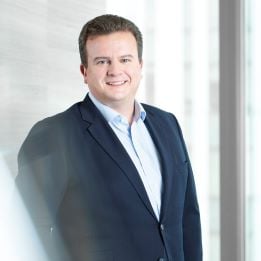

Group General Counsel and Senior Vice President | DFS Group


Ryan Mark
Group General Counsel and Senior Vice President | DFS Group
Team size: Eight
In an increasingly complex global environment, how are you helping your organisation navigate risk while still supporting growth?
In an increasingly complex and regulated environment, I see legal not simply as a control function, but as a strategic enabler of the business. That requires understanding not only legal risk, but also the company’s commercial priorities, operating model, and the external factors that may affect growth.
My focus is on providing advice that is both legally robust and commercially executable. Whilst legal must continue to act as a gatekeeper, its real value lies in helping the business achieve its objectives in a way that is practical, efficient, and aligned with its risk appetite. The most effective legal support comes from being involved early, so risks can be identified and managed without unnecessarily slowing progress.
This is particularly important as regulation continues to expand, especially in areas such as data privacy, competition law, and consumer-facing regulation. In that context, I help the organisation navigate complexity through legal judgement, commercial awareness, horizon-scanning, and a pragmatic approach to problem-solving.
For a lean legal team, agility is essential. I have focused on building a team that is adaptable, self-motivated, and solutions-oriented, able to respond quickly to changing demands whilst maintaining high standards. That combination of commerciality, judgement, and agility allows legal to protect the business whilst supporting sustainable growth.
How has the role of General Counsel evolved in recent years, and where do you see GCs creating the most value today?
The role of General Counsel has evolved from technical legal adviser to strategic The role of General Counsel has evolved from technical legal adviser to strategic business partner. Today’s GC is expected not only to interpret the law, but also to understand the commercial context, anticipate risk, and help shape decisions at the highest level of the organisation.
GCs can no longer operate in a legal silo. The pace of change, growing regulatory scrutiny, and rising stakeholder expectations require legal leaders to be commercially aware, operationally engaged, and able to give advice that is clear, practical, and implementable. The business does not just need to understand risk; it needs to know how to move forward responsibly and effectively.
That is where GCs create the most value: by translating complexity into actionable guidance, enabling confident decision-making, and managing legal risk in a way that supports business objectives. Equally important is building agile, high-performing teams that can operate effectively across a broad range of issues. In smaller legal functions especially, success depends on adaptable, proactive people, and on leadership that coaches and mentors them to operate with confidence and judgement.
How do you build and maintain a strong legal team?
I believe strong legal teams are defined not only by technical excellence, but by mindset. In a lean team, it is essential to have people who are adaptable, capable, and willing to go the extra mile. They need to be curious, prepared to learn, and willing to engage deeply with the business rather than operate at a distance.
I focus on building a team culture that values ownership, collaboration, and commerciality. That means encouraging people to dig into issues, understand the wider business context, and work closely with colleagues across functions to find practical solutions. I also believe strongly in pairing different skill sets and perspectives, as this strengthens coverage, improves problem-solving, and helps individuals develop beyond their core discipline.
Maintaining a strong team also requires active coaching and mentoring. Particularly in a smaller function, people need the confidence to exercise judgement, take initiative, and adapt to a broad range of issues. My role is to create an environment where high standards are expected, but where people are also supported to grow, stretch themselves, and contribute meaningfully to the wider organisation.
Group General Counsel and Senior Vice President | DFS Group