Legal director | Rentco Africa

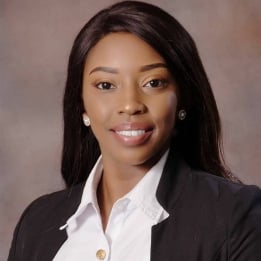
Margaret Mucheru
Legal director | Rentco Africa
What are the most significant transactions that your legal team has recently been involved in?
The legal team at RentCo Africa is not positioned behind transactions – it leads them. I personally architect every material financing mandate from first structuring through to final drawdown, operating to one standard: every transaction must be bankable to our financing institutions and commercially superior for our lessees – simultaneously, without compromise.
The defining transaction of the past year (2025) is the National Police Service Phase VII fleet procurement — 591 Isuzu vehicles and 303 Toyota units, underwritten by not one but two independent Tier 1 commercial banks: Equity Bank Kenya and Co-operative Bank of Kenya, who separately advanced a cumulative KES10bn in approved financing for this single mandate in 2025. I designed structurally consistent yet legally distinct frameworks for each bank — governing drawdown mechanics tied to National Treasury exchequer releases, multi-tranche insurance and vehicle registration compliance regimes, service and maintenance agreements with the OEMs to satisfying each bank’s individual conditions precedent, all governed by Kenya’s Public Procurement and Asset Disposal Act. The fact that two of Kenya’s most sophisticated commercial lenders independently underwrite the same leasing mandate to a combined KES 10 billion is not incidental — it is a direct reflection of the legal infrastructure I build.
Beyond NPS VII: I structured the KES3.6bn for one of the County Governments multi-asset leasing contract. While at capital markets, RentCo Africa pursues a deliberate two-track strategy – domestically, we are currently admitted to the Nairobi Securities Exchange’s Ibuka programme, where I lead the governance and investor-readiness restructuring toward eventual public listing; Internationally, we got an approval to proceed in structuring a Note Programme at the Cape Town Stock Exchange to raise green financing for our renewable energy portfolio. Through RentCo Renewable Energy Ltd a subsidiary of RentCo Africa Ltd, I structured a 1.3 MW Solar PV lease at Sasini PLC’s Kipkebe and Keritor tea factories – projecting 35,000 tonnes of CO₂ offset saving Sasini Kes 6,000,000 on operating expenses when taking power directly from the grid- and executed medical equipment lease agreements at for a Renal Unit in Kirinyaga County thereby, enabling both facilities to access life-sustaining clinical infrastructure without capital outlay.
One discipline connects every asset class, every bank, every jurisdiction: I build the financial architecture that makes each transaction possible – not the paperwork that records it.
What trends are you seeing in foreign investment into the region, and how does your role support or facilitate these opportunities?
Africa is not a risk – Africa is an opportunity. The perceived risk of investing in the continent is consistently overstated and consistently contradicted by the actual data on investment returns. I echo this not as a rallying call but as a professional who has spent her career generating the transactional evidence that makes it true.
The data is unambiguous: Moody’s Analytics, in a study of over 8,000 project finance loans spanning 1983 to 2018, found that Africa’s infrastructure loan default rate stands at just 1.9% — against Eastern Europe at 12.4%, Latin America at 10.1%, North America at 6.6%, and Western Europe at 4.6%. Africa is not the world’s riskiest investment market. It is among the most reliable. The problem is not performance — it is perception. And that perception gap costs this continent billions in unnecessarily expensive capital every year.
The world’s financial institutions understand this. MIGA — the Multilateral Investment Guarantee Agency, a World Bank Group institution — was established to bridge precisely this gap, providing political risk insurance and credit enhancement to investors and lenders against the non-commercial exposures that deter capital from African markets: currency inconvertibility, expropriation, breach of contract, and civil disturbance. In fiscal year 2025 alone, MIGA issued a record USD 9.5 billion in new guarantees across 44 projects — institutional confirmation that African investments, properly structured and legally sound, are fully underwriteable by the world’s most demanding capital providers.
My role is to ensure every RentCo Africa transaction is built to exactly that standard. I structure each deal so our financing banks are protected through absolute payment obligations, lender step-in rights, and Settlement Amount formulae that preserve the full present value of the financing, and Credit Insurance and Guarantees are also put in place by insurers suc as Zep -re and ATIDI and local insurers. I structure each deal so our lessees — governments, hospitals, energy operators, corporate fleets — receive the most commercially advantageous access to assets they could not otherwise own. Structured leasing achieves both simultaneously: it de-risks the investment for the financier while unlocking critical assets for the lessee — without either party conceding a thing.
I believe that Africa has the data. Africa has the institutions. Africa has the legal infrastructure. What Africa needs now are investors willing to let facts replace fear — and I have spent my career building the frameworks that make that choice commercially irresistible.
Structured leasing is East Africa’s most powerful and underutilized development finance instrument. I have proved that across sovereign and Corporate fleet procurement, renewable energy, medical equipment, and international capital markets. Africa is ready. It has always been ready. The question is whether the world is finally prepared to act on the evidence.
How do you navigate the legal complexities of cross-border transactions within the East African Community (EAC) and beyond?
Across our eight active sovereign jurisdictions—including Kenya, Tanzania, Uganda, Rwanda, DRC, Mauritius, South Africa, and the UAE—regulatory frameworks diverge significantly. Managing each market in an isolated silo creates immense operational friction; instead, I engineered a single, scalable legal architecture with lots of consultations with External Counsels in the various countries that was approved by our Board: the RentCo Africa Group Compliance Universe.
This proprietary framework standardises RentCo Africa’s risk appetite, contractual mechanics, and governance obligations at the group level, ensuring every transaction sits on an identical structural foundation before local deployment. We then apply precision-engineered local adaptations only where local statutory requirements strictly demand it. For example, when structuring NGO/expatriate leasing to diplomats, the diplomatic vehicle leasing, our core Master Operating Lease Agreement (MOLA) remained intact, but we rebuilt the VAT exemption and diplomatic registration protocols from first principles—engaging various Ministry of Foreign Affairs directly to align the transaction with Vienna Convention protocols.
Similarly, for one of our International Customers in Rwanda EV fleet master lease, we adapted that same core architecture to Rwanda’s regulatory environment while preserving the absolute payment obligations, default chains, and repossession rights our financing banks require across every market without exception. The jurisdiction changes, but our institutional standard remains absolute. This systematic approach allows a lean legal team to aggressively drive safe, compliant, and highly bankable pan-African expansion from the front.