Representative executive officer and general counsel | Unilever Japan Holdings G.K.



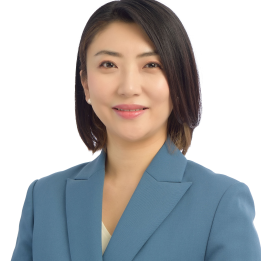
Sayaka Matsui
Representative executive officer and general counsel | Unilever Japan Holdings G.K.
What are the key projects that you have been involved in over the past twelve months?
Unilever has introduced Social First as a new strategic direction, centred on building brand relevance by engaging credibly in the cultural conversations that already shape consumer behaviour. Powered by social insights, data and technology, the strategy goes beyond marketing execution and influences what information decisions are based on, and how they are made across the organisation.
In Japan, Social First required more than adoption — it required leadership. In my role as general counsel, I approached the strategy as a change to the business operating model rather than a functional initiative. The key question was how to enable the organisation to make faster, better-informed decisions under a new and relatively unfamiliar way of working.
By anticipating how decision-making, ownership and risk profiles would evolve once Social First was embedded, Legal took an active role in shaping the conditions necessary for the strategy to succeed. Working closely with marketing and other functions, we helped define decision principles, establish proportionate guardrails and clarify accountability, ensuring that speed and governance were aligned rather than in tension.
We also led the development of guidance and training to equip teams to operate effectively where precedent was limited. Through this approach, Legal functioned as a strategic enabler — translating strategic intent into an executable model grounded in local realities and supporting sustainable business momentum.
Please describe a situation where your advice had a significant impact on business outcomes or objectives.
As general counsel, my role goes beyond identifying legal risk; it is to help shape how the business moves forward in situations of uncertainty. One situation where my advice had a meaningful impact on business outcomes was when I proposed alternative paths that allowed the business to progress while keeping risk within an acceptable range.
In such situations, out-of-the-box thinking is often required. There are times when an option initially appears unrealistic, or even impossible, yet closer examination reveals that it contains the most balanced way forward. By reframing the question from “whether we should proceed” to “how we can proceed responsibly,” and by exploring those less obvious paths with both discipline and imagination, I have been able to support the organisation in aligning behind a clearer direction. These moments illustrate how Legal can help unlock progress, rather than simply define boundaries, and they are aspects of the role that I find particularly motivating.
Equally important are situations where impact comes from stopping or simplifying what has long been assumed to be necessary. By analysing established processes and carefully assessing how much they actually contribute to governance or risk control, I have advised on removing or streamlining certain steps. This has helped reduce friction and shorten decision timelines, supporting faster execution without undermining the integrity of the control environment.
Through these approaches, I have sought to support clearer, more confident decision-making and to contribute, in a practical way, to better business outcomes.
Have you had any experiences during your career as a lawyer that stand out as particularly unique or interesting?
One experience that stands out was spending one year working at a community-based public interest law firm in the United States, I worked alongside US attorneys to support locally rooted businesses and community initiatives addressing social and economic challenges. Applying business law skills in this collaborative and unfamiliar context shifted how I approached legal problem-solving. It highlighted that viable options are sometimes found in places that initially seem impractical, and it strengthened out-of-the-box thinking, which continues to influence my work today.
How can general counsel foster a corporate culture that supports ESG principles and compliance across all levels of the organisation?
At Unilever, business integrity and sustainability sit at the core of our strategy and long-term value creation. By business integrity, we mean conducting business honestly and responsibly, including compliance with laws and regulations. As general counsel, I see my role as embodying these values and communicating them in a consistent, practical way across the organisation. I speak at our largest internal conferences every time, reinforcing that integrity is not an abstract concept, but something reflected in everyday decisions.
I also believe communication goes beyond words. Everything that happens internally or externally can act as a signal that either encourages or discourages individual integrity. This means there is no moment when business integrity can be set aside in my decision-making as general counsel. Consistency of message and action is essential to culture-building, and the Legal team and the GC can play an important role in maintaining that consistency.
When it comes to sustainability, the key is how Legal can enable concrete action. New initiatives often face structural or regulatory barriers. Identifying how those barriers can be navigated, and where appropriate contributing to the design of frameworks that make progress possible, is a critical moment for Legal to add value. I also see advocacy as part of the role: using legal knowledge to engage with stakeholders on what effective systems should look like is one of the strengths a general counsel can bring to advancing sustainability in practice.
Representative executive officer and general counsel | Unilever Japan Holdings
Representative executive officer and general counsel | Unilever Japan Holdings

Representative executive officer and general counsel
Unilever Japan Holdings
View Powerlist

Representative executive officer and general counsel
Unilever Japan Holdings
View Powerlist