
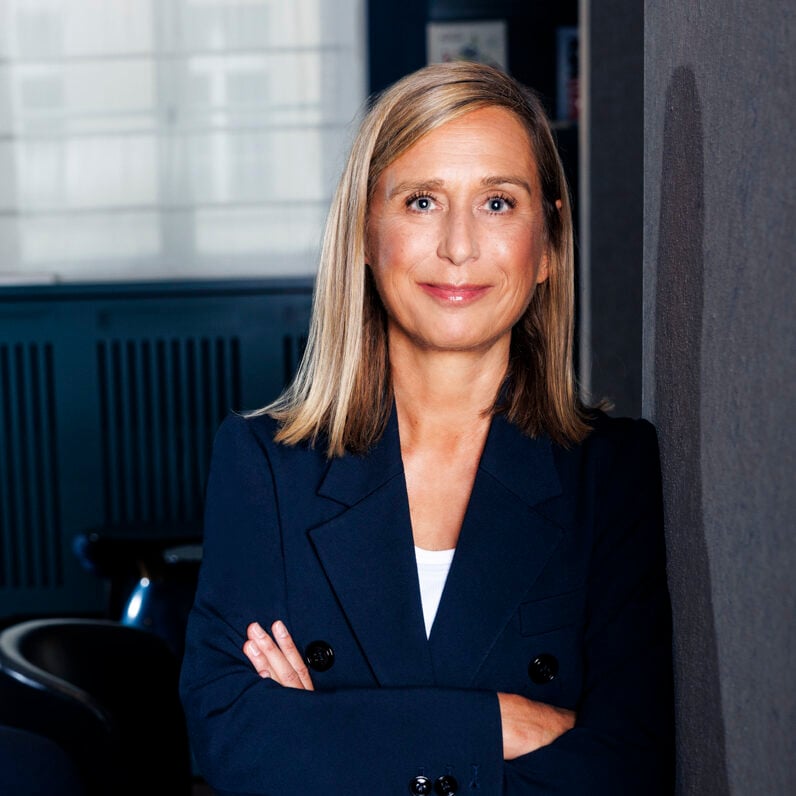
Group general counsel and member of the group management committee | Deutsche Bank


Dr Simone Kämpfer
Group general counsel and member of the group management committee | Deutsche Bank
Have you had any experiences during your career as a lawyer that stand out as particularly unique or interesting?
One experience that stands out is working on large‑scale, high‑stakes investigations where the legal, regulatory, and reputational dimensions all converged. These situations demand not only technical excellence but also exceptional judgment, discretion, and resilience.
What made these matters unique was the combination of complexity and human impact: navigating fragmented facts, coordinating across international teams, and providing clarity to clients in moments of intense scrutiny. You see very quickly that your role extends far beyond legal analysis – you become an advisor, a stabilizer, and often the person who articulates the path forward when others hesitate.
These experiences shaped my belief that the most meaningful work happens when legal rigor and principled leadership intersect. They taught me to operate decisively under pressure, to communicate with absolute precision, and to never lose sight of the trust placed in you when the stakes are highest.”
Looking forward, what trends do you foresee in the legal landscape over the next 5–10 years that companies should prepare for?
Over the next decade, the legal landscape will become more integrated with business decision‑making, not less.
First, we will continue to see expanding regulatory expectations around governance, ESG, and individual accountability. Companies will need legal functions that are anticipatory rather than reactive, with the ability to translate emerging requirements into competitive advantage.
Second, the role of the General Counsel will increasingly sit at the intersection of law, risk, and strategy. Boards and management will expect legal leaders to help navigate ambiguity, reputational risk, and societal scrutiny, not just legal exposure.
Finally, technology – including AI – will change how legal work is done, but its expertise will continue to matter. The differentiator will not be automation alone, but the ability to combine technological efficiency with experience, in depth knowledge and sound human decision‑making. The organisations best prepared for this shift will be those that invest early in their people, their data, and the underlying processes that allow technology and human expertise to reinforce one another. It’s a great privilege for me to see that Deutsche Bank has exactly this spirit.