

Group general counsel and senior vice president legal and audit | HARIBO Holding


Dr Klaus Cannivé
Group general counsel and senior vice president legal and audit | HARIBO Holding
How do you approach managing legal aspects during periods of instability or crisis to ensure the organisation’s resilience?
I like Wayne Gretzky’s quote: ‘A good hockey player plays where the puck is. A great hockey player plays where the puck is going to be.’ Obviously, we can’t predict litigation trends, political shifts, or changes in our business in detail—nobody can. But like everyone in the legal, compliance, and audit industry, we must anticipate what could come and ensure we have the resources to respond effectively.
Two aspects I’d like to highlight: First, detailed knowledge of specific topics is becoming less important than the ability to adapt to new situations, laws, or economic environments. In daily work, that means acting more as a coach, sparring partner, or sounding board – avoiding micromanagement and overly hierarchical structures.
Second, resource management is critical. We must avoid wasting time on administrative tasks that don’t create value. We need to reshape responsibilities and build a buffer for special topics and challenges. Typical tools include outsourcing non-strategic tasks to trusted external partners and training business colleagues instead of reviewing every document. I hope this keeps us ready for wherever the puck is going next.
Looking forward, what trends do you foresee in the legal landscape over the next 5–10 years that companies should prepare for?
I guess the standard answer you’ll hear is that ‘AI changes everything.’ Some believe most legal jobs will be wiped out and that, without coding skills, lawyers will become ‘obsolete.’ I’m not so sure about that. AI is obviously already transforming our industry. However, its impact varies across different areas. I still believe AI will have a stronger effect on Big Law and large legal departments dealing with big data and standardised products. For smaller legal departments, the impact will be more evolutionary: it’s a tool to make decisions better and faster, but it won’t replace the decision-makers. Let’s talk in five years – if you see me unemployed and, in a coding, bootcamp, I was wrong!
I see another major challenge emerging: geopolitical dynamics are increasingly shaping strategic decisions for globally active companies. These issues are landing on our desks with growing frequency – and demand our attention. Legal departments can play a leading role here because of our ability to assess both legal and economic consequences.
Finally, the landscape of external advisors is undergoing a profound shift. Choosing the right law firm—or any advisor—is becoming more complex amid the rise of AI technologies, aggressive (hourly) rates, and diverging strategic approaches. It’s no longer just about quality and cost; it’s about finding the perfect fit for individual needs and culture. In short: effective panel management is becoming a key factor for success.
What is a cause, business or otherwise, that you are passionate about? Why is this?
I’m always a bit suspicious when people say they’re passionate about ‘law’ or ‘compliance.’ After a day of tackling legal or strategic challenges, my real passions are far more enjoyable: tennis and wine. On the court, I’m more enthusiastic than talented – but I love the game. And as the son of a winemaker, my love for wine was inevitable. A good glass of German Riesling reminds me that some things in life are meant to be appreciated, not regulated.
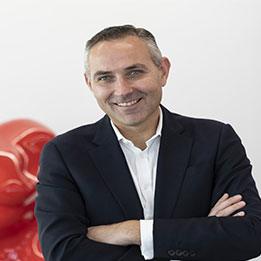
Group general counsel - senior vice president legal and audit
HARIBO Holding
View Powerlist

Group general counsel - senior vice president legal and audit
HARIBO Holding
View Powerlist
Group general counsel - senior vice president legal and audit
HARIBO Holding
View Powerlist
Group general counsel - senior vice president legal and audit
HARIBO Holding
View Powerlist