
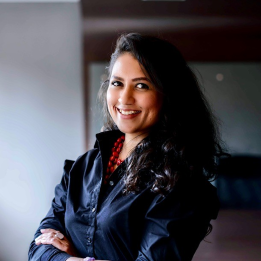
Head, group legal and contracts | Muhibbah Engineering


Thivina Kumaran
Head, group legal and contracts | Muhibbah Engineering
What are the most significant cases or transactions that your legal team has recently been involved in?
Over the past year, we have been involved in several cross-border transactions and projects. A key matter was the acquisition of a target company in France. This transaction took close to a year to complete and required extensive SPA negotiations under French law, and the structuring of condition subsequent mechanisms for the issuance of bank guarantees, including a counter-guarantee from a Malaysian bank. We also undertook detailed risk analysis relating to the target’s real estate assets, particularly construction warranties and liabilities under the French law, as well as employment related exposures. We are also currently involved in a proposed acquisition of another company, now at the due diligence stage, focusing on identifying legal, regulatory and operational risks. We also supported the Group’s expansion into the Middle East, coordinating the establishment and incorporation of new entities under unfamiliar regulatory frameworks.
Beyond M&A, we are supporting the development and operational structuring of a fuel storage terminal in Vientiane, Lao PDR, advising from project inception on land lease and concession arrangements, EPC risk, and long-term storage and offtake agreements. This was particularly challenging due to the need to navigate concession based land frameworks and the broader complexities of Lao PDR’s legal environment while aligning legal solutions with operational realities.
Further, we also handled several contentious matters, including arbitrations in Malaysia and regionally. These disputes are technically complex, often requiring niche oil and gas expertise and coordination across jurisdictions, including parallel proceedings for enforcement purposes. Some matters were resolved through negotiated settlements, resulting in significant savings in cost and time.
What do you see as an opportunity or risk over the next six months?
The immediate risk is internal capacity building. The team is relatively new, with two counsel joining this year. While experienced, our business has a steep learning curve; contracts are highly technical, projects are operationally driven, and disputes often hinge on engineering or execution details rather than purely legal interpretation. If a dispute arises, we must be able to respond with both legal and technical understanding. The priority over the next six months is therefore knowledge transfer and embedding the team within the business so they understand how our projects function in practice, not just on paper.
At the same time, the Group is clearly looking outward. Following the French acquisition, the potential of other acquisition signals continued international expansion. This creates opportunity but it also introduces risk, as each jurisdiction brings different regulatory, employment and governance requirements. Our challenge will be ensuring that our internal frameworks scale in a disciplined way to support that growth.
What do you find most rewarding about working as an in-house lawyer?
Coming from private practice in dispute resolution background, much of my earlier work was reactive. We stepped in when something had already gone wrong. Moving in-house changed that dynamic significantly. I am now involved much earlier in the process. I sit with the business teams and management, understand what they are trying to achieve, and help structure transactions, manage risk, and design solutions that allow projects to move forward. That shift from being purely advisory to becoming a strategic partner is incredibly fulfilling.
I also value the ability to balance legal principles with commercial reality. It was an adjustment at first, recognising that the role is not about saying “no,” but about finding a way to support the growth of the business. When you see a project close, an acquisition complete, or a policy you implemented actually guiding behaviour across the organisation, there is a tangible sense that you have contributed to something beyond just giving legal advice.
Can you describe a situation where legal input materially influenced a key business decision?
One situation where legal input materially influenced a key business decision was during a cross-border acquisition.
At the outset, the transaction was viewed primarily as a commercial opportunity; the focus was on securing the asset quickly. During legal due diligence, however, we identified several risks tied to the target’s real estate and historical construction compliance, including gaps in insurance coverage and uncertainties around long tail liability exposure.
Rather than allowing the business to proceed on the original structure, we worked closely with management and external counsel to reassess the risk allocation. Legal proposed a revised approach: restructuring parts of the completion mechanics, introducing specific indemnities with extended survival periods, and linking post-closing obligations to financial security instruments. This shifted the discussion from concerns the issues might derail the transaction to a focus on how to proceed safely. The acquisition ultimately moved forward, but on terms that protected the company.
question hereWhat leadership qualities do you prioritise when building or developing your legal team?
I focus on building lawyers who exercise sound commercial judgement, not just technical competence. That means encouraging them to understand how the business operates and how their advice affects real project outcomes.
Ownership and accountability are important. I expect team members to manage matters end to end, while providing guidance to build confidence in engaging directly with stakeholders and making recommendations.
Given the technical and engineering driven nature of our work, I encourage the team to understand operational and project realities, not just contractual wording. This strengthens their credibility and allows them to propose solutions rather than simply identify risks.