-
Does your jurisdiction have a class action or collective redress mechanism? If so, please describe the mechanism(s) and outline the principal sources of law and regulation and its overarching impact on the conduct of class actions in your jurisdiction.
The Israeli legal system provides a statutory class action mechanism under the Class Actions Law, 2006, which is the principal source governing the filing, certification, and adjudication of class actions in Israel.
In addition to the Class Actions Law itself, class action proceedings are governed by the Class Actions Regulations, 2010, which set out procedural rules specifically applicable to certification motions and the management of class proceedings. In matters not specifically regulated by these regulations, the Civil Procedure Regulations, 2018 apply as a supplementary procedural source.
Under the Class Actions Law, class action proceedings are conducted in two distinct stages: first, the stage of determining whether the claim should be certified as a class action; and second, the stage of adjudicating the class action itself. The petitioner (who seeks to represent the members of the class) is required to file a motion to certify the claim as a class action together with the class action statement of claim.
The certification stage is adjudicated as a separate and substantial preliminary proceeding. Following the respondent’s response, the court may hear evidence, decide interlocutory applications, and conduct a relatively intensive examination of the legal and factual basis for certification.
At the certification stage, the court examines whether the statutory requirements for certification are met and whether the matter is suitable to proceed as a class action. In particular, the court considers:
(i) whether the class action the petitioner seeks to pursue is based on one of the matters and causes of action specified in the Class Actions Law, or in another statute that permits the matter to be pursued by way of a class action (Section 3);
(ii) whether the petitioner has standing under the Class Actions Law, namely as a person with a personal cause of action, a relevant public authority, or, in appropriate circumstances, an organisation whose public purposes relate to the issues sought to be determined in the class action (Section 4);
(iii) whether the conditions for certification are satisfied, including that (1) the claim raises substantial questions of fact or law that are common to all members of the group, and there is a reasonable possibility that these questions will be resolved in favor of the class; (2) a class action is the efficient and fair way of resolving the dispute under the specific circumstances of the matter; and (3) there is reasonable basis to assume that the interest of the class members will be represented and managed properly and in good faith (Section 8).
In addition, the Class Actions Law leaves the court with a measure of discretion and provides that, even where all the conditions set out above are satisfied, the court may take broader policy considerations into account when deciding whether to certify the claim as a class action.
If the court grants the certification motion, it must define in its certification decision the class on whose behalf the action will proceed, identify the representative plaintiff and class counsel, specify the common questions of fact and law and the causes of action to be determined in the class proceeding, and set out the relief sought. Notice of the certification decision is then published, and class members are included in the proceeding unless they request exclusion within 45 days, or within such other period as the court may determine.
If the court grants the certification motion, the proceeding moves to the second stage, in which the court adjudicates the class action statement of claim filed by the petitioner at the outset of the proceeding. At this stage, the claim proceeds as an ordinary civil action, subject to the class definition, causes of action, and remedies set out in the certification decision. Accordingly, the respondent files a statement of defence, preliminary proceedings take place, evidence is heard, written submissions are filed, and the court ultimately renders judgment.
-
What is the history of the development of the class actions/collective redress mechanism and its policy basis in your jurisdiction?
Prior to the enactment of the Class Actions Law, the applicable provision fell under Regulation 29 of the Israeli Civil Procedure Regulations, 1984 (which are no longer in force), which, in principle, regulated the filing of a claim by a single plaintiff on behalf of multiple interested parties. However, various difficulties arose in applying the provisions of this regulation for the purpose of filing and adjudicating class actions, primarily due to procedural requirements the regulation set forth (for example, the requirement to personally notify all relevant plaintiffs of the filing of a claim under Regulation 29), as well as the fact that the mechanism was established under subordinate rather than primary legislation.
Ultimately, in 2006, the Class Actions Law was enacted. The Class Actions Law does not permit the filing of a class action on any subject without limitation; rather, it enumerates a closed list (within the Second Addendum) of cases and conditions under which a class action may be filed (for example, certain types of consumer claims, claims against insurers under specified conditions, claims against banking corporations, claims arising from securities-related matters, etc.). By imposing these limitations, the legislature sought to restrict the scope of filing class actions.
Since the enactment of the Class Actions Law, the class action mechanism has become an increasingly popular litigation tool, and the number of motions to certify class actions filed has grown significantly. As a result, in recent years, there has been a growing effort to combat phenomena perceived as negative consequences of the expanded use of class actions, while, at the same time, encouraging and promoting class actions that rest on a sound factual and legal foundation.
As part of that effort, a series of legislative measures were introduced. These include amendments aimed at curbing motions for certification that end at an early stage through withdrawal arrangements accompanied by compensation to the representative plaintiff, or through settlement agreements that create res judicata for class members before the court has examined whether the statutory conditions for certification are in fact satisfied. At the same time, the legislature established a public fund designed to support well-founded class actions of public and social importance. In addition, a court-fee requirement was introduced for applicants seeking to file class actions, in part as a means of reducing the overall volume of filings.
In addition, since 2024, the Ministry of Justice has been advancing a comprehensive reform of the Class Actions Law, which remains in the legislative process. Among other things, the proposed reform is intended to reduce what are perceived as abusive filing patterns, including vexatious class actions filed by repeat players, and to limit the exposure of small and medium-sized businesses to class action litigation.
-
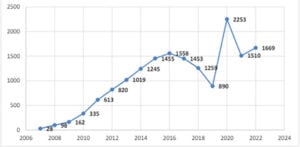
What is the frequency of class actions brought in your jurisdiction (divided by type of claim, as applicable), in terms of number of cases over the years and/or comparison to other types of litigation?
According to empirical research conducted and published in March 2023 by an inter-ministerial team established to examine the arrangements stipulated in the Class Actions Law, since its enactment in 2006, there has been a surge in class actions filed in Israel. The research found that class action cases are among the most resource-intensive in the Israeli court system, in terms of the judicial time invested in them. In the past five years, an average of 1,500 class actions have been filed per year. The inter-ministerial team published the following chart, which lays out the number of motions to certify class actions filed over the years:

-
Are there certain courts or types of claims that are most prevalent (for example competition vs commercial litigation generally)?
According to the empirical study published in March 2023, the types of claims pursued by way of class actions in Israel have changed over time. In recent years, there has been a dramatic increase in motions to certify class actions in the field of the rights of persons with disabilities, particularly claims relating to accessibility obligations. (One possible explanation for this is that the legislature exempted class actions brought on such grounds from court fees.) There has also been an increase in class actions in the areas of equality and discrimination, employment law, and spam-related claims.
At the same time, there appears to have been a certain decline in consumer class actions, which were historically among the most common categories of class action filings, as well as in restitution claims against public authorities in respect of mandatory payments allegedly collected unlawfully.
As for the courts in which such claims are most prevalent, class actions in Israel are not concentrated in a single specialist court. Rather, they are heard by the court with subject-matter jurisdiction over the underlying claim. Most class actions are adjudicated in the civil courts, namely the magistrates’ courts and the district courts, depending on the aggregate amount of the claim as estimated by the representative plaintiff. Where the total alleged damage to the class is ILS 2.5 million or more, the claim will be heard by the district court, whereas where the aggregate amount is lower, it will generally be heard by the magistrates’ court.
Alongside this, certain class actions are heard by specific tribunals depending on subject matter. For example, motions to certify class actions concerning employment matters are heard by the regional labour courts, motions to certify class actions against public authorities are generally heard by the district court sitting as an administrative court, and motions to certify class actions involving economic or securities-related matters will often be heard by the economic division of the district court, in judicial districts in which such a division exists.
-
What is the definition of 'class action' or 'collective redress' relevant to your jurisdiction?
There is no formal definition of the term ‘class action’ in the law. Generally, a class action is a proceeding filed pursuant to one of the items enumerated in the list set forth in the Class Actions Law, which has been certified as a class action by a court decision following a Certification Motion.
-
What are the general 'triggers' for commencement of a class action or collective redress in your jurisdiction from a factual perspective?
As a general rule, a ‘trigger’ for the filing of a class action in Israel may be any of a wide range of events, depending on the circumstances of the event and the type of claims it may give rise to on the part of the affected group members.
For example, a media report or public disclosure regarding an error or deviation from regulations by a retailer engaged in the sale of goods to the public (in the case of a consumer class action); a significant fluctuation in the value of a publicly traded company’s share following a major event in the company’s operations (in the case of a class action based on a securities-related cause of action); or the publication of an investigation being conducted by state enforcement authorities regarding a particular matter (for instance, in the context of a class action based on a securities-related cause, or against a banking corporation or insurer); and similar examples.
Where a motion to certify a class action is prompted by a media or public trigger, it will often be filed very quickly (sometimes within hours or days of the publication) in an effort by the applicant and counsel to be the first to file. By doing so, the applicant and counsel seek to ensure that they, rather than another applicant and counsel, will conduct the proceeding on behalf of the class.
A trigger may also arise from the applicant’s own personal cause of action. In some cases, the applicant may have initially pursued an individual claim against the company and only in the course of that private proceeding come to understand that there is a broader group of similarly affected persons, such that the personal claim may be suitable for adjudication as a class action. In such circumstances, the applicant may seek to discontinue the individual proceeding and file, in its place, a motion to certify a class action.
Often, class actions are filed without a specific ‘trigger’ event preceding their submission. Frequently, the applicants filing such actions are ‘repeat players’ in this field, often represented by attorneys who are themselves repeat players. Accordingly, these applicants and their counsel are experienced in identifying opportunities to file class actions and, in some cases, in generating potential causes of action that may serve as the basis for such proceedings, even without a ‘trigger’ event that brings a specific issue to the attention of the public.
-
How do class actions or collective redress proceedings typically interact with regulatory enforcement findings? e.g. competition, environmental or financial regulators?
Findings by regulatory authorities (whether Israeli or foreign), such as the Competition Authority, the Israel Securities Authority, or the Capital Markets, Insurance and Savings Authority, often play a significant role in class action proceedings.
While regulatory findings are not formally binding on civil courts, they often carry considerable weight in class action proceedings. This is particularly so at the certification stage, where the applicant’s evidentiary burden to show that the class has a viable cause of action is lower than the burden required at the stage of adjudicating the class action itself.
Accordingly, petitioners in class actions frequently rely on final regulatory determinations – such as findings of unlawful restrictive arrangements, securities law violations, or consumer protection breaches – to substantiate their claims.
On the other hand, respondents operating in regulated markets will often rely on decisions, reports, and correspondence with regulators to show that the conduct challenged by the petitioner was carried out in accordance with regulatory guidance or instructions.
Courts, while not obligated to adopt the regulators’ conclusions regardless of circumstances, often view them as persuasive, particularly when the findings are final and based on thorough investigative processes. A party may be allowed to present contradictory evidence, but the evidentiary threshold to contradict such findings is generally high.
Thus, class actions are commonly filed following regulatory announcements or enforcement actions. However, it is not uncommon for petitioners, often ‘repeat players’ in the class action field, to initiate proceedings independently of regulatory findings, identifying potential causes of action based on their own investigations.
Overall, regulatory findings serve as an important tool for class action petitioners in Israel, significantly influencing the likelihood of certification and the prospects for success on the merits.
-
What types of conduct and causes of action can be relied upon as the basis for a class action or collective redress mechanism?
As mentioned above, a class action cannot be filed in Israel unless it is based on one of the specific causes of action listed in the Second Addendum to the Class Actions Law. The Second Addendum includes the following types of actions:
a. Consumer protection (e.g., unfair trade practices, defective products, and misleading consumers).
b. A claim against an insurer, insurance agent, or management company, in connection with a matter between such party and a client.
c. A claim against a banking corporation, in connection with a matter between the corporation and a client, and a claim against a financial services provider or payment service provider.
d. A claim based on a cause of action relating to an antitrust issue (specifically, a cause of action under the Economic Competition Law).
e. A claim based on a cause of action arising from the ownership, possession, acquisition, or sale of a security.
f. A claim in connection with an environmental nuisance against the party responsible for such nuisance.
g. A claim based on a cause of action under the Prohibition of Discrimination in Products, Services, and Entry into Places of Entertainment and Public Places Law.
h. Claims arising under various statutes concerning the protection of employees’ rights.
i. Claims arising under various statutes concerning the protection of rights of people with disabilities.
j. A claim against a public authority for the restitution of amounts unlawfully collected as taxes, fees, or other mandatory payments.
k. Claims against advertisers for the unlawful dissemination of spam (unsolicited commercial communications).
l. Claims based on additional specific causes of action, generally less prevalent among filed class actions.
It should also be noted that, as part of the comprehensive reform to the Class Actions Law currently being advanced by the Israeli Ministry of Justice and still undergoing the legislative process, an effort is being made to revise the causes of action for which class proceedings may be brought. This includes, among other things, a proposal to add a dedicated cause of action in the field of privacy law, relating, inter alia, to violations of the Protection of Privacy Law concerning the use of databases subject to registration requirements and the information that must be provided when approaching an individual for the purpose of collecting personal data.
-
Are there any limitations of types of claims that may be brought on a collective basis?
Section 3(a) of the Class Actions Law stipulates that a class action may only be filed if it is based on a cause of action specified in the Second Addendum (specified above) or on a provision of law that explicitly permits the submission of class actions on its basis.
In addition, Section 3(a) specifically emphasises, with respect to public authorities, that no class action may be brought against a public authority for damages caused by a third party, based on an allegation concerning the authority’s exercise, or failure to exercise, supervisory, regulatory, or enforcement powers in relation to that third party.
-
Who may bring a class action or collective redress proceeding? (e.g. qualified entities, consumers, companies etc)
Section 4 of the Class Actions Law defines who is entitled to file a certification motion, as follows: (1) an individual or corporation who possesses a valid personal cause of action that raises substantive questions of fact or law common to all members of the group; (2) a public authority enumerated in the First Addendum (namely, the Commission for Equal Rights of Persons with Disabilities, the Israel Nature and Parks Authority, and the Equal Employment Opportunities Commission) with respect to a claim within the scope of one of its public purposes; and (3) an organisation (as defined by the Class Action Law) with respect to a claim within the scope of one of its public purposes, provided that the court is convinced that, under the circumstances, the individual possessing the personal cause of action would have difficulty filing the certification motion (except for the Israel Consumer Council, which is entitled to submit a certification motion even if there is no such difficulty).
-
Are there any limits on the nationality or domicile of claimants in class actions or collective redress proceedings?
The Class Actions Law does not provide any explicit limitation as to the nationality or domicile of the petitioner or the claimants.
That said, several district court decisions have recognised substantial practical and legal difficulties in conducting a class action on behalf of foreign claimants. These difficulties may include, among other things, subjecting foreign class members to the jurisdiction of a court they do not know and did not choose; the possibility that the law applicable in their place of residence may be more favourable to them than Israeli law; difficulties in enforcing judgments against foreign class members; challenges in providing adequate notice to foreign class members regarding representative proceedings being conducted in Israel; and difficulties in ensuring that foreign class members are given a genuine opportunity to opt out of the class or to object to a settlement that may bind them.
For example, in T.C. (Central District) 6771-01-18 Nir Ben Zeev v Booking.com Israel Online Hotel Reservations Ltd. (17 April 2026), the court certified the class action only in part, holding that the class on whose behalf the action was to proceed would not include foreign citizens or residents. The court explained that a class action brought on behalf of foreign claimants is an exceptional situation, in which foreign class members are drawn into proceedings before an Israeli court not on their own initiative and without their knowledge, while Israeli jurisdiction and Israeli law are applied to them even though they did not choose either.
Accordingly, although there is no express rule in the Class Actions Law barring foreign citizens or residents from being included in the class, in practice, Israeli courts have used the tools available under the Class Actions Law to conclude, in appropriate cases, that conducting a class action on behalf of foreign claimants is not an efficient and fair means of resolving the dispute.
-
Are there any limitations on size or type of class?
The Class Actions Law does not provide any explicit limitation on size or type of class. Thus, a petitioner is not required to prove the exact size or scope of the class.
At the same time, the statutory conditions in the Class Actions Law that the court must examine when deciding whether to certify a claim as a class action relate, directly or indirectly, to proof of the existence of a class.
In this context, the petitioner must show, inter alia, that there is a sufficiently large group of persons with claims similar to his or her own and that the petitioner’s personal cause of action is not merely individual in nature. In addition, the petitioner must demonstrate that a class action is the most efficient and fair means of conducting the proceeding, and that this mechanism is preferable to multiple individual claims. As part of that showing, the petitioner is generally expected to establish that there is a sufficiently large group with similar claims, and that because the individual loss suffered by each class member is relatively small compared with the cost of pursuing and proving an individual claim, it is more efficient and fairer to proceed by way of a class action.
-
Are there any requirements or prohibitions in sourcing this class?
The Class Actions Law does not specifically prohibit any action in sourcing the class. Furthermore, petitioners or their counsel (and often both) are often ‘repeat players’ in the field of class action litigation, with extensive experience in identifying legal violations or malpractice that may give rise to a class action claim. Moreover, given the opt-out mechanism established under the Class Actions Law, there is no real requirement for the petitioner to actively source members of the class, as long as the petitioner can demonstrate that a large group of affected individuals may indeed exist.
-
Which courts deal with class actions or collective redress proceedings?
As noted above, the court designated to hear a specific class action is determined according to the general rules of subject-matter and territorial jurisdiction. For example, the jurisdiction of the court in a class action seeking monetary relief will be determined by the total monetary compensation sought or estimated in the claim. Another example is a class action filed in relation to a cause of action over which the labour court has exclusive subject-matter jurisdiction. Such a class action will be adjudicated by the relevant labour court.
-
Are there any jurisdictional obstacles to class actions or collective redress proceedings?
The Class Actions Law does not impose any restrictions relating to territorial jurisdiction. Therefore, the general Israeli rules of jurisdiction and private international law apply. In this regard, when a certification motion is filed against a respondent residing outside of Israel, the court will examine whether the procedural rules regarding proper service have been met and if the forum non conveniens doctrine applies. Furthermore, the court will also consider applicable law regarding the matter.
It should be noted that, in recent years, a series of rulings have broadened the interpretation and application of the relevant considerations and procedural rules, alleviating some of the obstacles that petitioners face when filing a certification motion against a foreign respondent. Prominent rulings in this regard provide that foreign entities that operate or supply online services in Israel are subject to Israeli jurisdiction and may be liable for damages under Israeli law, even where their terms and conditions contain a choice of forum clause.
-
Does your jurisdiction adopt an “opt in” or “opt out” mechanism?
The default mechanism for class actions in Israel, in accordance with the Class Action Law, is an opt-out mechanism. However, the court has judicial discretion to order, under special circumstances, that an opt-in mechanism shall apply. In such a case, the class shall include only those who have notified the court, in writing, of their desire to join the action, and who would have been entitled to bring the claim in their own name based on the cause of action underlying the class action.
-
What is required (i.e. procedural formalities) in order to start a class action or collective redress claim?
In order to initiate a class action, the petitioner must comply with several procedural formalities. Inter alia, the petitioner must file an individual statement of claim, based on a personal cause of action, together with the certification motion, supported by an affidavit. In the certification motion, the petitioner must define the class he or she seeks to represent, specify the remedies sought on behalf of the class members, including the total estimated damage caused to the class, and explain why, in the petitioner’s view, the conditions set out in the Class Actions Law for conducting the claim as a class action are satisfied, as well as why the petitioner and counsel are suitable parties to represent and manage the interests of the class fairly and adequately. In addition, the petitioner must pay the court fees required for filing the certification motion.
In addition, prior to filing, the petitioner must check whether the Class Actions Registry contains a pending class action or certification motion raising identical or substantively similar material questions of fact or law. If the petitioner identifies such a pending proceeding, this must be disclosed in the certification motion.
After the petitioner files the certification motion, he or she must notify the Courts Administration of the filing and provide it with copies of the certification motion and the class action statement of claim, so that the proceeding may be entered in the Class Actions Registry.
-
What other mandatory procedural requirements apply to these types of matters?
While the Class Actions Law does not require any prior notice to respondents, lack of such prior notice may be a relevant consideration in the decision on whether to grant certification in specific circumstances, as recognised by case law. In addition, prior notice is generally required under case law, though not expressly under the Class Actions Law, when filing a claim against a public authority for the restitution of amounts allegedly collected unlawfully.
It should also be noted that, as part of the proposed reform currently undergoing the legislative process, there is an effort to expand the requirement for prior notice. Among other things, the reform seeks to codify in the Class Actions Law the requirement to give prior notice to public authorities before filing a class action against them, and to impose a prior notice requirement in relation to small and medium-sized businesses before filing motions to certify class actions against them in certain categories of claims (such as claims arising from harassment by spam or certain claims based on failures to comply with accessibility obligations towards persons with disabilities).
-
Are normal civil procedure rules applied to these proceedings or a special set of rules adopted for this purpose?
The procedures governing motions for class action certification and the class actions themselves are subject to the core provisions of the regular Civil Procedure Regulations, while also being concurrently subject to the specific provisions of the Class Actions Regulations.
In this regard, it is important to note that class proceedings commenced before 31 December 2020, and which are still pending, remain subject to the former Civil Procedure Regulations, 1984 (alongside the Class Actions Regulations). By contrast, class proceedings commenced on or after 31 December 2020, are governed by the core provisions of the new Civil Procedure Regulations, enacted in 2018 (alongside the Class Actions Regulations).
-
How long do these cases typically run for?
The deliberation on a certification motion can vary significantly from case to case, depending on specific circumstances. As explained, the certification stage itself involves the submission of pleadings, the conduct of preliminary proceedings (particularly discovery), the submission of additional evidence, if necessary, the adjudication of various motions, evidentiary hearings, the submission of closing arguments, and, finally, a decision on the certification motion. As a result, the certification proceedings alone may extend over several years. Consequently, in most cases, class action proceedings themselves span many years.
In this regard, it is noteworthy that a study conducted in July 2021, which examined judicial workload in the Israeli courts, found that class action proceedings are among the most ‘expensive’ types of proceedings in terms of court workload and judicial time investment.
-
What remedies are available to claimants in class action or collective redress proceedings?
In general, the Class Actions Law does not limit the type of remedies that may be sought in a class action, and the court has discretion to award any remedy it deems appropriate for the benefit of the class, including monetary compensation, injunctive relief, declaratory relief, and restitution.
It should also be noted that, as part of the proposed reform currently undergoing the legislative process, it is proposed that motions to certify class actions against small businesses, in certain categories of claims (such as claims arising from harassment by spam, or certain claims based on failures to comply with accessibility obligations towards persons with disabilities), be limited to claims for mandatory, injunctive, or declaratory relief only, and not include claims for monetary compensation in respect of harm caused to class members.
-
What is the measure of damages for any financial remedies for class actions or collective redress proceedings?
The Class Actions Law provides guidelines for the court as to quantifying damages and the distribution of remedies for damages among the class. The preferred method that coincides with the purpose of a class action is to reward the class members for actual damage resulting from the respondent’s wrongdoing. Nonetheless, when there is an inherent difficulty in quantifying the specific damages, the court has the authority to order that estimated damages be applied.
As to distribution, the court may order monetary compensation, or any another suitable remedy, to be paid directly to each class member who has proven eligibility, in the amount and manner it decides. Alternatively, the court may order each class member to prove their eligibility for monetary or any other compensation. The court may otherwise order the respondents to pay a lump sum, from which each class member will be compensated on a pro-rata basis. If a remaining sum is left due to a class member relinquishing compensation, failing to prove eligibility, or if he or she cannot be located or contacted, the remaining sum will be allocated among the other class members proportionally, provided that no class member is overcompensated, following which the court may order any sum left to be reverted to the national trust for class actions or to be used for other purposes, such as donations to certain public organisations that promote a cause consistent with the underlying purpose of the class action.
In cases where it is impossible to identify and locate the specific individuals that incurred damages, the court may order any other remedy in favour of the group, in whole or in part, or in favour of the public, as it deems appropriate under the circumstances.
-
Are punitive or exemplary damages available for class actions or collective redress proceedings?
Under the Class Actions Law, the court may not award exemplary damages in a class action, nor may it award damages without proof of loss, except in class actions based on causes of action relating to the rights of persons with disabilities.
This means that there are causes of action in respect of which an individual claimant, proceeding on an individual basis, may be entitled under the applicable statute to seek exemplary damages or damages without proof of loss (for example, a claim arising from harassment by spam). However, where such causes of action are pursued by way of a class action, each class member is entitled only to compensation for the personal loss actually suffered.
-
Is a judge or multiple judges assigned to these cases?
The answer depends on the court in which the class action is being heard, in accordance with the rules of subject-matter jurisdiction. In civil courts, motions for class action certification are heard by a single judge. In labor courts, such motions are typically heard by a judicial panel comprised of three members—a judge, a representative of a workers’ organisation, and a representative of an employers’ organisation.
It should be noted that, in our experience, judges assigned to class action cases are often designated judges who develop particular expertise in the field of class actions and receive professional training in this area.
-
Are class actions or collective redress proceedings subject to juries? If so, what is the role of juries?
The Israeli legal system does not involve juries. Proceedings in Israel are conducted before professional judges.
-
Is there any prescribed procedural mechanism for the collective settlement of class actions or collective redress proceedings?
Section 18 of the Class Actions Law sets out a detailed procedural mechanism for settlement agreements in class actions and requires that any such settlement be brought before the court for approval.
A motion to approve a settlement agreement must be filed with the court, together with affidavits on behalf of the parties and their counsel, setting out all material details of the proposed settlement. If the court does not dismiss the motion in limine, it will order publication of a notice to the public. Following publication, class members, a relevant public authority or organisation, and the Attorney General may file objections to the proposed settlement, and the parties are then given an opportunity to respond. In addition, class members who do not wish the settlement to apply to them may apply to the court for permission to opt out.
After such process is completed, the court will review the settlement agreement and any objections (if applicable), examine the relevant considerations, and decide whether to approve the proposed settlement.
-
Is there any judicial oversight for settlements of class actions or collective redress mechanisms?
As mentioned, a settlement in a class action, both at the certification stage and after the action has been certified is subject to judicial oversight and requires the court’s approval.
Section 19 of the Class Actions Law sets out the considerations the court must take into account in rendering a reasoned decision on whether to approve a proposed settlement. Among other things, the Class Actions Law provides that:
(i) The court may approve a settlement only if it is satisfied that the settlement is proper, fair, and reasonable in light of the interests of the class members, and that the settlement is the most efficient and fair way of resolving the dispute under the circumstances.
(ii) As a rule, before approving a settlement, the court must appoint an independent expert in the relevant field to provide an opinion on the advantages and disadvantages of the proposed settlement, unless the court finds that such an opinion is unnecessary due to special reasons, which must be set out in its decision. Accordingly, the court is also required to address in its decision the opinion of the independent expert appointed to examine the proposed settlement.
(iii) In deciding whether to approve the settlement, the court must consider various factors, including the gap between the relief offered under the settlement and the relief class members might have obtained had the proceeding been decided in their favour, any objections submitted, the procedural stage of the case, and the risks and prospects of continuing the litigation compared with the advantages and disadvantages of resolving the matter by settlement.
(iv) Where a proposed settlement is submitted before the motion to certify has been granted, the court must also consider whether the certification motion prima facie satisfies the statutory conditions for certification under the Class Actions Law.
As part of judicial oversight, the court may condition approval of the settlement on terms aimed at protecting the interests of the class members, ensuring compliance with the law, mitigating the impact of the representative plaintiff problem, or supervising the proper implementation of the settlement. The court may also order the parties to submit a report upon implementation of the settlement or direct that other supervisory measures be taken.
Another aspect of judicial oversight is the court’s role and discretion in determining the incentive award to be paid to the petitioner and the attorney’s fees to be paid to the petitioner’s counsel following approval of the settlement. This is intended to ensure that the benefit granted to the petitioner and counsel is proportionate to the actual benefit provided to the class under the settlement and to create proper incentives in relation to class actions.
-
Is there any prescribed procedural obligation to undertake alternative dispute resolution (outside of the court system) and, if so, a specified format?
Under the Class Actions Law, the parties are not subject to any prescribed procedural obligation to pursue alternative dispute resolution, such as mediation, either before filing the certification motion or during the course of the proceedings.
That said, in our experience, at the case management stage following the filing of the certification motion, the response, and the reply, courts often encourage the parties to discuss settlement or to consider mediation before a professional mediator.
In addition, as noted above, in claims against the state or a public authority seeking restitution of amounts allegedly collected unlawfully, case law requires the petitioner to make a prior written approach setting out the cause of action and the arguments on behalf of the class. This step may open an initial dialogue between the parties without court involvement.
-
What litigation funding models are available for a class action or collective redress.
Several funding models are available in Israel for class actions.
First, Section 27 of the Class Actions Law established a public fund intended to assist representative plaintiffs in financing motions for certification and class actions that are considered to have public and social importance. The manner of applying for funding from this fund, and the procedure governing such funding, are regulated by the Class Actions Regulations (Financial Assistance for Motions for Certification and Class Actions), 2010.
According to the fund’s 2024 activity report, its annual budget stood at approximately ILS 1.4 million, its total commitments for approved applications were approximately ILS 1.17 million, and in 2024 it approved 51 funding applications out of 142 submitted. The report further indicates that approximately 60% of the applications submitted concerned consumer matters, and about 50% of the applications approved related to consumer matters. By contrast, approximately 17% of the approved applications concerned environmental matters, although only about 8% of the applications submitted related to that field. The report also suggests that the funding granted is generally limited to tens of thousands of shekels per case, and may be used for court fees, adverse costs exposure, translation expenses, expert opinions, witness expenses, and similar litigation costs.
Secondly, certain statutory bodies may finance class actions in areas falling within their regulatory remit. For example, the Securities Law authorises the Israel Securities Authority to finance a motion for certification or a class action brought on certain causes of action relevant to its sphere of activity, where it is satisfied that the proceeding raises a matter of public interest and has a reasonable prospect of being certified. In practice, the Israel Securities Authority appears to regard this as an important private enforcement mechanism for the protection of investors. For example, in October 2025, the Israel Securities Authority announced that it would fund a motion to certify a class action against IceCure Medical, originally filed in July 2021, concerning the alleged omission of material information from investors.
Another example is the Israel Consumer Council, a non-profit governmental corporation whose purpose is to protect consumer rights. The Class Actions Law grants the Israel Consumer Council special standing as a representative plaintiff, thereby enabling it to act as a representative plaintiff in class proceedings within its field of activity and, in practice, to support and finance such proceedings, either alongside a petitioner with a personal cause of action or on its own.
Similarly, the Class Actions Law grants certain public authorities (namely, the Commission for Equal Rights of Persons with Disabilities, the Israel Nature and Parks Authority, and the Equal Employment Opportunities Commission) standing to serve as representative plaintiffs in matters within their respective fields of activity. This too may operate, in practice, as a source of funding for class actions in those areas.
Thirdly, private litigation funding, which has become a popular funding mechanism in civil litigation more broadly, has also begun to enter the field of class actions. This is notwithstanding the absence of express regulation in Israeli law concerning third-party private funding of class actions.
In this regard, two conflicting decisions were issued in 2025 concerning the permissibility of for-profit private entities funding class actions. In the first, issued in August 2025, the Central District Court summarily dismissed a class action funded by a private entity. The court held that the absence of any express provision in the Class Actions Law regarding private funding should be treated as a negative arrangement, particularly given that the legislature specifically established a statutory public fund for financing class actions. On that basis, the court held that a privately funded class action was not in the interests of the class and should be struck out. It should be noted that in this proceeding, the Attorney General took the position that the Class Action Law’s silence on private funding should be understood as a lacuna to be judicially addressed through the development of appropriate rules, rather than as a negative arrangement categorically barring private funding. The court did not accept this position.
In the second decision, issued in December 2025, the court certified a class action and held, inter alia, that the Class Actions Law does not prohibit the receipt of funding from an external private source for the purpose of conducting the proceeding and that funding by a private investment fund did not justify dismissing the certification motion in limine.
Appeals were filed in both proceedings, and in April 2026, the Supreme Court ordered that, insofar as they concern the issue of private funding of class actions, the two appeals should be heard together. This means that the legal position regarding private third-party funding in Israeli class actions remains unsettled and is currently one of the most significant open issues in this area.
-
Are there any restrictions on third-party funding of a class action or collective redress.
As noted above, the issue of funding class actions through the statutory public fund is regulated by dedicated regulations. Among other things, these regulations provide that the petitioner and counsel must undertake to repay the funding if they fail to comply with the applicable requirements (for example, by failing to provide proper information), that the funding may not exceed 90% of the expenses actually incurred by the petitioner, and that, save in exceptional cases, the fund will not finance the petitioner’s legal fees.
As for private third-party funding, although there is no express regulation of the matter under Israeli law, Israeli case law is currently divided on whether a private entity may fund a class action and the issue is now pending before the Supreme Court.
In this regard, the district court decision that allowed private funding emphasised that such funding must be accompanied by full disclosure and transparency at the outset of the proceeding. It also stressed that the court must supervise the arrangement to ensure that, notwithstanding the private funding, the interests of the class members are managed in good faith and in a fair manner. This may include scrutiny of the funding agreement between the petitioner and the funder, as well as examination of the funder’s identity and activities, including any relationship between the funder and the respondent (for example, to ensure that the funder is not the respondent’s business competitor).
-
What are the top three emerging business risks that are the focus of class action or collective redress litigation?
According to the empirical research conducted and published in March 2023, the vast majority of class actions in Israel are filed for causes of action falling within two main categories. These therefore represent the top two categories of emerging business risks.
Consumer protection: The main business risks in this category relate to false and misleading advertising and false marking of goods. These issues are relevant to a large number of consumers (potential class members) and thus pose a substantial monetary risk for companies.
Rights of persons with disabilities: This category poses an emerging business risk due to growing awareness and governance as to the rights of persons with disabilities and an increasing trend in the filing of class actions claims based on such causes of action. Furthermore, the rules and procedures pertaining to such causes of action are designed to incentivise and encourage the filing of class actions, e.g., no court fee payment, the option to award statutory damages, etc.
A third category of emerging business risk involves securities and corporate governance class actions. Though the quantity of class actions filed for causes of action under this category is not as substantial as the other two categories, the ongoing development of relevant rules and regulations relating to this category creates high exposure for companies, with the main emerging business risks being, inter alia, allegations relating to misleading statement in a prospectus, insider trading, and breach of fiduciary duty. Furthermore, class actions in these matters tend to be legally complex, entail expert opinions, and involve a prolonged, costly process.
In addition, following the proposed reform to the Class Actions Law currently undergoing the legislative process, under which class actions may be permitted in the field of privacy protection and the use of databases, we are already identifying growing concern within the business sector that this area may generate a significant volume of class actions against businesses that have not aligned their practices with the statutory requirements. As a result, we are seeing an increase in requests from businesses seeking to assess their compliance with the applicable legal requirements, in order to reduce their exposure to class actions when the reform is enacted.
-
What trends in litigation are evident in the last three years in your jurisdiction in respect of class actions?
A noticeable trend in class action litigation over the last three years concerns accessibility claims (based on causes of action relating to the rights of persons with disabilities), as well as privacy-related claims involving alleged breaches by businesses of obligations concerning customers’ personal information.
Another significant trend stems from globalisation and the presence of multinational companies operating across multiple jurisdictions. As part of this trend, attempts are increasingly being made to replicate class actions pursued abroad, by advancing similar causes of action in Israel and seeking to represent Israeli class members allegedly harmed by the conduct of the same international corporation.
This phenomenon is also evident in the field of competition law, particularly in relation to the conduct of international market participants. In such cases, representative plaintiffs often seek to rely on decisions of foreign regulators or on class actions filed outside Israel, arguing that the conduct of those international entities has also had an impact on the Israeli public.
In addition, taking into account recent Supreme Court decisions and the proposed reform to the Class Actions Law, one of the more significant trends appears to be a gradual strengthening of protections afforded to defendants. This reflects a growing recognition that, in many cases, defendants are not necessarily large or financially robust entities and that class actions may have a significant adverse impact on them. In this context, recent Supreme Court case law indicates a willingness to increase the costs awarded against petitioners where certification motions are dismissed or struck out, as well as an initial recognition that, in appropriate circumstances, respondents may be entitled to seek document disclosure from the petitioner already at the certification stage (a procedural step that is generally associated with the petitioner given the information asymmetry that often exists between the parties).
-
Where do you foresee the most significant legal development in the next 12 months in respect of collective redress and class actions?
One of the most significant legal developments we foresee over the next 12 months is the continued strengthening of procedural protections afforded to defendants in class action litigation. This development is reflected both in the proposed reform to the Class Actions Law and in recent Supreme Court case law, and appears to stem from a growing recognition that defendants in class actions are not always large or financially robust entities and that class action proceedings may have a significant adverse impact on them.
In this context, the proposed reform seeks, among other things, to curb abusive or weak filings and to provide greater protection to respondents, particularly small and medium-sized businesses. We also expect continued legal developments in decisions and proceedings directed against vexatious plaintiffs and counsel who, by filing extortionate and unmeritorious certification motions, harm the business operations of small and medium-sized enterprises.
At the same time, we are already seeing early signs of this development in recent Supreme Court rulings, including a greater willingness to increase the costs awarded against petitioners where certification motions are dismissed or struck out, as well as initial recognition that, in appropriate circumstances, respondents may be entitled to seek document disclosure from the petitioner already at the certification stage. We therefore expect this trend to continue to develop, whether through legislation, judicial practice, or both.
-
Are class actions or collective redress proceedings being brought for ‘ESG’ matters? If so, how are those claims being framed?
Israel has a comprehensive body of laws and regulations relating to ESG matters, and many of those matters may, in appropriate circumstances, be enforced through class actions. In practice, several aspects of the Class Actions Law facilitate the collective enforcement of claims that may be characterised as relating to environmental, social, and governance issues.
For example, the Second Addendum to the Class Actions Law allows class actions to be filed in respect of various infringements of environmental statutes. Prior to the enactment of the Class Actions Law, the principal remedy available in collective environmental proceedings was injunctive relief. The enactment of the Class Actions Law expanded the range of available remedies to include monetary relief, thereby creating a stronger economic incentive to bring class actions based on environmental matters.
The Class Actions Law has also significantly advanced the enforcement of employee rights by enabling class actions to be brought under various employment statutes, including claims relating to minimum wage, the employment of agency workers, and other employment-related causes of action. Another example is the significant increase in the number of class actions based on causes of action relating to the rights of persons with disabilities, which may be attributed, at least in part, to the exemption from court fees in such cases.
A notable precedent concerning companies’ ESG-related practices is the class action brought by the Ministry of Environmental Protection against two major corporations, Hogla-Kimberly Ltd and Sano-Bruno’s Enterprises Ltd, in relation to alleged greenwashing practices. The Tel Aviv District Court held that the companies misled the public by labelling bags as ‘environmentally friendly’ and representing that they were made of biodegradable and ecological material.
Another important example is the Supreme Court’s judgment of August 2025 concerning a motion to certify a class action against companies in the Volkswagen group arising out of the Dieselgate affair, which concerned the installation of a device designed to falsify data relating to pollutant emissions from the group’s vehicles. The Supreme Court held that, in principle, class actions should not be ruled out in cases involving mass wrongs and harm allegedly caused to the public as a result of exposure to environmental pollution. However, in the specific case before it, the applicants failed to present sufficiently reliable and scientific evidence establishing a personal cause of action and damage suffered by a distinct group of persons as a result of Volkswagen’s conduct. In other words, the applicants did not satisfy the requirements of the Class Actions Law, particularly as regards proving a common cause of action relating to damage suffered by members of the proposed class.
Finally, it should be noted that in recent years Israeli regulators have shown increased interest in ESG-related issues. For example, the Ministry of Strategic Affairs established a programme aimed at encouraging companies, through the distribution of grants, to prepare and publish ESG reports, and the Israel Securities Authority issued a statement calling on reporting corporations whose securities are traded publicly to publish an annual corporate governance report. It is therefore reasonable to expect that class actions concerning ESG matters will continue to develop in coming years.
-
Are there any proposals for the reform of class actions or collective redress proceedings? If so, what are those proposals?
As mentioned, in 2024, the Ministry of Justice introduced a bill proposing a comprehensive reform of the Class Actions Law. As of May 2026, the bill remains pending final approval by the Knesset.
The proposed bill contains comprehensive amendments on various matters, including several amendments that aim to tackle the large number of unsubstantiated and frivolous motions to certify class actions filed regularly with the court. These include:
- Obliging petitioners to notify prospective respondents prior to filing a certification motion, as a precondition to such filing, in specific circumstances, inter alia, in a claim filed against a ‘small business’ for causes of action enumerated in the Class Actions Law, in any claim against a ‘micro business’, or in a claim against a public authority seeking restitution of unlawfully collected amounts.
- Granting the court the authority to impose costs, in a reasonable and fair amount, on petitioners or their counsel if the court deems the motion to certify or the class action to have been conducted in bad faith.
- Granting the court the authority to order that a motion to certify be dismissed at any time if it deems the motion to be vexatious or on the grounds of de minimis harm.
- Revoking the court’s authority to grant an incentive award to the petitioner and attorney’s fees to counsel when approving a withdrawal from a certification motion or a class action.
- Limiting the number of motions to certify that a petitioner may file to five per year, in an effort to restrict repeat players in class action litigation.
Another notable proposed amendment is the addition of several causes of action relating to the Protection of Privacy Law to the Second Addendum to the Class Actions Law, allowing such causes of action to serve as a basis for a motion to certify a class action.
Israel: Class Actions
This country-specific Q&A provides an overview of Class Actions laws and regulations applicable in Israel.
-
Does your jurisdiction have a class action or collective redress mechanism? If so, please describe the mechanism(s) and outline the principal sources of law and regulation and its overarching impact on the conduct of class actions in your jurisdiction.
-
What is the history of the development of the class actions/collective redress mechanism and its policy basis in your jurisdiction?
-
What is the frequency of class actions brought in your jurisdiction (divided by type of claim, as applicable), in terms of number of cases over the years and/or comparison to other types of litigation?
-
Are there certain courts or types of claims that are most prevalent (for example competition vs commercial litigation generally)?
-
What is the definition of 'class action' or 'collective redress' relevant to your jurisdiction?
-
What are the general 'triggers' for commencement of a class action or collective redress in your jurisdiction from a factual perspective?
-
How do class actions or collective redress proceedings typically interact with regulatory enforcement findings? e.g. competition, environmental or financial regulators?
-
What types of conduct and causes of action can be relied upon as the basis for a class action or collective redress mechanism?
-
Are there any limitations of types of claims that may be brought on a collective basis?
-
Who may bring a class action or collective redress proceeding? (e.g. qualified entities, consumers, companies etc)
-
Are there any limits on the nationality or domicile of claimants in class actions or collective redress proceedings?
-
Are there any limitations on size or type of class?
-
Are there any requirements or prohibitions in sourcing this class?
-
Which courts deal with class actions or collective redress proceedings?
-
Are there any jurisdictional obstacles to class actions or collective redress proceedings?
-
Does your jurisdiction adopt an “opt in” or “opt out” mechanism?
-
What is required (i.e. procedural formalities) in order to start a class action or collective redress claim?
-
What other mandatory procedural requirements apply to these types of matters?
-
Are normal civil procedure rules applied to these proceedings or a special set of rules adopted for this purpose?
-
How long do these cases typically run for?
-
What remedies are available to claimants in class action or collective redress proceedings?
-
What is the measure of damages for any financial remedies for class actions or collective redress proceedings?
-
Are punitive or exemplary damages available for class actions or collective redress proceedings?
-
Is a judge or multiple judges assigned to these cases?
-
Are class actions or collective redress proceedings subject to juries? If so, what is the role of juries?
-
Is there any prescribed procedural mechanism for the collective settlement of class actions or collective redress proceedings?
-
Is there any judicial oversight for settlements of class actions or collective redress mechanisms?
-
Is there any prescribed procedural obligation to undertake alternative dispute resolution (outside of the court system) and, if so, a specified format?
-
What litigation funding models are available for a class action or collective redress.
-
Are there any restrictions on third-party funding of a class action or collective redress.
-
What are the top three emerging business risks that are the focus of class action or collective redress litigation?
-
What trends in litigation are evident in the last three years in your jurisdiction in respect of class actions?
-
Where do you foresee the most significant legal development in the next 12 months in respect of collective redress and class actions?
-
Are class actions or collective redress proceedings being brought for ‘ESG’ matters? If so, how are those claims being framed?
-
Are there any proposals for the reform of class actions or collective redress proceedings? If so, what are those proposals?