-
What are the key financial crime offences applicable to companies and their directors and officers? (E.g. Fraud, money laundering, false accounting, tax evasion, market abuse, corruption, sanctions.) Please explain the governing laws or regulations.
Ecuador’s financial crime framework reflects the country’s commitments under the Vienna Convention, the Palermo Convention and the Financial Action Task Force (FATF) Recommendations. Financial offences are primarily governed by the Organic Comprehensive Criminal Code (Código Orgánico Integral Penal, or COIP). Pursuant to Article 17 COIP, only acts or omissions expressly defined in that Code constitute criminal offences. The key financial crimes applicable to companies and their directors and officers are the following:
Money Laundering: Article 317 COIP criminalizes intentionally acquiring, possessing, administering, transferring, converting, concealing or using assets derived, directly or indirectly, from any unlawful activity, as well as intentionally concealing their illicit origin or giving them an appearance of legality.
Resolution No. 20-2024 issued by the Plenary of the National Court of Justice further confirms that money laundering is an autonomous offence. Accordingly, the illicit origin of the assets may be established through circumstantial evidence, without requiring a prior conviction for the predicate misconduct.
Failure to implement anti-money laundering controls: Article 319 COIP specifically criminalizes the intentional omission of legally required anti-money laundering controls by directors, administrators, compliance officers and other people responsible for preventing and reporting suspicious transactions, even where no money laundering offence has ultimately been consummated.
The relevant control duties are primarily set out in the Organic Law on the Prevention, Detection and Combat of Money Laundering and the Financing of Other Crimes (Ley Orgánica para Prevenir, Detectar y Combatir el Lavado de Activos y el Financiamiento de Otros Delitos, or AML Law), which requires reporting entities to implement risk-based compliance programmes; conduct customer due diligence and beneficial ownership verification; identify, assess and mitigate money laundering risks; establish internal policies, controls and record-keeping systems; provide ongoing employee training; and report unusual and suspicious transactions to The Financial and Economic Analysis Unit (Unidad de Análisis Financiero y Económico, or UAFE).
Illegal solicitation of funds: Article 323 COIP criminalizes the collection of money or other resources from the public, whether directly or through intermediaries, without the legally required authorization from the competent financial supervisory authority. The offence also extends to people who, without the legally required authorization, engage in monetary or foreign exchange intermediation activities reserved to entities that take part in the regulated financial system.
The provision is principally aimed at combating unauthorized financial intermediation, illegal investment schemes and pyramid schemes that operate outside the regulated financial system.
False financial information: Article 324 COIP criminalizes the preparation, certification, publication or use of false financial information by legal representatives, directors, administrators, accountants, auditors and employees of financial institutions and other regulated entities.
The offence seeks to preserve the transparency and reliability of financial reporting and broadly corresponds to what many jurisdictions characterize as false accounting or financial statement fraud. The provision is particularly relevant in the context of corporate governance, financial disclosure obligations and regulatory reporting.
Securities fraud: Article 313 COIP criminalizes a range of fraudulent practices affecting the securities market, including the use of false or misleading information, fictitious transactions, price manipulation schemes and other deceptive practices intended to induce investors to buy, sell or retain securities, or otherwise distort the integrity and transparency of the market.
The provision seeks to protect investor confidence and the proper functioning of the capital markets and constitutes Ecuador’s closest equivalent to market abuse and securities fraud offences recognized in other jurisdictions.
Tax fraud: Article 298 COIP criminalizes tax fraud, including the use of false, incomplete or inaccurate information, the concealment of income, assets or taxable transactions, the use of false documents or invoices, and other fraudulent mechanisms intended to reduce, avoid or obtain the improper refund of taxes.
The offence is particularly relevant for corporations, directors and officers involved in accounting, tax planning, invoicing and reporting functions. It broadly corresponds to tax evasion and tax fraud offences recognized in other jurisdictions.
Terrorism financing: Article 367 COIP criminalizes the financing of terrorism, including the provision, collection or management of funds, assets or economic resources intended to finance terrorist acts, terrorist organizations or persons involved in terrorist activities.
For these purposes, terrorism refers to acts which, by their nature or context, are intended to intimidate a population or compel a government or an international organization to perform or abstain from performing a particular act.
-
Can corporates be held criminally liable? If yes, how is this determined/attributed?
Since the entry into force of the COIP in 2014, Ecuador has recognized a general framework for corporate criminal liability under Articles 49 and 50 COIP.. Nevertheless, corporate criminal liability operates on a numerus clausus basis, meaning that corporations may only be held criminally liable for offences for which the COIP expressly provides corporate criminal liability..
Under Article 49 COIP, criminal liability may be attributed to a corporation where an offence is committed by its owners, administrators, governing bodies, representatives, agents, operators, factors, delegates or any other person acting under its instructions or authority, when the offence is committed for the benefit of the corporation or its associates.
Corporate criminal liability is independent from the liability of the individual involved. Consequently, criminal proceedings may be brought against the corporation even if the induvial offender has not been identified or prosecuted, or where criminal liability of the individual has otherwise been extinguished.
Finally, Article 45 (7) COIP recognizes the implementation of integrity systems, compliance programs and policies for prevention, management and supervision prior to the commission of the offence as a mitigating circumstance when determining the severity of the sanction to be imposed on the corporation. However, the existence of such preventive measures does not constitute an exemption from criminal liability.
-
What are the commonly prosecuted offences personally applicable to company directors and officers?
The offences most commonly prosecuted against company directors and officers are breach of trust, failure to implement anti-money laundering controls and, increasingly, private-sector corruption.
Breach of trust is, in practice, the offence most frequently prosecuted in the corporate context. It commonly arises where directors or officers are alleged to have misappropriated company assets or exceeded the authority entrusted to them.
Failure to implement anti-money laundering controls applies specifically to officers responsible for implementing statutory anti-money laundering controls. It is frequently investigated where reporting entities fail to comply with Ecuador’s AML obligations.
Private-sector corruption also applies directly to directors and officers involved in corrupt commercial practices. Although its prosecution remains relatively uncommon in practice, largely because of its recent introduction into Ecuadorian law, its relevance is expected to increase as enforcement develops.
-
Who are the lead prosecuting authorities which investigate and prosecute financial crime and what are their responsibilities?
The Office of the General Attorney (Fiscalía General del Estado, or FGE) is the sole authority responsible for directing criminal investigations and exercising public prosecutions in Ecuador, including financial crimes. As the institutions is indivisible, there is no statutory division of jurisdiction among prosecutors. Any prosecutor assigned to a case exercises full prosecutorial power of the FGE.
For operational purposes, however, the FGE and the National Police is organized through specialized prosecution and investigation units. Although these units provide technical specialization, they do not have exclusive jurisdiction over particular offences.
In practice, two specialized bodies collaborate with the FGE and with the National Police in financial crime investigations. The UAFE receives suspicious transaction reports, conducts financial intelligence analysis and refers cases to the FGE where there are reasonable grounds to suspect money laundering or related offences. Within the FGE itself, the Civil Investigation Directorate provides specialized investigative support, including financial investigations and expert analysis, at the request of the prosecution.
Depending on the nature of the offence, the Office of the Attorney General may also receive information and technical support from the Internal Revenue Service and the relevant Superintendency, particularly the Superintendency of Banks, the Superintendency of Companies, Securities and Insurance, or the Superintendency of Popular and Solidarity Economy, acting within their respective supervisory functions.
-
Which courts hear cases of financial crime? Are they determined by tribunals, judges or juries?
Ecuador does not recognize trial by jury in criminal proceedings. Financial crimes are generally heard by the ordinary criminal courts and determined exclusively by professional judges. However, offences involving organized crime or corruption, including many money laundering and terrorism financing cases, may fall within the jurisdiction of specialized anti-corruption and organized crime judges and courts.
During the investigation and pre-trial stages, proceedings are conducted by a single criminal court judge, who authorizes preventive measures, oversees the legality of the investigation and determines whether sufficient grounds exist to commit the case to trial. Cases that proceed to trial are generally heard by a three-judge criminal court.
Appeals are heard by three-judge criminal chambers of the Provincial Courts of Justice, while extraordinary appeals, including cassation, fall within the jurisdiction of the Criminal Chamber of the Nation Court of Justice.
-
How do the authorities initiate an investigation? (E.g. Are raids common, are there compulsory document production or evidence taking powers?)
Criminal investigations are initiated by the FGE upon receiving any information suggesting that a criminal offence may have been committed. In practice, however, financial crime investigations are most commonly triggered by reports issued by public supervisory authorities or by criminal complaints filed by competent public authorities.
Investigations concerning money laundering, terrorist financing and related offences most commonly originate from a report of indicia of criminal liability issued by the UAFE, following its analysis of suspicious activities reports submitted by reporting entities under Ecuador’s anti-money laundering legislation. Tax fraud investigations are typically triggered by following a criminal complaint filed by the Internal Revenue Service (Servicio de Rentas Internas, or SRI), or other tax-collecting authorities. Other financial offences are commonly reported by victims, financial institutions and other public or private entities whose compliance programs or internal controls identify suspicious transactions.
Once an investigation has been initiated, the FGE has broad evidence-taking powers and may seek judicial authorization where required by law. In practice, raids are common, particularly in money laundering investigations, and are frequently accompanied by the seizure of documents, electronic devices and any other relevant evidence, including digitally stored information. Likewise, compulsory document production is widely used, and companies can generally expect to be required to produce accounting records, corporate documentation, banking information and other material relevant to the investigation.
-
What powers do the authorities have to conduct interviews?
The FGE has broad powers to conduct interviews during the investigation. The prosecution may summon any person who may assist in clarifying the facts to provide an interview, which is given without oath and recorded as part of the investigation. Where the suspect is a corporation, the interview is given through its legal representative, assisted by the corporation’s legal counsel. If the person fails to attend after being summoned twice, the prosecution can order his or her compulsory appearance with the assistance of the National Police.
Both suspects and third parties may first be interviewed by the FGE during the investigation. If the case proceeds to trial, third parties may subsequently be called to testify before the court under oath. Where the defendant is a corporation, any statement on its behalf is given through its legal representative. Third-party testimony is subject to examination and cross-examination, and false testimony may give rise to criminal liability. If a summoned witness fails to appear, the tribunal may order the assistance of the National Police to secure the witness’s attendance.
-
What rights do interviewees have regarding the interview process? (E.g. Is there a right to be represented by a lawyer at an interview? Is there an absolute or qualified right to silence? Is there a right to pre-interview disclosure? Are interviews recorded or transcribed?)
Persons summoned for interview (versión, governed by Article 582 COIP) during the investigation have the right to be represented by legal counsel throughout the interview process. Although attendance may be compelled, the interview itself is voluntary and not given under oath, which means that the interviewee cannot be compelled to make any substantive statement. Accordingly, suspects benefit from the privilege against self-incrimination and may exercise their right to remain silent throughout the interview and, if they choose to testify, at trial. Third parties, although interviewed without oath, may subsequently be called to testify before the trial court under oath regarding the same facts. In practice, prosecutors frequently compare the interview with the subsequent testimony when assessing the witness’s credibility and consistency.
The interview is transcripted by the FGE and forms part of the investigation file. However, unlike witness testimony at trial, it does not constitute evidence by itself and may not replace oral testimony before the tribunal at trial.
By contrast, third parties who are interviewed solely as witnesses generally do not have access to the investigation file, as the investigation remains confidential until formal charges are officially brought. They may only access the initial criminal complaint or other document, giving rise to the investigation to the extent necessary to understand the purpose of the interview. Although third parties have no general right to inspect the investigation file, the prosecutor may, at their discretion, allow them to consult relevant parts of the file immediately before the interview where considered appropriate.
-
Do some or all the laws or regulations governing financial crime have extraterritorial effect so as to catch conduct of nationals or companies operating overseas?
Financial crime offences under the COIP are generally governed by the principle of territoriality and therefore apply to conduct committed within Ecuadorian territory. However, the COIP recognizes a limited number of circumstances in which its criminal provisions may apply to conduct occurring abroad.
In the context of financial crime, the principal bases of extraterritorial jurisdiction are where the offence produces effects in Ecuador or where it is committed abroad against an Ecuadorian national and has not been prosecuted in the jurisdiction where it occurred. In those circumstances, Ecuadorian authorities may investigate and prosecute the offence notwithstanding that the relevant conduct took place outside Ecuador.
These jurisdictional rules apply equally to individuals and corporations. Accordingly, companies operating overseas may be subject to Ecuadorian criminal jurisdiction only where one of these statutory grounds exists and the relevant offence expressly provides for corporate criminal liability.
-
Do the authorities commonly cooperate with foreign authorities? If so, under what arrangements?
Ecuadorian authorities regularly cooperate with foreign authorities in the investigation and prosecution of financial crimes through both formal and informal international cooperation mechanisms. Formal cooperation is primarily conducted through the figure of Mutual Legal Assistance (Asistencia Penal Internacional, or API) and commonly includes obtaining evidence, taking witness statements, producing banking and corporate records, executing searches and seizures, tracing and confiscating assets, and, where appropriate, extradition and joint investigations .
The FGE acts as Ecuador’s Central Authority for criminal mutual legal assistance and coordinates cooperation with foreign authorities. The legal framework is primarily established by the COIP, bilateral treaties and multilateral instruments, particularly the Palermo Convention, the United Nations Convention against Corruption (UNCAC), the Inter-American Convention on Mutual Assistance in Criminal Matters and, where applicable, the Vienna Convention against Illicit Traffic in Narcotic Drugs and Psychotropic Substances.
In money laundering investigations, cooperation is frequently complemented by exchanges of financial intelligence between the UAFEs (UAFE) and its foreign counterparts through the Egmont Group and other international cooperation networks.
-
What are the rules regarding legal professional privilege? What, if any, material is protected from production or seizure by financial crime authorities?
Ecuadorian law affords strong protection to the confidentiality of the lawyer-client relationship through the rules governing legal professional secrecy. In practice, this means that communications between lawyers and their clients made for the purpose of providing legal advice or defense in legal proceedings may not be intercepted by authorities. Likewise, lawyers cannot be compelled to disclose, whether by testimony or otherwise, confidential information relating to their client´s defense that has come to their knowledge int the course of such counseling and representation. Unlawful disclosure may result in criminal and disciplinary liability, and any evidence obtained in breach of these protections is inadmissible in court.
However, the protection is not absolute. Ecuadorian law does not create a general evidentiary privilege preventing documents from being produced or seized simply because they are held by legal counsel. Accordingly, documents that do not themselves constitute lawyer-client communications or reveal information protected by legal professional secrecy may, in principle, be produced or seized in accordance with the ordinary rules governing criminal investigations.
A different regime applies where lawyers carry out certain financial or corporate activities covered by Ecuador’s anti-money laundering legislation, such as buying or selling real estate or business entities, managing clients’ funds, securities or other assets, managing bank or securities accounts, organizing contributions for the creation, operation or management of companies, or creating, operating or managing legal persons or other legal arrangements. In those circumstances, they are subject to the reporting obligations imposed by the AML framework. Those obligations do not apply, however, where lawyers act exclusively in legal proceedings, or when providing legal advice in connection with such proceedings, thereby preserving the confidentiality of the defense function.
-
What rights do companies and individuals have in relation to privacy or data protection in the context of a financial crime investigation?
Individuals enjoy constitutional rights to privacy and personal data protection. In the context of criminal investigations, these rights do not prevent the FGE from obtaining personal information. Rather, investigative measures involving personal data must comply with the principles of legality, necessity and proportionality. Evidence not related to the case or obtained in breach of the principles mentioned above may not be included in the investigation file.
Corporations do not benefit from personal data protection in respect of their own corporate information. Accordingly, companies cannot rely on data protection legislation to prevent prosecutors from obtaining corporate records relevant to a criminal investigation, subject to the ordinary procedural safeguards governing investigative measures. Personal data relating to directors, employees and other individuals contained in those records remain protected by the principles described above.
The investigation file remains confidential during the pre-charge investigation stage and is accessible only to the parties. Nonetheless, once judicial proceedings commence, criminal proceedings are generally public. Ecuadorian law does not provide a general mechanism allowing financial crime proceedings to remain confidential, or permitting hearings to be closed, solely to protect commercially sensitive information or trade secrets.
-
Is there a doctrine of successor criminal liability? For instance in mergers and acquisitions?
Ecuadorian law does recognize a doctrine of successor corporate criminal liability. Article 50 COIP provides that corporate criminal liability survives corporate reorganizations and expressly regulates how liability is allocated following transformations, mergers, absorptions and divisions.
Following a transformation, liability remains with the transformed entity; in mergers, it passes to the surviving or newly incorporated company; and, in case of division, it is distributed among the resulting entities in proportion to the assets transferred, without prejudice to any joint liability established by law.
The same provision further prevents corporations from avoiding criminal liability through apparent dissolutions or any other corporate restructuring intended to evade criminal sanctions.
Accordingly, criminal due diligence is an important consideration in mergers, acquisitions and other corporate reorganizations involving companies operating in Ecuador.
-
What factors must prosecuting authorities consider when deciding whether to charge?
The FGE has the exclusive authority to exercise public criminal prosecution in Ecuador. Accordingly, the decision to bring charges is governed by the legal requirements established in the COIP and cannot be directed by any other authority. While those requirements are prescribed by law, their application necessarily requires the persecutor to exercise an independent legal assessment of the available evidence and the circumstances of each case.
Before filing charges, the prosecution must determine whether the available evidence provides sufficient grounds to establish both the existence of a criminal offence and the suspect’s participation in it. The alleged conduct must also fall within the scope of a criminal offence expressly defined by the COIP.
The prosecution must further consider whether any legal impediment prevents the file of charges. These include circumstances such as the extinction of criminal liability, the absence of a criminal offence or the lack of sufficient evidence to support the charges. Where any of these circumstances exist, the prosecution must seek the closure of the investigation rather than proceed with formal charges.
-
What is the evidential standard required to secure conviction?
A criminal conviction may only be based on evidence establishing the defendant’s guilt beyond reasonable doubt. Under the COIP, trial courts may convict only where the evidence presented at trial proves both the existence of the criminal offence and the defendant´s responsibility to that standard. Any reasonable doubt must be resolved in favor of the defendant, in accordance with the constitutional principle of the presumption of innocence.
-
Is there a statute of limitations for criminal matters? If so, are there any exceptions?
Criminal offences are generally subject to statues of limitation. As a general rule, the limitation period begins to run from the date on which the commission of the offence ceases and corresponds to the maximum term of imprisonment prescribed for the relevant offence under the COIP, subject to a minimum limitation period of five years.
Once charges have been formally brought, a separate limitation period applies. It is likewise equal to the maximum custodial sentence prescribed for the offence, subject to a minimum of five years, but it runs from the date on which charges are formally brought. If no final and binding conviction is obtained within that period, the criminal action is extinguished.
No exceptions apply to financial crimes. However, Ecuadorian law provides that certain other criminal offences are not subject to any limitation period for prosecution. These exceptions primarily include offences against the public administration, such as bribery, embezzlement, extortion by public officials and illicit enrichment, as well as serious human rights violations, in accordance with the Constitution and the COIP.
-
Are there any mechanisms commonly used to resolve financial crime issues falling short of a prosecution? (E.g. Deferred prosecution agreements, non-prosecution agreements, civil recovery orders, etc.) If yes, what factors are relevant and what approvals are required by the court?
Under Ecuadorian law, the only mechanism capable of resolving a criminal case without prosecution is conciliation, although its availability is limited to the cases expressly provided by Article 663 COIP.
In practice, the only category potentially relevant to financial crime covers offences punishable with a maximum term of imprisonment of up to five years. As most serious financial crimes carry higher penalties, conciliation is available only in a limited number of cases.
Conciliation is a victim-driven mechanism requiring the agreement of both the victim and the defendant. The parties are free to negotiate the terms of the settlement, which typically include restitution of property or unlawfully obtained funds, compensation for the damage caused or any other lawful form of reparation. Depending on the procedural stage, the agreement is either formalized by the prosecution or approved by the judge. Once the agreement has been fully complied with, the criminal proceedings are terminated; otherwise, they continue the ordinary course.
-
Is there a mechanism for plea bargaining?
Ecuadorian law recognizes a form of plea bargaining through a special procedure called abbreviate procedure (procedimiento abreviado), which allows cases to be resolved without a full trial where the defendant admits the facts alleged by the prosecution in exchange for a reduced sentence.
Unlike plea bargaining in some common law jurisdictions, the scope for negotiation is limited. The procedure is available only for offences punishable with a maximum term of imprisonment of up to ten years and is expressly excluded for certain offences, including terrorism financing. The defendant must expressly consent to the procedure with the assistance of legal counsel and admit the facts underlying the charges. While the prosecution proposes the applicable sanction, it may not exceed one-third of the minimum term of imprisonment prescribed for the offence, and the parties cannot negotiate the legal classification of the offence.
The agreement is subject to judicial approval. The court must verify that the statutory requirements have been satisfied and that the defendant’s admission and consent have been given freely and voluntarily before issuing a conviction imposing the agreed sentence.
-
Is there any obligation to disclose discovered misconduct to prosecuting authorities, or any benefit to making a voluntary disclosure? Is there an established route or official guidance for making such disclosures?
Although Ecuadorian law imposes disclosure obligations in certain specific contexts, there is no general obligations to disclose discovered financial misconduct to prosecuting authorities. Instead, the principal reporting obligations in this area arise under Ecuador’s anti-money laundering legislation.
Reporting obligations apply to a wide range of regulated entities, including financial institutions, insurance companies, securities market participants, money remitters, real estate businesses, hydrocarbons companies, dealers in precious metals and stones, notaries, accountants and lawyers carrying out designated financial and corporate activities. These entities must appoint compliance officers, implement internal AML controls and report unusual and unjustified transactions to the UAFE, which analyzes the information and refers cases to the FGE where criminal conduct is suspected.
Outside the AML framework, Ecuadorian law does not establish a general voluntary disclosure regime or official guidance for self-reporting financial crime. Any voluntary disclosure of potentially criminal conduct is therefore made directly to the FGE. Although Ecuador does not offer formal incentives for self-reporting comparable to those available in some jurisdictions, cooperation with the authorities may result in sentencing benefits: Voluntary surrender before arrest constitutes a mitigating circumstance under the COIP. In addition, under the figure of effective cooperation (cooperación eficaz), individuals who provide substantial, verifiable and useful information about the ongoing investigation may qualify for significant sentence reductions, subject to statutory requirements and judicial approval.
-
What rules or guidelines determine sentencing? Are there any leniency or discount policies? If so, how are these applied?
The sentence imposed for a criminal offence is determined within the statutory minimum and maximum penalty prescribed for the relevant offence. In other words, there is a sentencing framework. Within the statutory range, the court determines the appropriate sentence in light of the seriousness of the particular conduct, the defendant’s degree of participation and the applicable aggravating or mitigating circumstances.
The COIP provides several mechanisms capable of reducing the applicable sentence. First, an accomplice is subject to a sentence equal to one-third of that imposed on the principal offender. Second, ordinary mitigating circumstances reduce the applicable sentencing range only where at least two mitigating circumstances are present, and no aggravating circumstances exist.
The COIP also recognizes a separate “transcendental mitigating circumstance”, which is not subject to the ordinary two-mitigating-circumstances requirement and may result in a grater reduction where the defendant provides precise, truthful, verifiable and relevant information that materially contributes to clarifying the offence, identifying those responsible or preventing further offences.
Additional reductions are available through effective cooperation, where the defendant provides substantial assistance in the investigation or prosecution of criminal offences, and through the abbreviate procedure, under which the defendant admits the facts alleged by the prosecution in exchange for up to a 2/3 reduction of the prescribed sanction. In the case of corporations, the existence of effective compliance programs prior to the commission of the offence also constitutes a statutory mitigating circumstance.
-
How are compliance procedures evaluated by the prosecuting authorities and how can businesses best protect themselves?
Ecuadorian law does not recognize compliance programs as a defense excluding corporate criminal liability. However, Article 45 (7) COIP provides that the implementation of integrity systems, compliance programs and policies for the prevention, management and supervision of criminal risks before the commission of the offence constitutes a mitigating circumstance when determining the sanction to be imposed on a corporation.
Under Article 49 COIP, prosecuting authorities and courts evaluate compliance procedures according to the corporation’s specific circumstances, including its size, nature of business, organizational complexity and the adequacy of its direction, supervision and internal controls. The assessment focuses on whether the program was genuinely implemented and capable of preventing the offence, rather than merely existing as a formal policy.
In practice, businesses are best protected by adopting a risk-based compliance program tailored to their operations, supported by expert management and effectively implemented through written policies, internal controls, due diligence procedures, compliance officers where required, employee training, internal reporting mechanisms, periodic monitoring and auditing, and timely reporting of unusual or suspicious transactions where required by law. Authorities are likely to attach grater wight to compliance measures that were operating before the offence occurred than to remedial measures adopted only after an investigation has commenced. However, it is important to note that Compliance programmes are not mandatory under theCOIP). They are only mandatory for reporting entities (obliged entities) subject to the AML framework.
-
What penalties do the courts typically impose on individuals and corporates in relation to the key offences listed at Q1?
Money laundering: Individuals are liable to imprisonment ranging from five to seven years for the least serious forms of the offence and up to nineteen to twenty-two years for the most serious forms. In the latter cases, offenders are also subject to a fine equivalent to five times the value of the laundered assets. Where the offence involves transnational money laundering, the statutory maximum sentence within the applicable range must be imposed. Corporations are subject to dissolution and a fine of 1,000 to 5,000 times the minimum wage.
Failure to implement anti-money laundering controls: Individuals are liable to imprisonment of six months to one year. Corporations are subject to a fine of 100 times the minimum wage.
Illegal solicitation of funds: Individuals are liable to imprisonment of five to seven years. Corporations are subject to a fine of 200 to 500 times the minimum wage.
False financial information: Individuals are liable to imprisonment of three to five years. Corporations are subject to a fine of 200 to 500 times the minimum wage.
Securities fraud: Individuals are liable to imprisonment of three to five years. Corporations are subject to a fine of 200 to 500 times the minimum wage.
Tax fraud: Individuals are liable to imprisonment ranging from one to three years for the least serious forms of the offence and up to seven to ten years for the most serious forms. Where the tax loss exceeds 100 times the minimum wage, the statutory maximum sentence within the applicable range must be imposed Corporations are subject to dissolution and a fine of 50 to 100 times the minimum wage.
Terrorism financing: Individuals are liable to imprisonment of twenty-two to twenty-six years, together with a fine equivalent to twice the value of the funds or assets provided, collected or offered for terrorist purposes. Corporations are subject to dissolution.
-
What rights of appeal are there?
Criminal sentences may generally be appealed before a Provincial Court (similar to a Court of Appeals), which is empowered to review both factual and legal issues.
Final judgements may also be challenged through cassation before the National Court of Justice (similar to a Supreme Court). Cassation is limited to reviewing errors of law and does not permit a reassessment of the facts or evidence.
Ecuadorian law also guarantees the right to a double review of every criminal conviction. To give effect to this guarantee, it provides a special remedy, which ensures that no conviction becomes final unless it has been reviewed and confirmed by a second judicial decision. The remedy applies where a conviction is entered for the first time either by a Provincial Court on appeal after an acquittal at first instance or by the National Court of Justice following a successful cassation appeal against an acquittal.
Final convictions may exceptionally be challenged through the extraordinary remedy of revision. Revision is available only where new evidence demonstrates that the conviction should not stand.
-
How active are the authorities in tackling financial crime? How long do proceedings typically take?
Enforcement against financial crime is generally active in Ecuador, although the level of enforcement varies depending on the offence. Money laundering, failure to implement anti-money laundering controls, tax fraud and terrorism financing receive particular attention. These offences benefit from specialized enforcement framework involving dedicated units within the FGE, the UAFE, specialized police investigators and, in the case of tax fraud, the SRI. In addition, Ecuador’s AML legislation requires broad range of private-sector entities to report unusual and suspicious transactions, generating a significant flow of intelligence to the authorities.
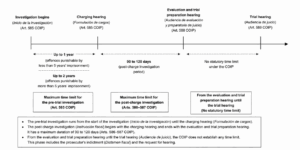
Enforcement of other financial and corporate offences is comparatively more limited, as Ecuador does not maintain specialized investigative structures for those offences. In practice, investigations frequently depend on complaints filed by victims or other reporting entities, together with the ordinary investigative activity of the FGE. The statutory stages and maximum investigation periods are summarized in the timeline below. Actual duration varies considerably depending on the complexity of the case, the procedural route followed, court scheduling and the availability of appeals. Complex financial crime cases that proceed through trial and the ordinary appellate process commonly require three years or more before a judicial decision becomes final and binding.

-
In the last 5 years, have you seen any trends or focus on particular types of offences, sectors and/or industries?
Over the past five years, Ecuador has increasingly concentrated its enforcement efforts on financial crimes associated with organized crime and illicit financial flows. Particular attention has been given to money laundering, failure to implement anti-money laundering controls, tax fraud, illegal solicitation of funds, unauthorized financial activities and terrorist financing, especially where linked to narcotics trafficking, corruption or illegal mining.
A notable development has been the transition from a reactive enforcement model towards a financial intelligence and risk-based approach. Rather than focusing exclusively on prosecuting predicate offences, authorities increasingly seek to identify, trace and disrupt the financial structures supporting criminal organizations. Consequently, greater emphasis is now placed on suspicious transaction reporting, allowing investigations to target criminal organizations through their financial activities rather than solely through the underlying offences.
This evolution has been accompanied by closer coordination between the UAFE (UAFE), the FGE, specialized police units, supervisory authorities and the judiciary, together with the expansion of the preventive compliance obligations applicable to both financial institutions and designated non-financial businesses and professions.
From a sectorial perspective enforcement has focused particularly on the financial sector, the popular and solidarity economy, real estate, mining, the hydrocarbons sector, motor vehicle trading and other cash-intensive businesses, as well as informal investment schemes and unauthorized financial activities that may facilitate money laundering or the illegal raising of funds. Overall, the trend has been towards treating financial crime as part of broader organized criminal activity, combining criminal investigations with financial intelligence, preventive compliance measures and coordinated action among supervisory and prosecutorial authorities.
-
Have there been any landmark or notable cases, investigations or developments in the past year?
The most significant development during the past year has been the entry into force of Ecuador’s new AML Law, which replaced the previous AML framework and substantially strengthened the country’s preventive anti-money laundering regime.
The reform places greater emphasis on risk-based compliance and reinforces the obligations of reporting entities, requiring a more robust approach to risk assessments, customer due diligence, transaction monitoring, internal control and compliance programs. As a result, corporations operating in regulated sectors should expect higher compliance standards and closer supervisory scrutiny.
One of the principal institutional innovations is the creation of the National Council for the Coordination against Money Laundering and the Financing of Other Crimes (Consejo Nacional de Coordinación contra el Lavado de Activos y el Financiamiento de Otros Delitos, or CONCLAFT). Unlike the UAFE, whose role is to receive, analyze and disseminate financial intelligence, the CONCLAFT is responsible for coordinating the national AML strategy, promoting cooperation among the competent authorities and strengthening the implementation of a unified, risk-based approach across the public sector. This is expected to improve information sharing, reduce institutional fragmentation and enhance the effectiveness of financial crime investigations.
-
Are there any pending or proposed changes to the legal, regulatory and/or enforcement framework?
Several legislative initiatives currently under consideration point to a clear regulatory trend towards strengthening corporate compliance obligations and the prevention of financial crime.
First, Ecuador appears to be moving towards an organizational fault model of corporate criminal liability. The proposed reforms would place greater emphasis on the effectiveness of corporate compliance programs and, in certain circumstances, would recognize an effective compliance program implemented before the offences as a ground for exempting the corporation from criminal liability, rather than merely reducing the applicable sanction.
Secondly, the reforms would also increase the significance of organizational failures in determining corporate liability. Companies that knowingly operate without adequate internal controls, risk management systems or compliance procedures could face more severe sanctions, reflecting a growing emphasis on corporate governance and the company’s own contribution to the commission of the offence.
Finally, the proposed reforms indicate a continued expansion of anti-money-laundering obligations beyond the traditional financial sector. Preventive compliance obligations are expected to extend to additional high-risk industries whose business activities are particularly susceptible to money-laundering, corruption or organized crime, including sectors characterized by significant cash flows, complex corporate structures or high-value transactions. This reflects a broader regulatory strategy of shifting from sector-specific supervision to a risk-based framework that captures a wider range of economically vulnerable activities.
-
Are there any gaps or areas for improvement in the financial crime legal framework?
The principal gaps in Ecuador’s financial crime legal framework do not rise from a lack of criminal offences or sever penalties, but from limited legal certainty, weak institutional capacity and the absence of sufficiently effective incentives for prevention, voluntary cooperation and early resolution.
First, corporate criminal liability regime would benefit from clearer rules based on organizational fault. The law should define more precisely when inadequate supervision or internal controls become criminally relevant, how the effectiveness of a compliance program is assessed and when a program implemented before the offence may exclude, rather than merely mitigate, corporate liability. Clear-risk-based standards would provide companies with a genuine incentive to invest in effective prevention while distinguishing isolates misconduct from criminal conduct enabled or tolerated by the company’s organization.
Secondly, Ecuador lacks a general framework for voluntary corporate disclosure and does not provide mechanisms comparable to deferred prosecution agreements. The abbreviate procedure results in conviction, while conciliation is narrowly available and generally excludes offences affecting the State. A court-supervised mechanism allowing prosecution to be deferred or discontinued in exchange for timely disclosure, full cooperation, remediation, disgorgement, compensation and compliance improvements could significantly shorten proceedings and encourage companies to detect and correct misconduct. Given Ecuador’s institutional vulnerabilities, any such mechanism should be governed by transparent statutory criteria and meaningful judicial oversight.
Institutional capacity also requires improvement. Financial crime investigations frequently involve complex corporate structures, digital evidence, cross-border transactions and links to organized crime. Greater specialization, stable multidisciplinary teams and stronger coordination between prosecutors, the UAFE, tax authorities, supervisory agencies and the police would improve both the selection and prosecution of significant cases. Additional offences and higher penalties are unlikely to produce meaningful results unless the authorities have the technical resources and institutional independence required to enforce them consistently.
Finally, proceedings should become faster and corporate sanctions more predictable and proportionate. Ecuador could benefit from simplified procedures for companies that admit the relevant facts, secure compensation and forfeiture, and accept effective remedial measures. Sentencing should place greater wight on the benefit obtained, the harm caused, the seriousness of the organizational failure. Cooperation, remediation and recidivism. The objective should be a framework in which enforcement is more certain rather than merely more severe: companies that prevent, disclose and correct misconduct should have a credible route to reduced or avoided prosecution, while companies that deliberately tolerate criminal activity or cooperate with organized crime should face swift substantial consequences.
Ecuador: White Collar Crime
This country-specific Q&A provides an overview of White Collar Crime laws and regulations applicable in Ecuador.
-
What are the key financial crime offences applicable to companies and their directors and officers? (E.g. Fraud, money laundering, false accounting, tax evasion, market abuse, corruption, sanctions.) Please explain the governing laws or regulations.
-
Can corporates be held criminally liable? If yes, how is this determined/attributed?
-
What are the commonly prosecuted offences personally applicable to company directors and officers?
-
Who are the lead prosecuting authorities which investigate and prosecute financial crime and what are their responsibilities?
-
Which courts hear cases of financial crime? Are they determined by tribunals, judges or juries?
-
How do the authorities initiate an investigation? (E.g. Are raids common, are there compulsory document production or evidence taking powers?)
-
What powers do the authorities have to conduct interviews?
-
What rights do interviewees have regarding the interview process? (E.g. Is there a right to be represented by a lawyer at an interview? Is there an absolute or qualified right to silence? Is there a right to pre-interview disclosure? Are interviews recorded or transcribed?)
-
Do some or all the laws or regulations governing financial crime have extraterritorial effect so as to catch conduct of nationals or companies operating overseas?
-
Do the authorities commonly cooperate with foreign authorities? If so, under what arrangements?
-
What are the rules regarding legal professional privilege? What, if any, material is protected from production or seizure by financial crime authorities?
-
What rights do companies and individuals have in relation to privacy or data protection in the context of a financial crime investigation?
-
Is there a doctrine of successor criminal liability? For instance in mergers and acquisitions?
-
What factors must prosecuting authorities consider when deciding whether to charge?
-
What is the evidential standard required to secure conviction?
-
Is there a statute of limitations for criminal matters? If so, are there any exceptions?
-
Are there any mechanisms commonly used to resolve financial crime issues falling short of a prosecution? (E.g. Deferred prosecution agreements, non-prosecution agreements, civil recovery orders, etc.) If yes, what factors are relevant and what approvals are required by the court?
-
Is there a mechanism for plea bargaining?
-
Is there any obligation to disclose discovered misconduct to prosecuting authorities, or any benefit to making a voluntary disclosure? Is there an established route or official guidance for making such disclosures?
-
What rules or guidelines determine sentencing? Are there any leniency or discount policies? If so, how are these applied?
-
How are compliance procedures evaluated by the prosecuting authorities and how can businesses best protect themselves?
-
What penalties do the courts typically impose on individuals and corporates in relation to the key offences listed at Q1?
-
What rights of appeal are there?
-
How active are the authorities in tackling financial crime? How long do proceedings typically take?
-
In the last 5 years, have you seen any trends or focus on particular types of offences, sectors and/or industries?
-
Have there been any landmark or notable cases, investigations or developments in the past year?
-
Are there any pending or proposed changes to the legal, regulatory and/or enforcement framework?
-
Are there any gaps or areas for improvement in the financial crime legal framework?