
HSF’s qualifying trainee retention rate falls as Stephenson Harwood keeps 90% of intake

HSF’s qualifying trainee retention rate falls as Stephenson Harwood keeps 90% of intake

Herbert Smith Freehills‘ (HSF) qualified trainee retention score has dipped to 80% while City-headquartered firm Stephenson Harwood recorded a significant increase in its autumn 2017 trainee retention rates for this autumn.

At the same time last year, in contrast, HSF retained 94% of its autumn qualifying trainees.

The firm offered 28 out of 35 final-year trainees a qualified role this autumn, which all 28 accepted. Four of those NQs will be based overseas, two in Paris, one in Singapore and one in Dubai.

HSF training principal and dispute resolution partner James Baily said: ‘We are very pleased that four of our London trainees in this round are qualifying into overseas offices, which demonstrates the global opportunities that are available for our trainee solicitors.

Meanwhile, nine out of City-headquartered firm Stephenson Harwood’s ten (90%) qualifying trainees have been offered and accepted positions at its London office, marking an improvement over last autumn when 77% of trainees were retained.

The shipping and insurance-focused international firm said newly-qualified lawyers (NQs) will take up roles in the firm’s corporate, marine and international trade, commercial litigation and finance practices.

Stephenson Harwood finance partner and trainee principal Neil Noble told Legal Business that the increased retention was due to demand: ‘We have to look at which practice areas of the business were in need of recruitment. Luckily there was widespread demand across the firm so we had spaces for everyone.’

Noble also stated that commercial litigation was the main practice area at the firm that was in need of added depth.

Stephenson Harwood posted a mixed financial year, with revenues up 11% to £176m but profit per equity partner falling 9% to £708,000. HSF similarly reported unusual results 2016/17, as its revenue grew also by 11% to £920.5m but profit per equity partner fell 3% to £760,000.

In comparison, autumn trainee retention rates at Trowers & Hamlins were 70%, while Withers kept 73% of its final-year group.

This article first appeared on The Lex 100‘s sister publication, Legal Business.

Mayer Brown and BLP land key roles on £1.3bn Walkie Talkie sale in record property deal

Mayer Brown and BLP land key roles on £1.3bn Walkie Talkie sale in record property deal

Mayer Brown, Berwin Leighton Paisner (BLP) and CMS Cameron McKenna Nabarro Olswang all advised on the £1.3bn purchase by Hong Kong investors LKK Health Products of London landmark skyscraper, 20 Fenchurch Street, or the ‘Walkie Talkie’.

In the UK’s largest property deal to date, Mayer Brown UK real estate head Chris Harvey told Legal Business that the transaction demonstrates further appetite from foreign investors including new entrants to the London market.

‘Asian investors have been very active over the last five years and there is clearly no lack of appetite. This is likely to continue as Asian investors see London still as being a safe haven and comparatively good value compared to their home markets, especially with the depreciation of the pound,’ he added.

LKK, a member of Hong Kong-based food company Lee Kum Kee Group was advised by a Mayer Brown team. UK real estate head Chris Harvey and global head of real estate Jeremy Clay led, with real estate partners Andrew Hepner, Caroline Humble, Anita Jones and Pat Jones, antitrust partner David Harrison and construction partner Jonathan Olson-Welsh.

Corporate and securities partners Jeremy Kenley, Connor Cahalane and Tim Nosworthy, employment and benefits partner Nick Robertson and tax partner Sandy Bhogal all also worked on the deal.

BLP advised co-seller The Canary Wharf Group. BLP’s investment management head, Antony Grossman and chairman Robert MacGregor led its team.

CMS acted for co-seller real estate investment trust Landsec, previously Land Securities, with real estate partners Victoria Henry and Barry Morris and tax partner Nick Burt leading.

The sale follows that of the ‘Cheesegrater’ building for £1.15bn earlier this year to Chinese-owned CC Land, in which BLP and Mayer Brown, alongside Herbert Smith Freehills, advised on one of the largest Chinese purchases of UK real estate.

This article first appeared on The Lex 100‘s sister publication, Legal Business.

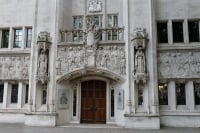
‘A triumph for access to justice’: Supreme Court rules employment tribunal fees unlawful

‘A triumph for access to justice’: Supreme Court rules employment tribunal fees unlawful

The Supreme Court has unanimously ruled that employment tribunal fees are unlawful, allowing trade union UNISON’s appeal in a ground-breaking decision requiring the government to stop charging the fees.

Today’s ruling found the fees unlawful under both domestic and EU law because they had the effect of preventing access to justice. The Supreme Court stated that therefore the fees must be quashed.

The Supreme Court also ruled that the fees were ‘indirectly discriminatory’ under the Equality Act 2010, because a higher proportion of women pursue the more expensive type B claims and thus paid more in fees.

Lords including Neuberger, Reed, Lady Hale, Mance, Kerr, Wilson and Hughes unanimously agreed the judgment, following a two-day March hearing.

As a result of the decision, the government should also repay claimants more than £27m in past fees, according to UNISON.

UNISON first issued the long-running claim in 2013 on the basis that employment tribunal fees prevented those on low income and those who faced discrimination from accessing justice, but judgments from the High Court in 2013 and the Court of Appeal in 2015 both ruled in favour of the government.

In July 2013, the government introduced fees for any claimants seeking to file and pursue a claim in the employment tribunals, before which it was free to do so. Claims were classified as type A or type B based on how quickly the claim would take to be resolved. For a single claimant, simply filing type A claims required £390 in fees while type B claims charged £1200. Further employment tribunal fees were charged to claimants during the claim.

UNISON was represented by Dinah Rose QC and Iain Steele of Blackstone Chambers and Karon Monaghan QC and Mathew Purchase of Matrix Chambers, who were instructed by UNISON’s in-house legal team.

For the government, the Lord Chancellor was represented by David Barr QC of Temple Garden Chambers and Victoria Wakefield of Brick Court Chambers, instructed by the government legal department.

The Law Society of England and Wales president Joe Egan said in a statement the decision was ‘a triumph for access to justice, and a resounding blow against attempts to treat justice as a commodity rather than the right it is.’ It argued ‘against the hike in tribunal fees before it was implemented and – like so many others – warned that they would deny people the chance to uphold their basic rights at work. Today the Supreme Court has vindicated that view, and restored access to justice for those mistreated in the workplace,’ Egan added.

The Law Society had highlighted the ‘massive drop in cases coming to the tribunal in the wake of the fees being introduced’ and that ‘at least 14,000 people every year are unable to afford to go to the tribunal to resolve their claims, as well as tens of thousands of missing cases.’

The Bar Council said that the decision is ‘welcome to all who believe in the fundamental importance of the rule of law.’

Charles Russell Speechlys employment partner Emma Bartlett told Legal Business the ruling was ‘ground-breaking’ and that ‘it is going to open the floodgates to claims that have been previously left in the basement.’ Bartlett also argued that the introduction of fees and the resulting prevention of access to justice has meant that case law progression has been ‘stilted’ since 2013.

Kingsley Napley’s head of employment law Richard Fox agreed that ‘it has taken far too long to correct what was always and obvious injustice’. The fees had ‘cut a swathe through the majority of claims with one fell swoop, making them disappear overnight.’

Chris Holme, employment partner at Clyde & Co, said that fees ‘must now fall away’ and that ‘it is likely that the government will consider imposing a new fees regime, but until then new fees cannot be imposed.’

According to Trowers & Hamlins employment partner Emma Burrows, there could be a sharp increase in claims following the decision: ‘The employment tribunals are already under strain following a reduction in judicial resources. As claims go back up, this will need to be addressed by the government.’

In February 2016, reports revealed that 86 courts across England and Wales, including tribunals, would be sold in order to raise funds for judicial modernisation programmes. Around 140 courts were shut across England and Wales in a 2011 review.

This article first appeared on The Lex 100‘s sister publication, Legal Business.

Watson Farley to retain all its qualifying trainees as Mishcon’s rate falls to 64%

Watson Farley to retain all its qualifying trainees as Mishcon’s rate falls to 64%

Watson Farley and Williams will retain 100% of its autumn 2017 qualifying trainees, while Mishcon de Reya‘s rate of retention has dipped below 80% for the first time in three years.

All of Watson Farley’s 15 final-year trainees will stay at the firm on permanent newly-qualified lawyer (NQ) contracts, marking a modest improvement over last year’s autumn trainee retention rate when 13 out of 14 or 93% of its trainees were kept on.

The NQs will be retained across Watson Farley’s practice areas; four in energy, three in asset finance and corporate, and one each in litigation, real estate, tax, employment and finance.

Watson Farley’s graduate recruitment and development manager Lucie Rees said that the firm’s 100% retention rate was ‘particularly exciting’ and that ‘we have always been pleased that we have kept on a high percentage of our qualifying trainees over the years.’

Mishcon’s trainee retention rates dropped from its autumn trainee retention last year, when all 11 trainees were kept on. This year, the firm has retained nine out of a group of 14, equalling just 64%.

In a statement, Mishcon said: ‘We are constantly testing and improving our recruitment procedures. It’s disappointing that retention is lower this year – in the previous three years it has been over 80%. But we are confident that our evolving strategy will help ensure that the matching of trainees to the firm works well on both sides.’

A number of UK firms have announced their autumn 2017 trainee retention rates, revealing that Mishcon’s 64% rate fell below both Trowers & Hamlins and Withers, who posted 70% and 73% rates respectively.

Watson Farley posted strong financial growth in its most recent financials, with global revenues rising above 20% to £159.8m. Mishcon also recorded a strong set of results this year, with 17% turnover growth to £149.4m. The firm’s revenues have doubled since 2011/12 when Mishcon’s top line was £73.1m.

This article first appeared on The Lex 100‘s sister publication, Legal Business.

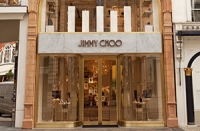
Slaughter and May leads as Freshfields and Paul Weiss take key roles on £900m Michael Kors buyout of Jimmy Choo

Slaughter and May leads as Freshfields and Paul Weiss take key roles on £900m Michael Kors buyout of Jimmy Choo

Slaughter and May, Freshfields Bruckhaus Deringer and Paul, Weiss, Rifkind, Wharton & Garrison are all advising on Michael Kors’ £900m offer for luxury British fashion company Jimmy Choo.

Under the agreement, the shoemaker would become a wholly-owned subsidiary of Michael Kors. Its shareholders will receive £2.3 in cash for each of their Jimmy Choo shares, 36p above the £1.68 share price the day before Jimmy Choo’s parent JAB Luxury announced it would launch a formal sale process in April.

Slaughter and May acted for Michael Kors in the UK, while Paul Weiss advised the company on US corporate and financing aspects. The Slaughters team is comprised of London-based corporate and commercial partner Jeffrey Twentyman, competition partner Lisa Wright and tax partner Sara Luder.

Paul Weiss team’s team was led by New York-based corporate partners Justin Hamill and Tom de la Bastide, alongside co-head of North America capital markets and securities John Kennedy.

Freshfields acted for Jimmy Choo via corporate partner Christopher Mort, with support from corporate partner Alison Smith, employment partner Nick Squire and antitrust partner Alex Potter.

The boards of directors of both companies have approved the transaction but has yet to be voted in by Jimmy Choo’s shareholders.

The deal will be subject to regulatory approvals in the EU, US and Russia and is expected to complete in the fourth quarter of 2017.

When Jimmy Choo floated on the London Stock Exchange in 2014, the issuer, private investment firm JAB Holdings owned by the German billionaire Reimann family, instructed Freshfields with Mort as leading partner. Hogan Lovells acted for Jimmy Choo at the time on its long-term incentive plans, while Linklaters advised on refinancing matters.

The Michael Kors offer is part of a string of foreign takeovers generating work in the city this year as foreign buyers take advantage of the drop in the value of the pound since Britain voted to leave the EU.

This article first appeared on The Lex 100‘s sister publication, Legal Business.
Clyde & Co sets up in Los Angeles to focus on aviation and insurance clients

Clyde & Co sets up in Los Angeles to focus on aviation and insurance clients

Clyde & Co has launched its ninth US office, opening in Los Angeles with a two-partner team consisting of Julie Hawkinson and Jim Koelzer.

The office will focus on providing insurance and aviation clients with insurance coverage and litigation defence services.

In a statement, Clydes partner and chair of the US board Bill Casey described Los Angeles as ‘a large and vibrant commercial center and hub for insurance litigation and aviation.’

Koelzer joins the firm from litigation specialist Robins Kaplan and will support the new Los Angeles office alongside current Clydes partner and San Francisco office co-founder Hawkinson. Both Koelzer and Hawkinson’s practices focus on representing clients in insurance disputes.

Hawkinson and Koelzer will lead a team comprising one counsel and an associate who also joins from Robins Kaplan. Clydes’ senior associate Natasha Mikha will also form part of the new team.

‘A permanent on-the-ground presence will help us deliver the best service to our clients and act as a platform to help recruit the finest legal and insurance talent in Southern California and beyond’, Casey said.

The Los Angeles opening continues a program of strong US expansion for Clydes in 2017, with the firm having launched in Chicago and Washington DC earlier this year.

A 10-partner team, which joined from Global 100 firm Troutman Sanders, were hired to open the new offices. Troutman’s Chicago office managing partner Eileen King Bower heads up Clydes’ new office in the city, while a six-partner insurance litigation team was brought in to staff the Washington DC office.

Clydes now counts almost 50 partners and 200 legal professionals in the US, with other offices in New Jersey, San Francisco, Miami and Atlanta.

Clydes also announced the launch of its first Mexican office in May this year, following a merger with four-partner local firm Garza Tello & Asociados.

This article first appeared on The Lex 100‘s sister publication, Legal Business.

Latham and Hogan Lovells act on consortium’s £2.9bn potential offer for Paysafe Group

Latham and Hogan Lovells act on consortium’s £2.9bn potential offer for Paysafe Group

Latham & Watkins is advising Blackstone and CVC Capital Partners in their £2.9bn preliminary proposal takeover bid for UK online payment company Paysafe.

The FTSE 250 company, which is based on the Isle of Mann, was advised by a Hogan Lovells team led by corporate partner Maegen Morrison with support from corporate partners Don McGown and John Connell.

It announced on Friday it was considering a possible cash offer of 590p per share from a consortium of funds managed by the two private equity heavyweights.

Paysafe offers a prepaid payment method for payments online without a bank account or credit card. It has developed more than 200 payment systems in over 40 currencies. These include digital wallets services which allow account holders to withdraw funds and make payments across 200 countries.

Latham London corporate partners David Walker, Kim Ihenacho and Richard Butterwick are working on the deal for the consortium, which has until 18 August to make a firm offer or withdraw its bid.

Paysafe, which employs more than 2,200 staff in 12 offices in Europe, North America and India, previously rejected a number of indicative offers from the consortium since early May. The company’s shares soared by 8% at the announcement on 21 July.

The payments industry is undergoing a period of consolidation, as people increasingly switch from cash to electronic payment.

In July, US payment group Vantiv purchased British rival Worldpay for £9.1bn and Ingienico acquired Swedish Bambora from Nordic Capital for a total consideration of €1.5 billion.

Hogan Lovells has a long-standing relationship with Paysafe and acted for it in relation to its €1.1bn acquisition of online payment provider Skrill Group from CVC in 2015.

This article first appeared on The Lex 100‘s sister publication, Legal Business.
RPC turns to the University of Law to provide legal training for its future trainees

RPC turns to the University of Law to provide legal training for its future trainees

Future RPC trainees will be undertaking their legal training at The University of Law (ULaw) from September 2017.

The aspiring lawyers will be able to study the GDL, LPC and MSc in Law, Business and Management at the university’s London Moorgate campus.

ULaw was recently awarded a gold ranking in the government-led Teaching Excellence Framework (TEF).

RPC offers both legal and consultancy advice to a range of sectors. The law firm is made up of 79 all equity partners, over 300 other lawyers and more than 600 people in total. Headquartered in London, RPC has offices in Hong Kong, Singapore and Bristol.

ULaw will work closely with RPC to design a new insurance law elective in response to changes introduced by the UK Insurance Act 2015. This high-quality module will equip future lawyers with a comprehensive range of practical and theoretical skills aligned to both the legal and insurance business challenges of today’s market.

Professor Andrea Nollent, Vice-Chancellor and CEO at The University of Law, said: “We are very much looking forward to beginning our new partnership with RPC. We are confident that our existing legal education programmes combined with the development of a new insurance law elective will play a pivotal part in training the future workforce of RPC and provide them with the skills needed to succeed in a highly competitive market.”

Simon Hart, Partner and Training Principal at RPC, said: “We are very enthusiastic about the prospects for our new partnership with ULaw. As RPC continues to respond to the rapidly changing legal market, as well as the forthcoming radical reforms to legal education, we were looking for a partner in the education sector who reflected our own desire to be progressive and forward thinking. With ULaw, we believe we have found that partner. ULaw has demonstrated an impressive commitment to understanding our needs and working with us to develop our future legal talent.”

The future trainees will join the likes of Linklaters, DLA Piper, CMS, Ashurst, and Berwin Leighton Paisner, whose future trainees already undertake their legal training at ULaw. The university also provides a new paralegal apprenticeship scheme to global law firms Freshfields and Hogan Lovells.

Dentons to merge with Scotland’s Maclay Murray & Spens to gain foothold in European oil and gas centre

Dentons to merge with Scotland’s Maclay Murray & Spens to gain foothold in European oil and gas centre

Dentons is to combine with Scottish firm Maclay Murray & Spens, embarking on the latest phase of its European expansion into Scotland’s oil and gas markets and bringing its total UK lawyers to over 800.

The merger is the latest in a series for the Dentons, the world’s largest law firm by number of fee earners, as it adds three more offices in Aberdeen, Edinburgh and Glasgow. Dentons’ European offices will total 31 on completion of the deal.

Maclays partners and Dentons UKMEA partners have approved the takeover, which will add 196 lawyers and 62 partners to Dentons UK operations, bringing its partner figure in the UK to 198.

The deal awaits the go-ahead from Dentons global partnership, expected in three weeks. Maclays will then operate under the Dentons brand.

The Scottish firm focuses on financial services, energy, transport and real estate. The two firms also share clients in the banking sector including RBS, Lloyds Banking Group and Santander and are both on the panel of transport company Network Rail.

Dentons UKMEA CEO Jeremy Cohen told Legal Business that the strong practice fit between the two firms and the opportunities to service clients ‘much more seamlessly’ north and south of the border were the main factors in the merger.

‘The office in Aberdeen gives us the opportunity to have a presence in Europe’s leading oil and gas centre,’ Cohen said.

Maclays advised Aberdeen Asset Management on its merger with Standard Life in March 2017, which valued the Scottish fund manager at £3.8bn. He also mentioned the firm’s clients in the whisky sector, which is ‘mostly served and consumed outside Scotland’, as other potential beneficiaries of the merger. They include the Edrington Group and Inver House Distillers.

Maclays CEO Kenneth Shand told Legal Business: ‘The merged entity is the sort of organisation that operates globally and we will be able to provide a better service for them as part of Dentons.’

This is the third merger this year for Dentons, after it combined with Dutch law firm Boekel in March and with Monterrey-based Canales Zambrano y Asociados at the start of the year. In May, the firm launched in Georgia, taking on a team of 11 lawyers from DLA Piper in Tblisi, and opened its second office in Saudi Arabia alongside Riyhad with a launch in Jeddah.

The firm also recently announced plans to form an alliance with Brazilian firm Vella Pugliese Buosi Guidoni, which will give Dentons access to 13 partners and 116 fee-earners in São Paulo and Brasília.

Denton’s UKMEA financial results in 2016/17 revealed a 9% fall in profit per equity partner (PEP) to £481,000 and a modest 1% increase in revenue to £166.4m.

This article first appeared on The Lex 100‘s sister publication, Legal Business.
20% hike at Vinson pushes associate starting pay to £120k as US leaders heat up City talent market

20% hike at Vinson pushes associate starting pay to £120k as US leaders heat up City talent market

Vinson & Elkins (V&E) has increased its London associate and trainee solicitor salary levels, boosting newly qualified salaries 20% to £120,000 and first-year trainee salaries by 11% to £50,000.

The firm announced the rates this week (20 July), alongside its second-year associates pay. They will receive a pay rise of 15% to £127,000 (from £110,000 previously), while the firm boosted third-year salaries to £140,000, a 17% increase from £120,000 last year. Meanwhile, the firm hiked second-year trainee salaries 17% to £55,000.

All of the associate salary increases at V&E were implemented on 1 July 2017, while the trainee increases take effect from 1 September 2017.

In January 2017, when V&E published its financial results, its revenues were up 4% to $653.9m. PEP was $2.03m for the year.

The new compensation structure follows V&E’s move in January 2016 to increase all of its London-based associate salary levels and raise its newly qualified salaries to £100,000, then a 25% rise.

At the time, second-year associates also received an overall pay increase of 22% to £110,000, while third-year wages grew 20% to £120,000. The Texas firm last increased salary levels to £45,000 for first-year trainees in September 2015, and £47,500 for second-year trainees.

V&E’s London managing partner Alex Msimang said it is very important that the firm attracts and retains top talent at every level.

‘This is a highly competitive market, and we believe these compensation adjustments exemplify our appreciation for the hard work and excellent service that our associates and trainees provide to our clients every day,’ he added.

Earlier this month, Akin Gump also increased trainee salaries by 12% and 8% for first and second years respectively, raising incoming first-year trainee pay from £43,000 to £48,000, and second-year salaries from £48,000 to £52,000. NQ pay at Akin remains at $180,000 which is £140,000 at current exchange rates, as the firm last increased NQ remuneration levels in September 2016 from £100,000.

Also in this year’s pay review, Jones Day boosted their junior lawyers’ pay by 18%, rising to £100,000, £15,000 up from last year.

This article first appeared on The Lex 100‘s sister publication, Legal Business.