Share on LinkedInShare on LinkedIn

ARTICLE · 29 OCTOBER 2020

Can You Predict A Split Decision In Civil Cases At The California Supreme Court After Oral Argument?

Arnold & Porter
Arnold & Porter
Contributor
Arnold & Porter

Arnold & Porter

With over 1,000 lawyers across 16 offices worldwide, Arnold & Porter is renowned for its...

View firm profile
Explore more from Arnold & Porter

Last week, we reviewed the academic literature on oral argument analytics and compared the data on oral arguments at the California Supreme Court.

United StatesLitigation, Mediation & Arbitration

Last week, we reviewed the academic literature on oral argument analytics and compared the data on oral arguments at the California Supreme Court. Last week, we aggregated the data on reversals – reversals plus partial reversals ("affirmed in part, reversed in part"). This week, we're checking if the oral argument data is any different for partial and complete reversals.

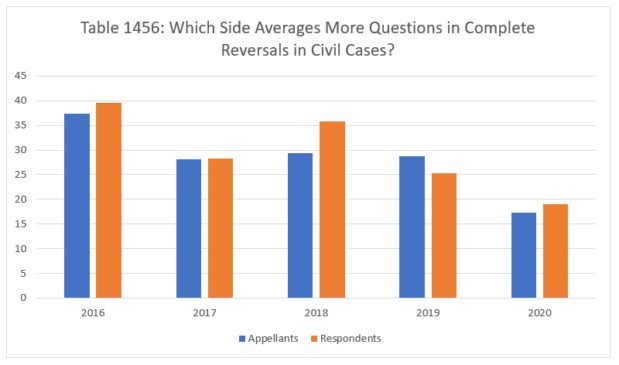
We report the data on outright reversals in Table 1456 below. We expect the losing party to get more questions, and sure enough, the losing appellees get more questions in four of five years between 2016 and 2020.
998282a.jpg

However, in partial reversals, appellees only received more questions in one of five years – 2017.

We operate a free-to-view policy, asking only that you register in order to read all of our content. Please login or register to view the rest of this article.

The content of this article is intended to provide a general guide to the subject matter. Specialist advice should be sought about your specific circumstances.

See more popular content from