Share on LinkedInShare on LinkedIn

ARTICLE · 02 JUNE 2026

When ICE Agents Come To The Workplace, What Should Employers Know About Their Rights And Obligations? (Video)

When ICE agents arrive at your workplace, understanding the legal distinctions between judicial warrants, administrative subpoenas, and informal visits is critical. This guide clarifies employer rights and obligations...

United StatesEmployment and HR

1795112.jpg

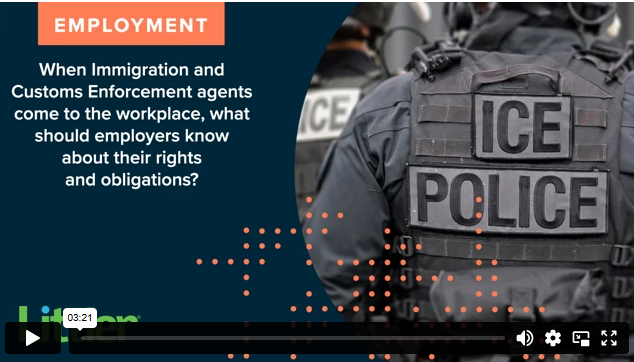
When Immigration and Customs Enforcement (ICE) agents come to the workplace, what should employers know about their rights and obligations?

Employers may encounter ICE activity, or site visits, with little—or no—notice in a range of enforcement actions, including raids, sweeps, or inspections.

Your rights and obligations as an employer turn on whether agents present a judicial warrant, an administrative warrant/subpoena, or no legal documentation at all.

What are the key distinctions?

Let’s start with the judicial warrant. A judicial warrant is an order signed by a judge or magistrate and typically references a U.S. District Court or a state court at the top. Albeit federal courts are more common.


We operate a free-to-view policy, asking only that you register in order to read all of our content. Please login or register to view the rest of this article.

The content of this article is intended to provide a general guide to the subject matter. Specialist advice should be sought about your specific circumstances.

See more popular content from

