Global wine consumption has plummeted to its lowest level since 1961, with Australia facing a structural crisis of oversupply and declining demand. As export markets contract and consumer preferences shift toward premium wines, the industry confronts a fundamental question: can it restructure quickly enough to survive, or will the market force the transformation by default?
Oversupply has long been an issue. Structural demand decline is now the crisis that no one has a quick fix for.
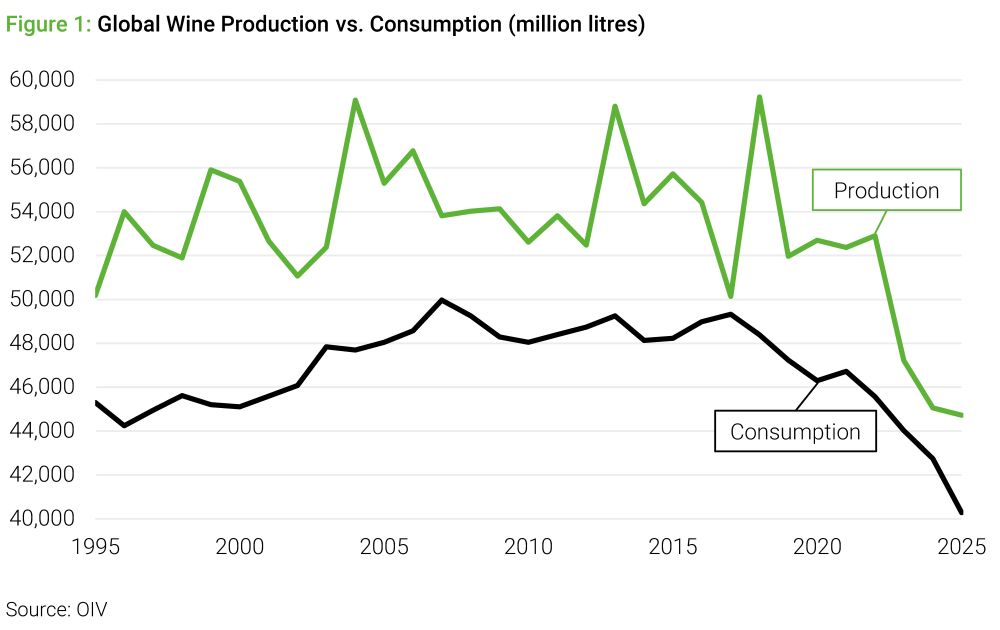
In 2025, global wine consumption reached its lowest level since 1961. In just two decades, the industry reversed 60 years of growth from its 2007 peak.
Having reached almost 50 billion litres in 2017, global consumption has fallen sharply every year since, reaching just 40 billion litres in 2025, a drop of 18% in eight years, and is forecast to drop a further billion litres by 2028. This is a structural reset, and it is accelerating.
Meanwhile, Australia produced 1.13 billion litres of wine in 2024-25, according to Wine Australia, comfortably outpacing total sales (domestic and export) of 1.08 billion litres. National stock levels rose 5%. The stock-to-sales ratio now sits at 1.9, some 15% above the ten-year average, with an excess of approximately 262 million litres sitting in tanks with nowhere to go. To put that in perspective: it is more than half of everything
We operate a free-to-view policy, asking only that you register in order to read all of our content. Please login or register to view the rest of this article.
The content of this article is intended to provide a general guide to the subject matter. Specialist advice should be sought about your specific circumstances.