Share on LinkedInShare on LinkedIn

ARTICLE · 17 APRIL 2026

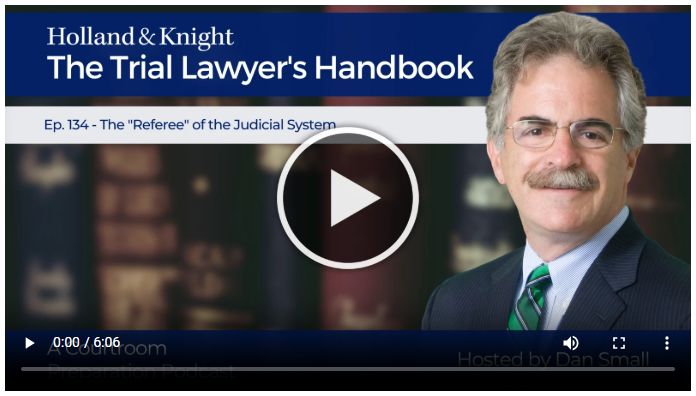
Podcast - The "Referee" Of The Judicial System

What happens when a judge loses control of the courtroom? Through pro bono work in Uzbekistan and analysis of landmark cases, this episode explores how judicial authority shapes the adversarial system. Discover why even the most skilled advocates cannot achieve justice without judges who effectively manage proceedings and enforce procedural rules.

United StatesLitigation, Mediation & Arbitration

1774636a.jpg

Order in the courtroom determines whether justice can move forward. In this episode of "The Trial Lawyer's Handbook," litigation attorney Dan Small examines the essential role judges play in the adversarial system through his pro bono work in Uzbekistan and the mock case State v. Faulkner. Drawing parallels to the Farmers Export and Rendle cases, Mr. Small shows how trial lawyers must balance forceful advocacy with respect for judicial authority. He recounts how an Uzbek judge, unfamiliar with the referee role, struggled to manage competing advocates until a makeshift gavel helped establish control. Mr. Small concludes that a fair adversarial system depends not only on skilled advocates but also on judges who can enforce rules and maintain fair, balanced proceedings.

We operate a free-to-view policy, asking only that you register in order to read all of our content. Please login or register to view the rest of this article.

The content of this article is intended to provide a general guide to the subject matter. Specialist advice should be sought about your specific circumstances.

See more popular content from

