Share on LinkedInShare on LinkedIn

ARTICLE · 01 OCTOBER 2015

Leveraging Employment Restraints To Protect Business Assets

Seyfarth Shaw LLP
Seyfarth Shaw LLP
Contributor
Seyfarth Shaw LLP

Seyfarth Shaw LLP

Our high-caliber legal representation and advanced delivery capabilities allow us to take on our...

View firm profile
Explore more from Seyfarth Shaw LLP

When a key employee subject to an employment restraint leaves a business to join a competitor, fast decisions need to be made to protect client goodwill or guard against misuse of confidential information.

United StatesEmployment and HR

When a key employee subject to an employment restraint leaves a business to join a competitor, fast decisions need to be made to protect client goodwill or guard against misuse of confidential information.

The more leverage an employer has against the former employee and his or her new employer, the better the prospects of negotiating a sensible solution quickly or, failing that, taking successful legal action.

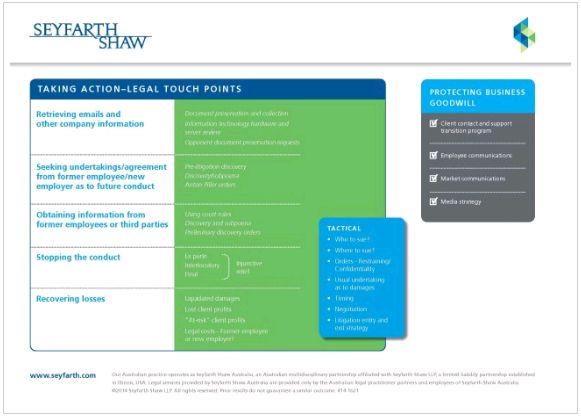
Set out below is a summary of the key legal touch points:

Proving loss

One issue that looms large in these situations, particularly where the decision taken is to start legal action, is proving that the business has suffered financial loss. Often, there are no immediate financial losses in the wake of the employee's departure. It may be some time before conduct in breach of the restraint hits the business' bottom line. The easier it is to prove loss, the more confident will be the decision to proceed with a damages case.

We operate a free-to-view policy, asking only that you register in order to read all of our content. Please login or register to view the rest of this article.

See more popular content from


