
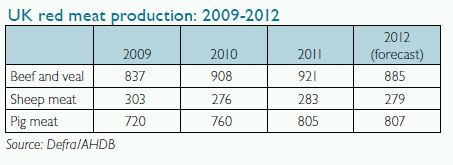
Beef slaughterings have been high in the first half of 2011. An unexpected rise in both beef cows and heifers presented to market in the first half has contributed to this, possibly due to high input costs and a strong cull cow trade. Prime cattle slaughterings have also been higher, but this is not expected to continue through the second half of the year. According to the British Cattle Movement Service there have been less dairy bull registrations over the past year. The increase in commodity prices has made bull beef less attractive and this is expected to reduce prime beef supplies throughout the second half of 2011. Prime beef supplies throughout the whole year are expected to be up on 2010 but only marginally, with the cull trade contributing the majority to the overall increase.
The increased culling in the beef herd is expected to reverse the rise in breeding cow numbers recorded in the 2010 June survey and numbers are expected to fall back to those seen in June 2009. The decline in dairy herd breeding cow numbers is forecast to stabilise (unless milk prices reduce significantly).
Production in 2012 is expected to fall quite considerably (4%). Carcass weights are expected to be lower as producers finish cattle quicker due to an increase in feed costs and, in some cases, limited winter forage. In addition to this, cull cow and dairy bull slaughterings are forecast to be lower.
Sheep meat production
The good spring weather has led to the national lamb crop forecast being increased by EBLEX. Production for 2011 is expected to be 2% more than in 2010. But even though domestic consumption is expected to continue its decline due to the relatively high price of lamb and the economic pressures on UK households, global factors are expected to maintain strong demand for UK sheep meat.
Imports from New Zealand, where production has been lower from January to May, were nearly 20% down on the year. Overall import levels are forecast to reduce by 11.5% compared to 2010. The converse can be seen for exports. Lower supplies from both New Zealand and Ireland will mean main European import markets will be available for UK exports. This situation is expected to continue into 2012, but there are indications that the New Zealand flock is recovering resulting in increased supplies for both the UK and European markets, placing pressure on demand for UK sheep meat.
Pig meat production
Pig slaughterings during the first half of the year have been higher than forecast. Sow productivity improved following the cold spell before Christmas and production for the first half of 2011 is up by 7% compared to the previous year's levels. This increased production is forecast to continue through the second half of the year with overall output anticipated to rise by about 6%. Slaughterings for the year are forecast to reach 9.9 million head – the largest since 2002 – with overall production anticipated to increase by 6%.
UK slaughterings and production is only forecast to increase marginally in 2012 following an anticipated reduction in the sow breeding herd.
The content of this article is intended to provide a general guide to the subject matter. Specialist advice should be sought about your specific circumstances.





